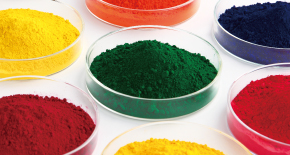
We offer the most extensive product portfolio for plastics and dope-dyed applications. By leveraging our global network, we contribute to product development that aligns with the latest market trends and regulatory requirements.
For those who want to quickly search our plastic pigment lineup
Quickly access the full product list with minimal navigation.
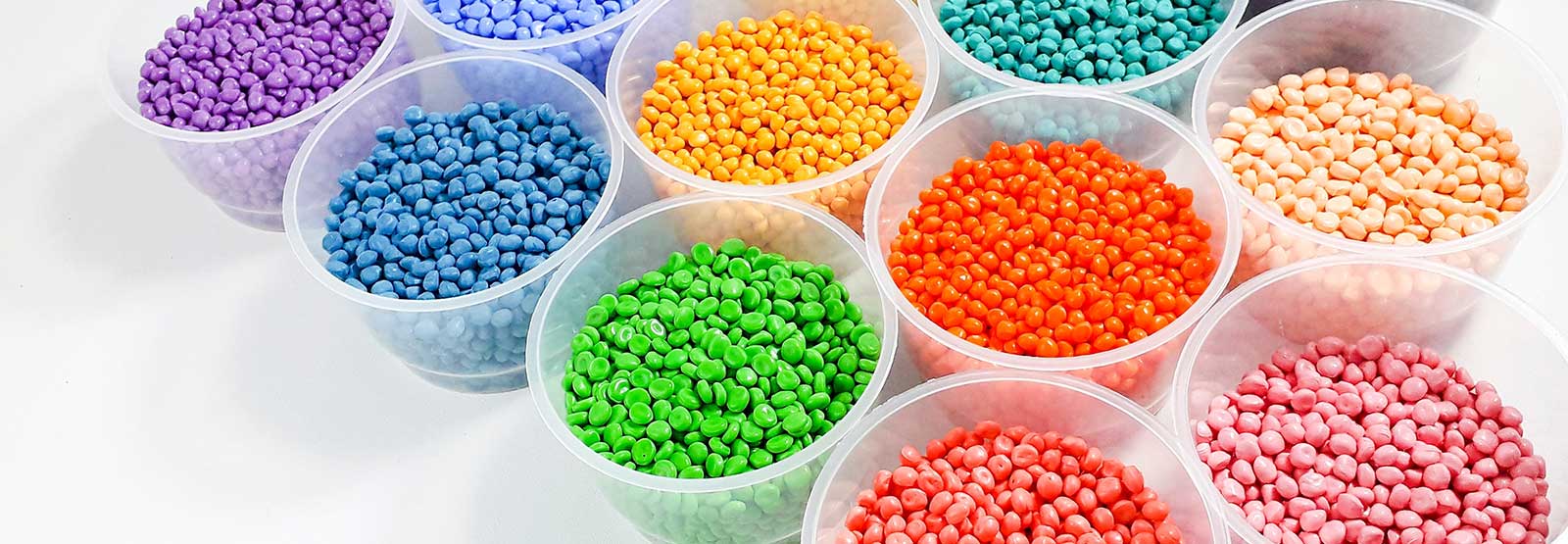
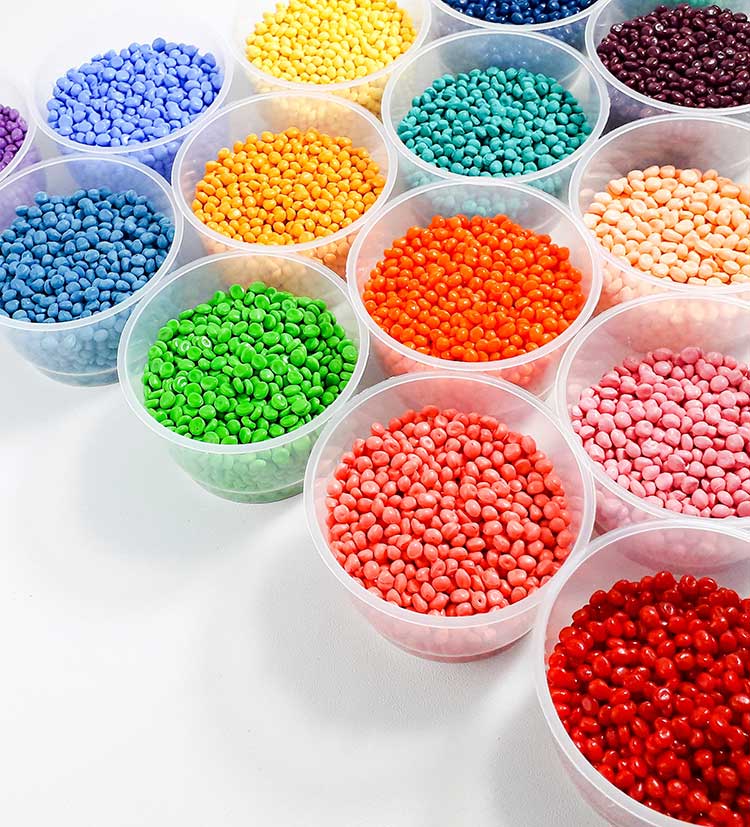
For a wide range of plastic applications, we offer organic, inorganic and effect pigments, including pearlescent and metallic pigments, as well as selected dyes. We introduce products tailored to application and performance requirements such as heat stability, weather resistance, dispersibility and chemical resistance, while also considering regulatory requirements for food contact and toy-related applications.
What you can learn on this page
Target polymers: PP, PE, PVC, PS, ABS, PA, PC, PBT, PET, POM and more
Evaluation criteria: processing and environmental heat stability, weather resistance, lightfastness, dispersibility, chemical resistance, migration, and compliance with food-contact and toy-related regulations
Recycling-related needs: NIR-reflective black pigments to support polymer sorting using near-infrared light
Technical support: technical documents, SDS provision and proposals for application-specific evaluations
Keywords:
Engineering plasticsSolution dyeing for fibersNIR-reflective black (near-infrared)Food contact (FCC / FCS)RecyclingPearlescent and brilliance
We offer a broad range of products for diverse plastic applications and
support plastic product design and formulation development where color
is important.
Broad portfolio
Organic, inorganic, effect pigments including pearlescent and
metallic pigments, and dyes optimized by application.
Color Index, polymer and application-specific selection guides
enable quick identification of suitable product candidates.
Application-optimized portfolio
A range of heat-stable pigments for reliable color development in
resins from general-purpose plastics to engineering plastics
requiring high processing temperatures.
Optimized for molding processes including injection molding,
extrusion and solution dyeing for fibers.
Replacement proposals based on computer simulations and color
comparison samples.
Food-contact and toy-related regulatory support
Information such as FCC and FCS data to support conformity checks
for food-contact and toy applications.
Information on compliance with relevant regulations in each
country, with analysis and guidance based on specialist
experience, including
NiAS.
NIR-control pigments for recycling and heat-shielding applications
Black pigments compatible with NIR polymer sorting in recycling
processes.
Black pigments that help suppress temperature rise on resin
surfaces through NIR reflection.
Technical support
Technical support for pigment formulation, application-specific
performance evaluation and replacement studies.
Troubleshooting and improvement proposals for plastic coloring.
Reliability information (E-E-A-T)
Reviewed by: Color & Display Business Division, Color Materials
Business Unit (Pigments Sales Group)
Based on heat test results, we offer a lineup of pigment products
that can withstand the high processing temperatures of engineering
plastics and selected super engineering plastics.
Evaluation metrics: ΔE (color difference), heat resistance during
processing, heat resistance temperature
Color Reproducibility, Particle-Size Control, and Pressure Stability
We maintain thermal stability during processing in PP/PA/PET. In
addition, by optimizing particle-size distribution and managing
pressure rise, we reduce pigment agglomerates and help prevent yarn
breakage.
We are advancing compliance with food contact and toy regulations
across countries and regions. We provide information on compliance
status through FCC/FCS.
Support: compliance information provided via FCC/FCS; support for
individual inquiries
Operations: responding to frequent revisions and updating
information promptly
NIR-Reflective Black Pigments / Black Pigments for Near-Infrared-Based Plastic Sorting
Black Pigments Detectable by Near-Infrared Plastic Sorting Systems
Features NIR-reflective properties and is compatible with plastic sorting systems that use near-infrared technology. The product lineup also includes grades designed to withstand the thermal history associated with recycling processes.
Feature: NIR-reflective properties support product designs compatible with near-infrared-based plastic sorting systems.
Evaluation Parameters: Near-infrared absorption rate, near-infrared absorption wavelength range
NIR-reflective black pigmentsNIR plastic sortingRecycling
*All product names listed on this page are trademarks of the DIC Group.
Pigment search tool banner
Information on over 2,000 pigments
in a single pigment search system
Pigment Finder is an online platform operated by Sun Chemical that
covers the full range of products handled by the DIC Group.
Pigment Finder provides easy access to detailed pigment information.
We have compiled the most frequently asked questions about pigments for plastics.
Total 9 / Shown 9
These are colorants used to color plastics. They provide thermal stability to withstand molding
conditions such as injection, extrusion, and blow molding, and their dispersibility is adjusted so
they disperse well in the resin and develop uniform color. Depending on the product, they offer
various durability properties to meet the requirements of each application.
Organic pigments offer a wide range of characteristics, and some provide high chroma and excellent
transparency. Inorganic pigments generally offer superior weather resistance, heat resistance, and
hiding power. The appropriate choice depends on the resin and the application.
First, it is important to select additives and pigments that match the resin’s processing conditions.
For pigments, not only the pigment type but also the addition level can affect heat resistance.
For mass coloration, it is generally recommended to select pigments with minimal coarse particles to
help prevent filter/nozzle clogging. We offer pigment products with controlled particle size and
pressure-rise management.
Yes. We conduct our own analyses and evaluations and can introduce products compliant with food-contact
and toy-related regulations in various countries. To keep up with increasingly stringent regulations,
including NiAS, we continuously collect information and carry out the required analyses and evaluations.
Yes. Our NIR-reflective black pigments can be detected by near-infrared resin sorting equipment.
The black tone has been improved to be more neutral, and we can also propose color matching with other
pigments as needed.
We first select a CI and pigment product group with a hue close to the target color, then narrow down
the options considering heat resistance. In the “Domestic Products List (Pigments for Plastics)” on this
website, you can select suitable pigment products with simple operations.
Yes. We can provide evaluation-quantity samples, spectral data, and other various data.
Please share the resin type, target color, molding conditions, and application.
Please refer to the SDS, which we can provide upon request.
Abbreviation and Terminology Guide
A guide to abbreviations and terminology frequently used on this website.
Engineering plastics
Plastics such as PA, PBT and PC are collectively referred to as
engineering plastics. They generally offer heat resistance above 100°C
and excellent mechanical properties.
Solution-dyed fibers
A method in which pigments or dyes are mixed into the spinning
solution of a synthetic fiber before the fiber is spun.
Color Index (CI)
International pigment classifications such as PR254, PR122, PY110 and
PB15:3.
Food-contact compliance (FCC / FCS)
For pigment products that comply with food-contact regulations in each
country or region, we provide documentation such as an FCC or FCS
(Food Contact Certificate / Food Contact Statement).
NIR (Near-Infrared)
Light in the wavelength range of approximately 780–2500 nm.
Near-infrared light can be converted into heat when absorbed by a
material, and is also used in recycling systems to identify and sort
resins. Since conventional carbon black readily absorbs near-infrared
light, NIR-reflective black pigments differ in heat-generation
behavior and resin-sorting compatibility.


 Broad portfolio
 Application-optimized portfolio
 Food-contact and toy-related regulatory support
 NIR-control pigments for recycling and heat-shielding applications
 Technical support
 Reliability information (E-E-A-T)