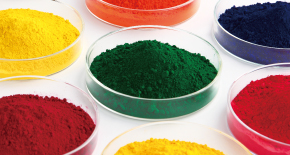
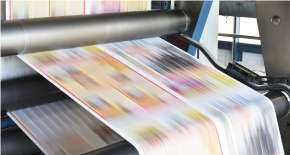
DIC’s digital printing pigments are high-performance pigments
optimized for a wide range of digital printing systems—including
water-based, UV, and solvent types—with a focus on inkjet and
electrophotographic toner applications.
Our pigment synthesis technology, which delivers uniform fine
particles, together with precise and versatile surface-treatment
technologies, provides excellent pigment dispersion in inks and
toners, reliable jetting performance, high chroma, and long-term storage stability.
These pigments meet demanding requirements for high chroma, high image
quality, and outstanding lightfastness and weather resistance across a
wide range of fields, from commercial and packaging to industrial
printing.
What you can learn on this page
Target systems: compatible with a wide range of digital printing
technologies, including water-based, UV, and solvent inkjet, as well
as various toner systems such as pulverizing, chemical, and
liquid toners.
Design focus: fine-particle pigment technology, particle size
control, and surface-treatment technologies that enable stable
jetting, high chroma, and long-term storage
stability.
Application range: Capable of supporting a wide variety of fields, including commercial printing, packaging printing, and industrial printing.
Key performance aspects: excellent high-chroma, high-image-quality printing, wide color gamut reproduction, and superior lightfastness, water resistance and weatherability.
Technology platform: high-reliability printing performance supported
by precise pigment synthesis and advanced pigment surface-treatment
technologies.
Implementation support: comparison by Color Index and series name,
along with technical documents and SDS availability.
Keywords:
Digital printing pigmentsInkjet pigmentsToner pigmentsWater-based inkjetElectrophotographyNon-Impact Printing (NIP)High-chroma, high-image-quality printingColor gamut reproductionLightfastness / Water resistance / Weather ResistanceParticle size control / Fine-particle pigments
Precision synthesis, pigment processing, and surface-treatment
technologies
View lineup
Quick search by application and performance. New grades are added regularly.
DIC’s pigments for digital printing—used as inkjet pigments and toner pigments—are supported by an integrated framework that spans quality control through technical support. Our strengths include precision synthesis, pigmentization, and surface-treatment technologies that enable high-chroma, high-image-quality printing and deliver excellent lightfastness and weather resistance.
Core Technologies
Precision synthesis and pigmentization technologies: Stable jetting and
high-strength color development through particle-size control of fine
pigments
Surface-treatment technologies: Suppresses settling and agglomeration
during long-term storage to maintain consistent print quality
Application-Specific Lineup
Supports a wide range of digital printing applications, including
commercial printing, packaging printing, and industrial printing
Optimized lineup for each NIP system, including water-based, UV, and
solvent inkjet systems, as well as electrophotographic toners
Also supports product comparison and substitution proposals using
Color Index
Quality & Supply Framework
Stable supply supported by global manufacturing and strict quality
management
High-precision control of batch-to-batch color differences and
dispersion characteristics
Reliability Information (E-E-A-T)
Technical documents and SDS: Provide the latest data on dispersion
technologies and particle-size control
High-chroma, high-speed printing enabled by DIC pigments
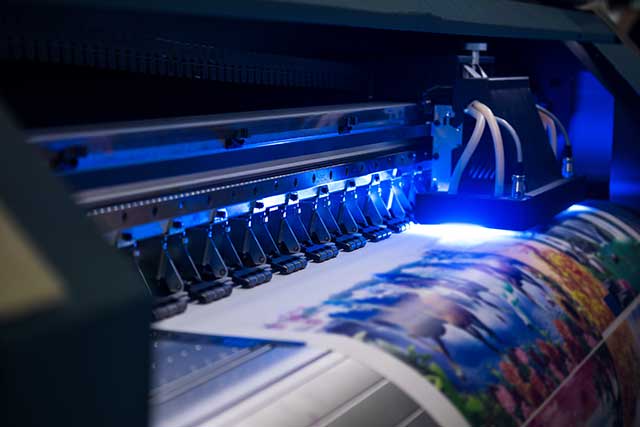
In commercial printing, high productivity and stable color reproduction are essential. DIC’s digital printing pigments, through control of pigment particle shape and surface treatment, enable stable nozzle jetting and high chroma. This supports stable, high-speed printing, particularly in inkjet systems.
Representative C.I. pigments: PR122, PB15:3, PY74, etc.
DIC pigment design for lightfastness, weatherability, and water resistance
Packaging such as corrugated board and films is exposed to harsh conditions, including light, abrasion, and contact with contents. DIC’s digital printing pigments, leveraging pigment processing and surface-treatment technologies, provide long-term color stability with excellent lightfastness, weatherability, and water resistance.
Representative C.I. pigments: PB15:4, PR146, PO71, PY155, PY180, etc.
From building materials and textiles to device printing
The scope of digital industrial printing is diverse, ranging from building panels, flooring, and interior sheets to textiles, industrial components, electronic devices, and direct printing on coated films. DIC’s digital printing pigments are designed to meet demanding requirements such as stability in various solvents, weatherability, and heat resistance, enabling consistent image quality and durability across a wide range of inkjet systems.
Representative C.I. pigments: PR254, PY110, PY138, PG7, etc.
Recommended systems: solvent-, oil-, UV-, and water-based inkjet
*All product names listed on this page are trademarks of the DIC Group.
Pigment search tool banner
Information on over 2,000 pigments
in a single pigment search system
Pigment Finder is an online platform operated by Sun Chemical that
covers the full range of products handled by the DIC Group.
Pigment Finder provides easy access to detailed pigment information.
This section summarizes the most common questions we receive about digital printing pigments (inkjet pigments).
Total 7 / 7 shown
Inkjet pigments are typically finely milled pigments whose surfaces are engineered to resist flocculation during dispersion. They offer excellent lightfastness, weatherfastness, and chemical stability, and are generally much more resistant to fading than dyes.
The optimal system depends on the specific grade. Please refer to the “Application” tags (water-based / UV / solvent / toner) in the product lineup table. Some grades are designed to work across multiple systems.
For inkjet applications, a volume-average particle size on the order of 100 nm is generally used as a guideline. Actual values depend on the grade, so we recommend confirming performance with evaluation samples under your specific formulation and conditions.
Our products are managed to comply with major regulations; however, please refer to the compliance information for each individual grade for the latest status. Where required, we can also issue conformity statements or related documentation.
Yes, we can provide evaluation quantities. Please let us know the desired Color Index, target application, and dispersion type (water-based / UV / solvent), so we can propose suitable grades.
Stock items can normally be shipped immediately. For make-to-order grades, lead time depends on the shade and quantity, but is typically on the order of several weeks. During peak demand periods, we recommend discussing requirements in advance.
Store in tightly closed containers at room temperature, avoiding direct sunlight and high temperature / high humidity. Recommended shelf life for unopened containers depends on the specific product; please check the documentation for each grade.
Abbreviation and Terminology Guide
A guide to abbreviations and terminology frequently used on this website.
IJ (Inkjet)
A printing method that ejects ink droplets from nozzles. Pigment dispersion stability and nozzle suitability are important.
WB (Water-Based)
An abbreviation for water-based ink, which uses water as its primary medium. Pigment dispersibility and water resistance are required depending on the application.
SB (Solvent-Based)
Ink primarily composed of organic solvents. It offers fast drying and excellent adhesion.
UV (Ultraviolet Curing)
Ink that cures instantly when exposed to ultraviolet light.
POD (Print on Demand)
A method of printing only the required number of copies. Pigment dispersion suitable for high-speed printing is essential.
DTF (Direct to Film)
A digital printing method in which the image is printed on film and then transferred.
DTS (Direct to Shape)
A technology for printing directly onto three-dimensional objects. Ink adhesion and durability are important.
Lightfastness
Durability against fading caused by exposure to light. It is important for outdoor applications and high-color-intensity printing.
Weather Resistance
The ability of a pigment to resist fading and deterioration over time when exposed to sunlight, rain, wind and temperature changes.
Dispersion Stability
A condition in which pigment particles remain stably dispersed without settling or agglomerating. It is a key property affecting print quality.

 Core Technologies
 Application-Specific Lineup
 Quality & Supply Framework
 Reliability Information (E-E-A-T)