
WATCHMaking the Invisible Visible
LINABLUE® Wonder—Delivering Safe, Reliable, Consistent Natural Blue Food Colorant Phycocyanin, Extracted from Spirulina Edible Blue-Green Algae, Cultivated Using More Sustainable Smart Farming Technologies

As global food and beverage manufacturers increase the use of natural food colorants to meet rising consumer demand, DIC Group subsidiary, Earthrise Nutritionals, is significantly expanding the capacity of its California-based facilities to grow the source of its natural blue food colorant LINABLUE® phycocyanin, the edible blue-green algae spirulina, using more sustainable, smart-farming technologies that contribute to a more circular economy. Like Spirulina, the edible blue-green algae known for its high levels of protein, vitamins, minerals, and antioxidants, LINABLUE® phycocyanin—already used by major food manufacturers globally—is poised for further expansion.
Major Topics Discussed
- What is the Natural Blue Food Coloring LINABLUE® Phycocyanin
- What Culinary and Functional Benefits Does LINABLUE® Phycocyanin Offer
- What Safety and Regulatory Benefits Does LINABLUE® Phycocyanin Offer
- What Health and Nutritional Benefits Does LINABLUE® Phycocyanin Offer
- What Makes Earthrise Smart Farming Sustainable
Key Takeaways
- LINABLUE® phycocyanin is a natural blue food colorant derived from the edible cyanobacterium spirulina.
- LINABLUE® phycocyanin offers safety, nutritional value, and antioxidant properties over artificial blue dyes.
- Earthrise Nutritionals extracts LINABLUE® phycocyanin from spirulina using only water as the extraction solvent, without any enzymatic treatment or organic solvents.
- Spirulina is one of the best-known edible blue-green algae, known for its high protein, vitamins, minerals, and antioxidants.
- By utilizing more sustainable smart farming technologies to cultivate blue-green algae efficiently, Earthrise Nutritionals is significantly reducing land, water, and energy consumption
In March 2025, DIC Group subsidiary Earthrise Nutritionals, LLC (Earthrise Nutritionals), launched a new facility in California to produce the edible blue-green algae (cyanobacterium) spirulina. The DIC Group invested approximately US$8 million in the new edible algae cultivation facility, designed around more sustainable processes and smart-farming technologies.
By utilizing more sustainable smart farming technologies to cultivate blue-green algae efficiently, Earthrise Nutritionals is significantly reducing land, water, and energy consumption at the base level of raw materials production, holding great promise for a more sustainable future. Moreover, the spirulina products from the new facility are fully compliant with California’s food safety regulations, including Proposition 65.
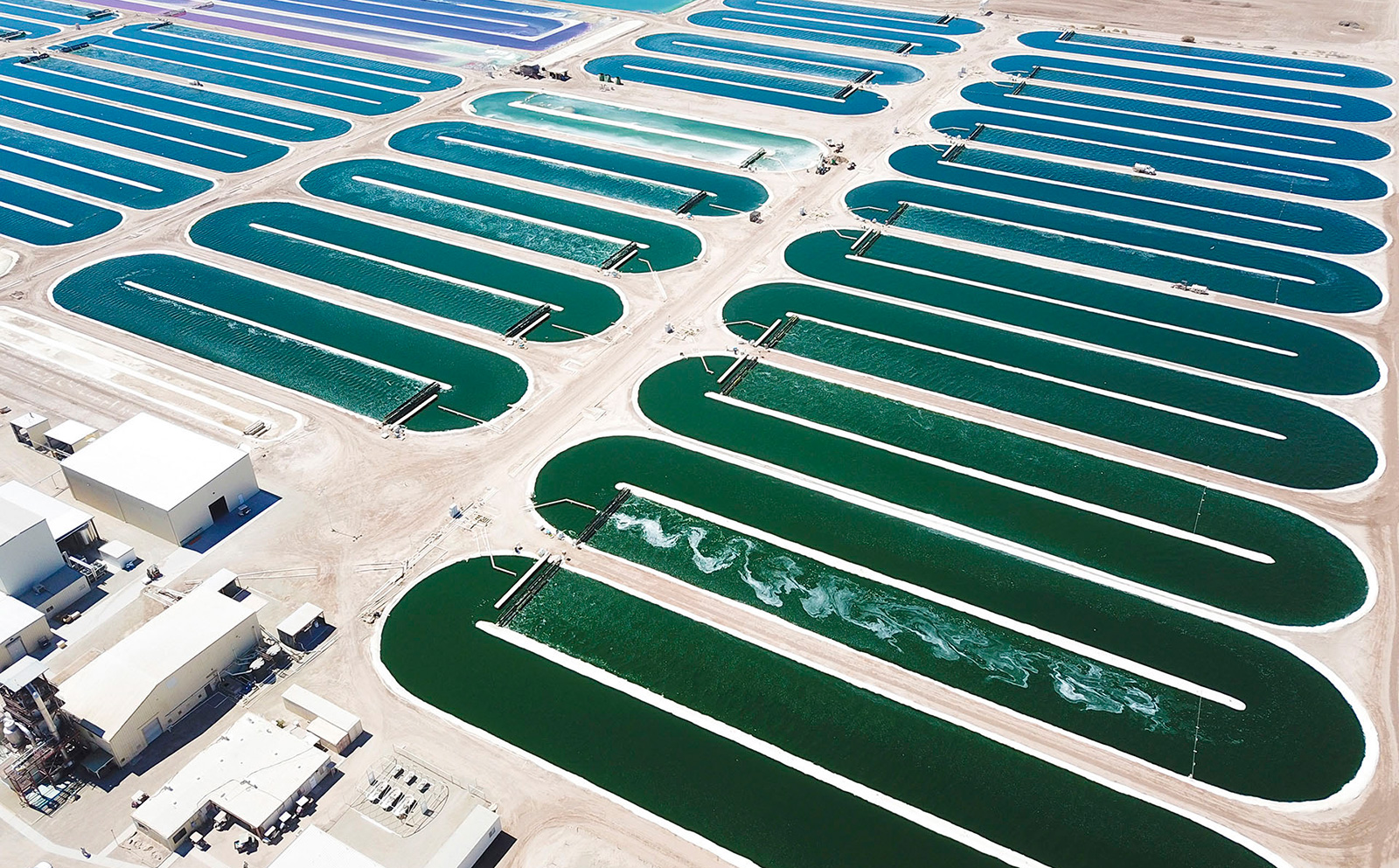
Earthrise Nutritionals' edible algae cultivation facility is strategically located in the remote Sonoran Desert in southeastern California.
This is especially meaningful as California is an extremely significant food producer, both domestically, where it is the US leader, and globally, where it is the world's fifth-largest food supplier, with some of the strictest and most proactive food health and safety standards in the US, with industry-leading bans on certain harmful food additives.
What is the Natural Blue Food Coloring LINABLUE® Phycocyanin
Produced by Earthrise Nutritionals, LINABLUE® phycocyanin is a natural blue food coloring derived from the edible cyanobacterium spirulina. LINABLUE® is used to add a vivid blue color to food and beverages and can be mixed with other natural colorants to create green, purple, and additional colors. Approved for use in the US, EU, and other countries, LINABLUE® phycocyanin is already a popular alternative to artificial blue dyes.
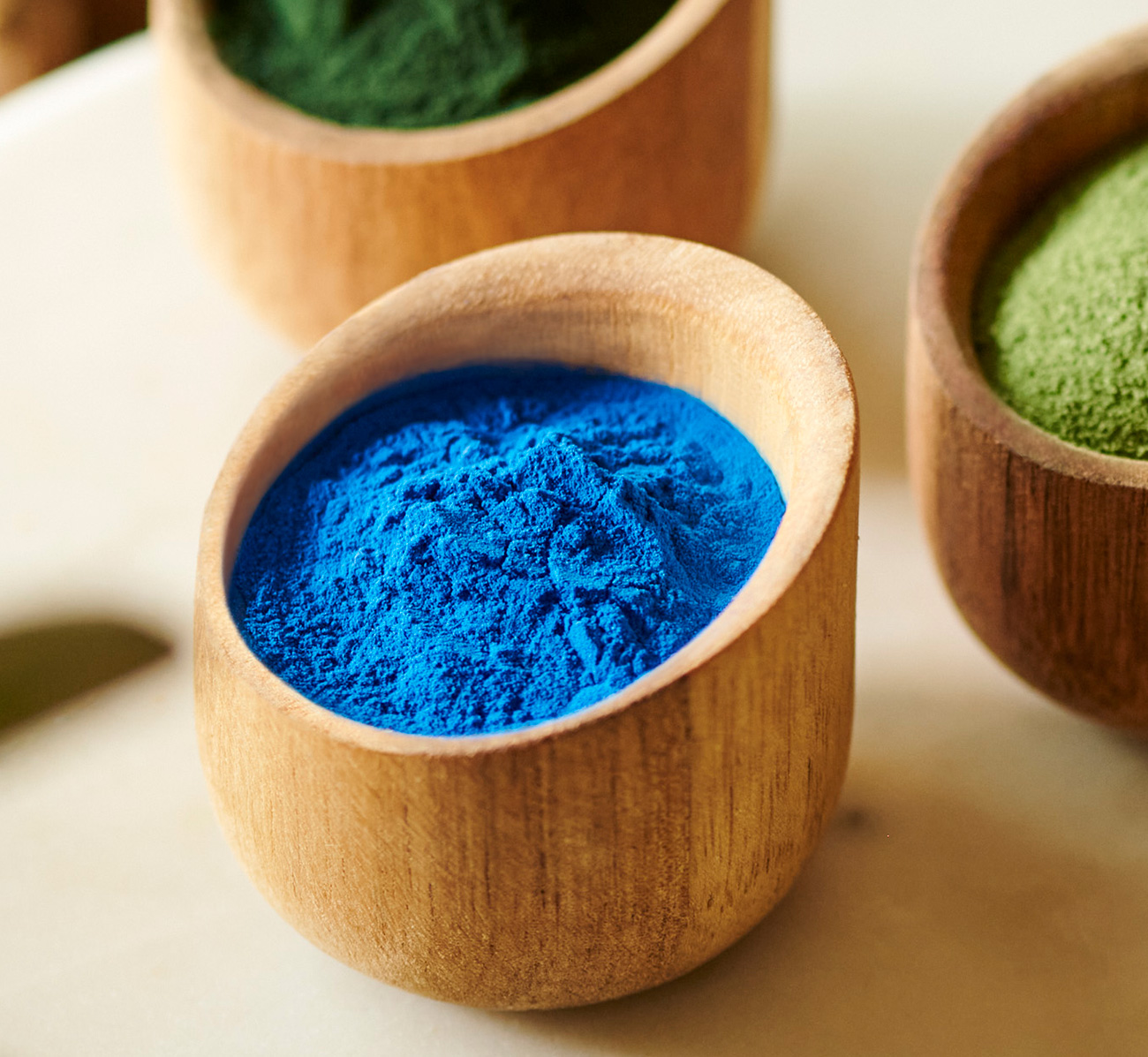
LINABLUE® phycocyanin natural pigment powder
What Are Some Benefits of Using LINABLUE® Phycocyanin as A Natural Food Colorant
A natural food colorant derived from spirulina blue-green algae, LINABLUE® phycocyanin offers safety, nutritional value, and antioxidant properties over artificial blue dyes. Using LINABLUE® phycocyanin as a natural food colorant provides several benefits, primarily its natural origin, safety, vibrant hue, and potential health benefits.
Earthrise Nutritionals has secured essential food safety certificates for LINABLUE® phycocyanin that major food or beverage manufacturers require, including Good Manufacturing Practice (GMP) and Food Safety System. Certification 22000 (FSSC 22000), Kosher, Halal, and Sedex Members Ethical Trade Audit (SMETA)—certification for which only Earthrise holds worldwide.
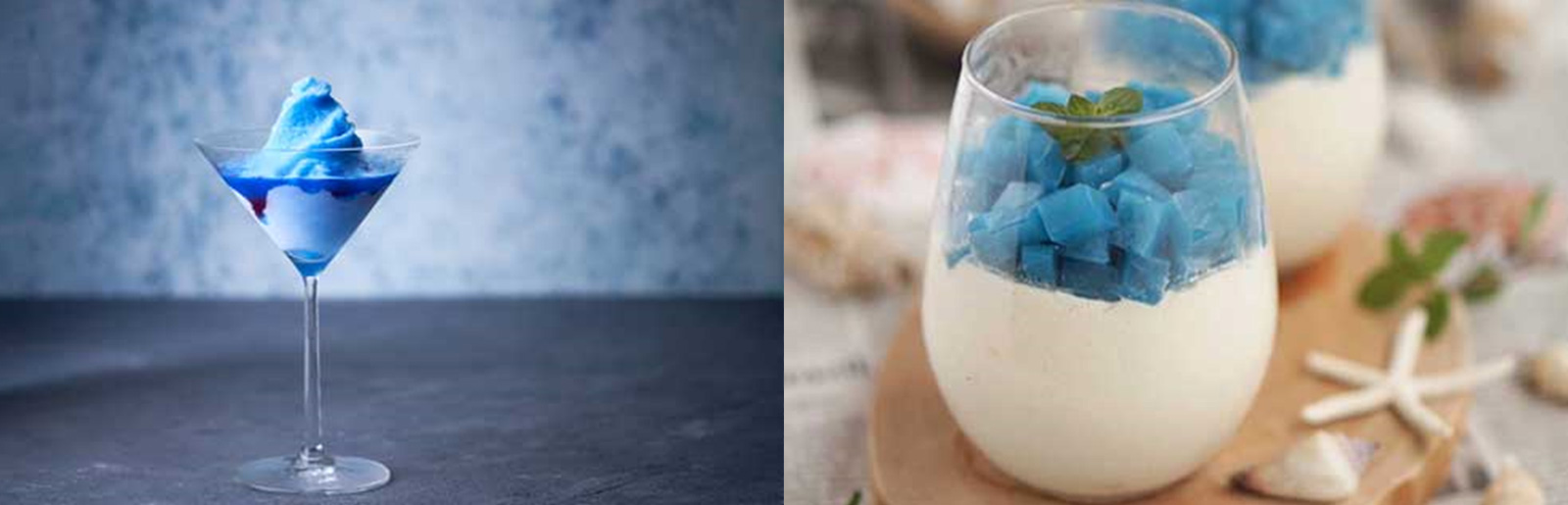
LINABLUE® phycocyanin offers safety, nutritional value, and antioxidant properties over artificial blue dyes.
What Culinary and Functional Benefits Does LINABLUE® Phycocyanin Offer
- Vibrant Color: Using LINABLUE® phycocyanin requires only a minimal amount to achieve a vivid blue color that is highly appealing to consumers.
- Versatile Application: It can be used in a wide range of food products, including ice cream, confections, beverages, yogurts, and more.
- Color Blending: It serves as a base for creating other natural colors like green and purple when mixed with natural yellow or red colorants.
- "Clean Label" Appeal: Using LINABLUE® phycocyanin allows manufacturers to meet the growing consumer demand for natural, plant-derived ingredients and transparent "clean" labeling.
- Culinary and Functional Benefits: LINABLUE® phycocyanin offers stable properties under certain conditions. See the chart below for solubility, pH stability, heat stability, light stability, alcohol stability, and more.
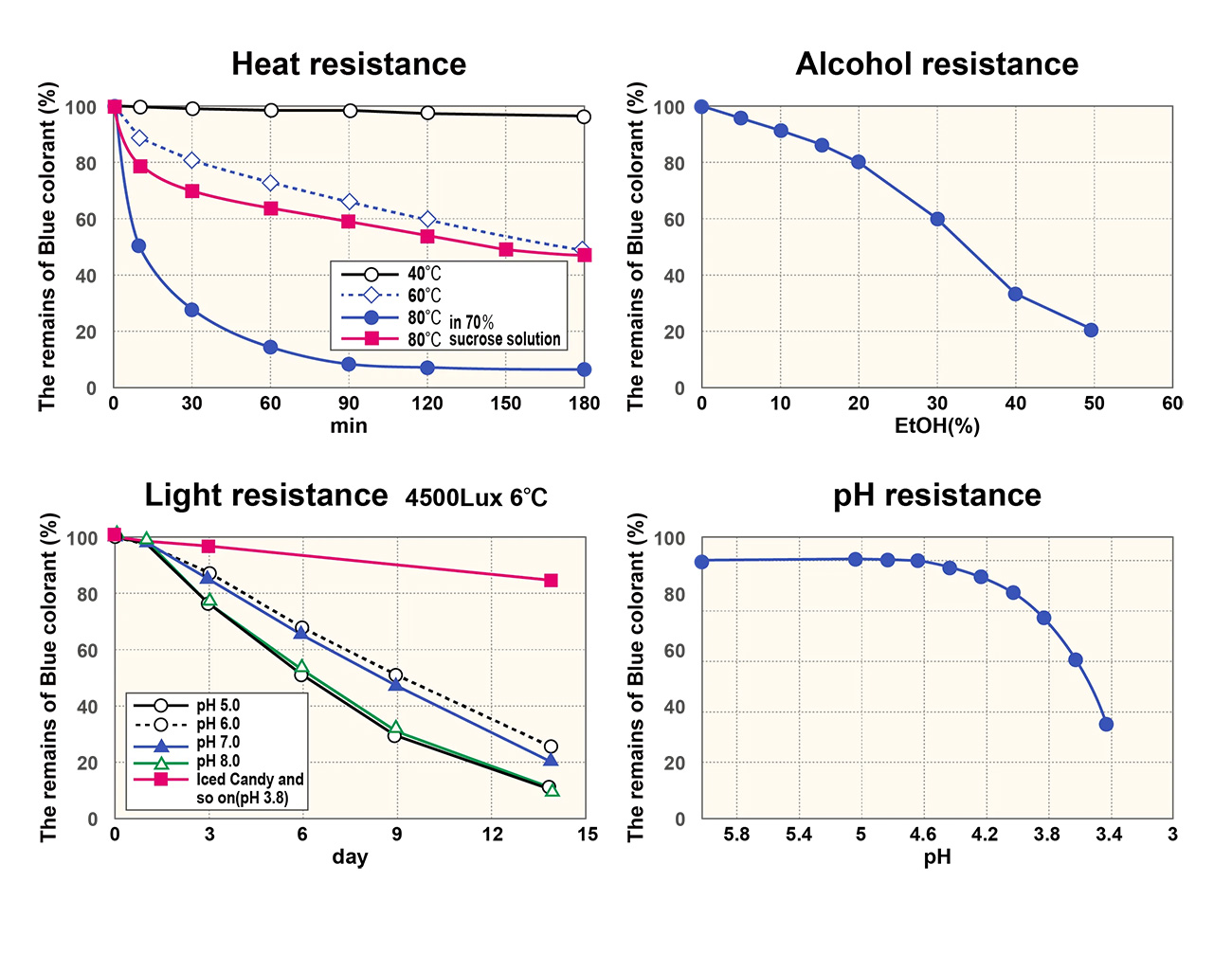
LINABLUE® offers stable properties under certain conditions, such as heat, light, alcohol, and pH resistance.
Who Needs Phycocyanin Natural Blue Food Colorants
Food and beverage manufacturers are increasingly demanding natural blue food colorants to meet rising consumer demand for visually appealing, "clean label," and healthier products, especially in popular drinks, candies, and baked goods segments.
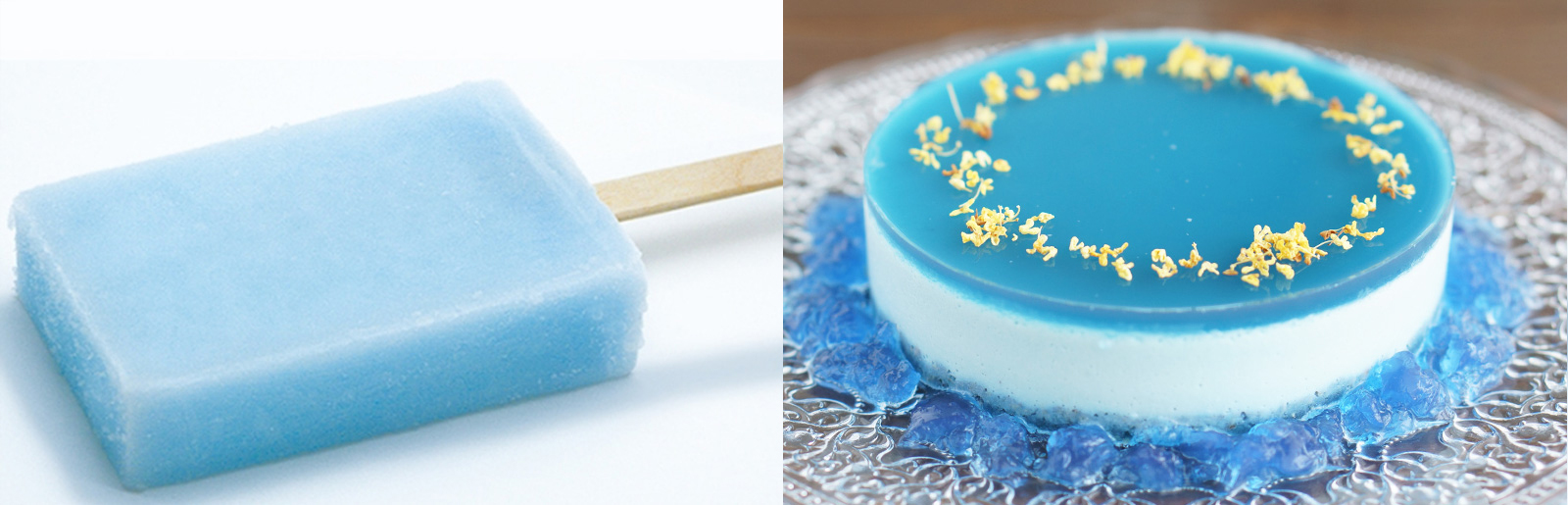
LINABLUE® phycocyanin is a natural blue food colorant that can be used to add a vivid blue color to food and beverages.
Relatively recent, the natural blue food colorant trend is driven by health-conscious consumers who want to avoid artificial additives due to potential adverse health impacts. Some say that using natural colorants aligns with a very modern "healthy hedonism," as consumers seek both the guilty pleasure of carefree consumption and well-being from their food choices.
What Are Clean Label Food Products
Clean-label food products are made with ingredients that consumers can easily recognize and understand. These food products avoid using artificial additives, preservatives, and synthetic chemicals. Clean-label foods emphasize short, simple ingredient lists, minimal processing, and transparency about their production. Essentially, the term “clean-label” reflects a consumer-driven expectation for more natural and wholesome foods.
What Safety and Regulatory Benefits Does LINABLUE® Phycocyanin Offer
- Naturally Sourced, LINABLUE® phycocyanin is extracted with water from spirulina, without the use of organic or chemical solvents—a significant safety benefit for food and beverage producers.
- Approved Globally: LINABLUE® phycocyanin is approved for use as a natural blue colorant in the United States (FDA-approved as a color additive exempt from certification), Europe, and major Asian nations, as well as the Joint FAO/WHO Expert Committee on Food Additives—unlike some other natural blue colorants using enzymatic treatment/organic solvent extraction, etc.—ensuring compliance with major food safety standards.
- Safety: LINABLUE® phycocyanin is considered safer than synthetic blue dyes (e.g., Blue No. 1), which have been linked to potential health risks in some studies. *
- Allergen and Toxin Free: Reputable sources verify that the product is free of common allergens, GMOs, pesticides, and algal toxins (also known as microcystins).
*See California’s Office of Environmental Health Hazard Assessment Synthetic Food Dye Risk Assessment - OEHHA
What Health and Nutritional Benefits Does LINABLUE® Phycocyanin Offer
- Rich Nutrient Profile: As a spirulina extract, LINABLUE® phycocyanin is a protein-pigment complex and a valuable nutritional component itself, containing proteins and all essential amino acids.
- Antioxidant Effects: The main component, phycocyanin, is a powerful antioxidant that helps reduce oxidative stress and inhibit free radicals.
- Potential Health Support: Phycocyanin is being studied for various health-promoting effects.
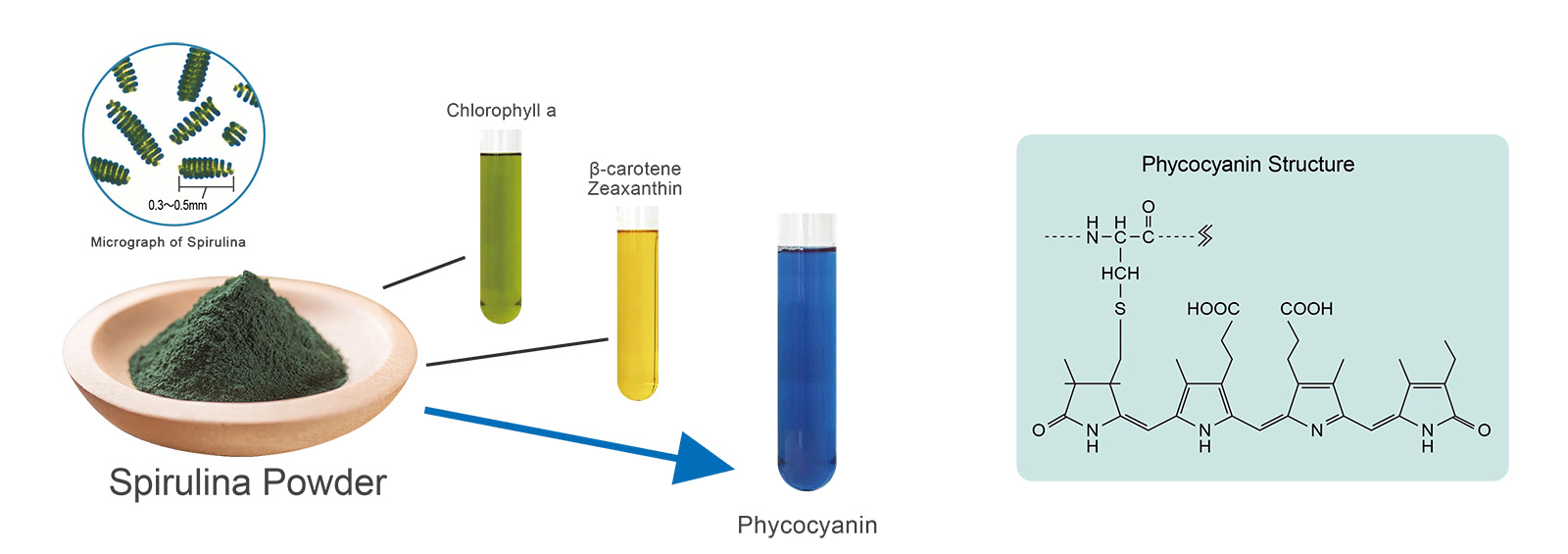
Earthrise extracts phycocyanin from spirulina powder by breaking through the cell walls in a buffer to release the pigment.
How Does Earthrise Nutritionals Safely Derive LINABLUE® Phycocyanin from Spirulina Powder
Phycobiliproteins (PBPs) are the primary pigments in cyanobacteria responsible for around 50% of light uptake. PBPs are subdivided by color: phycoerythrin C-PE (red), phycocyanin C-PC (intense blue), and allophycocyanin APC (vibrant blue). LINABLUE® contains both phycocyanin C-PC and allophycocyanin APC.
Earthrise Nutritionals extracts phycocyanin from spirulina powder by breaking through the cell walls in a buffer solution to release the pigment. Then it separates the blue liquid from the solid compounds via centrifugation, followed by purification steps to produce higher purity. Unlike other natural colorants or dyes, Earthrise Nutritionals uses only water as the extraction solvent, without any enzymatic treatment or organic solvents.
How Does Earthrise Nutritionals Safely Derive LINABLUE® Phycocyanin from Spirulina Powder
The DIC Group subsidiary Earthrise Nutritionals is using several key strategies and the latest state-of-the-art technologies to produce spirulina and natural blue colorant LINABLUE® phycocyanin—extracted from spirulina—sustainably.
What Makes Earthrise Smart Farming Sustainable
Spirulina, a blue-green algae, is a photosynthetic organism that uses photosynthesis to convert carbon dioxide (CO₂) into the chemical energy it needs to fuel its growth. Committed to sustainable, environmentally friendly production, Earthrise Nutritionals Plant Manager Tomoatsu Maguchi says, “Earthrise Nutritionals annually procures more than 1,200 metric tons of refined CO₂ from external sources to cultivate Spirulina, thereby satisfying over 50% of its energy needs with renewable energy from the Imperial Irrigation District (IID).” IID is a public corporation in Southern California that supplies water to support irrigation and the production of electric power. IID currently supplies both water and electricity to local farmland.
As part of the company’s commitment to promote sustainable agriculture toward a more circular economy, Earthrise Nutritionals entered into a formal partnership with LINDE—a global leader in industrial gases and engineering—to use purified CO₂ in spirulina cultivation. This arrangement aligns perfectly with Earthrise Nutritionals' environmental policy and the goal of achieving zero-water discharge while using over 50% renewable energy.
The DIC Group views sustainability as a key aspect of its management policy and actively works to address environmental issues, including achieving zero discharge of industrial wastewater from algae cultivation at the new US facility. In the future, the DIC Group will continue to strive to provide superior, environmentally friendly products to its customers worldwide.
See how Earthrise Nutritionals is cultivating edible algae in California in this short video.
- Closed-Loop Water Recycling: The Earthrise Nutritionals production system uses a closed-loop process where all water and nutrient-rich water from harvesting is recycled and reused back into the growing ponds. This closed-loop process prevents wastewater from being discharged off-site into the environment.
- Renewable Energy Use: Earthrise Nutritionals' California farm utilizes renewable energy, which accounts for more than 50% of its total energy consumption, significantly reducing its reliance on fossil fuels.
- CO₂ Fixation: As a photosynthetic organism, spirulina absorbs CO₂ during cultivation. Earthrise effectively uses CO₂ in spirulina production, fixing about 1,200 metric tons annually.
- Byproduct Utilization: Earthrise actively uses byproducts from the LINABLUE® phycocyanin extraction process as bio inks and fertilizers, etc., minimizing waste and promoting a circular economy approach.
- Pesticide/Herbicide Free Cultivation: Earthrise grows its spirulina without the use of any pesticides or herbicides, protecting the local ecosystem and ensuring a pure product.
- Ideal Location: The Earthrise Nutritionals farm is set in the remote Sonoran Desert of southeastern California, an environment with clean air, abundant sunlight, and mineral-rich water, which is ideal for cultivation with minimal environmental impact.
- Efficient Drying: The use of quick, flash-evaporation drying methods preserves the nutritional value and colorant quality of spirulina, making the overall process more energy efficient than other drying techniques.
These practices help Earthrise Nutritionals produce spirulina and LINABLUE® phycocyanin with significantly lower environmental impacts compared to traditional agricultural or animal protein sources.
What is Smart Farming
Smart farming, also known as smart agriculture, uses advanced technologies and data-driven practices to enhance traditional farming operations, thereby optimizing agricultural production and output. Smart farming operations involve utilizing technologies such as the Internet of Things (IoT), sensors, drones, data analytics, and artificial intelligence (AI) to monitor, manage, and optimize various aspects of farming.
Smart farming is the use of advanced technologies to improve the efficiency and sustainability of agricultural practices. In addition to bolstering crop yields and quality by enabling real-time monitoring of growing conditions and environmental data, smart farming aims to enhance agricultural sustainability by promoting energy and water conservation and fostering environmental awareness. Governments worldwide are promoting smart farming as a means of next-generation farm production.
How is Earthrise Using State-of-the-Art Smart Farming Technologies
Through strict cradle-to-grave production controls and continuous monitoring with smart-farming technology, Earthrise Nutritionals delivers very high quality, with low heavy metal levels and high safety, without irradiation.

Earthrise Nutritionals Plant Manager Tomoatsu Maguchi (center) and his team
Earthrise Nutritionals Plant Manager Tomoatsu Maguchi says, “To achieve sustainable smart farming, Earthrise Nutritionals has deployed five state-of-the-art technologies for the first time at its new production facility: a supervisory control and data acquisition (SCADA) system to centrally manage cultivation across the entire approximately 420,000 m² facility; collaborative robot arms that reduce costs and ensure safe operations; an AI-driven system for assessing algae growth; a water control and management system that simultaneously achieves zero discharge of industrial wastewater and outstanding product quality; and a drone-based facility analysis system.”
What is a Supervisory Control and Data Acquisition (SCADA) System
A Supervisory Control and Data Acquisition (SCADA) system is a control system architecture for monitoring and controlling systems in production facilities. SCADA gathers and analyzes data, transforming results into an accessible visual format.
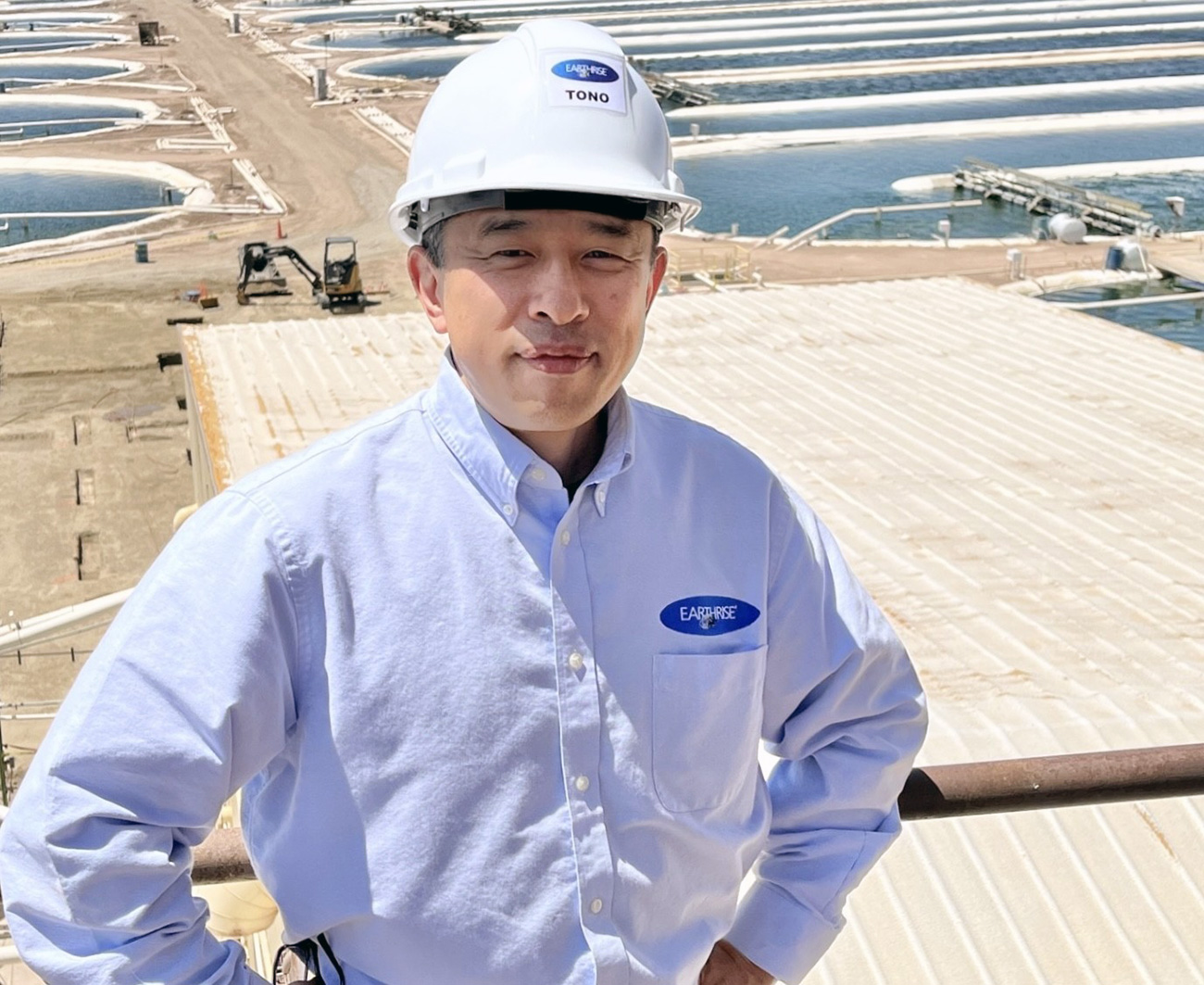
Earthrise Nutritionals LLC, President and CEO Takaaki Ono
Why is Spirulina Edible Blue-Green Algae important to the Future of Humanity
Earthrise Nutritionals LLC, President and CEO Takaaki Ono says, “The global spirulina market size was valued at USD 651.35 million in 2023 and is poised to grow from USD 700.85 million in 2024 to USD 1,259.29 million by 2032, at a CAGR of 7.6% during the forecast period (2025 - 2032). The rapidly growing awareness of the health benefits of spirulina and other types of edible blue-green algae is expected to drive demand. An increasing number of developers are utilizing spirulina to create new functional foods, beverages, dietary supplements, and nutraceuticals, thereby creating long-term opportunities for the spirulina industry. “
Spirulina Market Insights
The global spirulina market size was valued at USD 651.35 million in 2023 and is poised to grow from USD 700.85 million in 2024 to USD 1,259.29 million by 2032, at a CAGR of 7.6% during the forecast period (2025-2032).
- The rapidly increasing awareness of the health benefits of spirulina and other types of algae is boosting demand for spirulina.
- Increasing use of spirulina in functional foods, nutraceuticals, and dietary supplements will create new opportunities for spirulina.
- The surging popularity of veganism and demand for plant-based food products worldwide will boost the consumption of spirulina.
- Launch of new supportive government initiatives to promote algae production.
- Evolving consumer preferences, demand for natural ingredients, and a growing emphasis on sustainable practices will drive global demand for spirulina.
- On the contrary, limited awareness in developing countries, risks of contamination, and the availability of alternative superfoods are estimated to be the key constraints to the development of the spirulina market.
