
WATCHMaking the Invisible Visible
From a Cross-Plant Talent Exchange Program to Business-Driving Collaboration: How Kashima and Ulsan Are Building One DIC Together
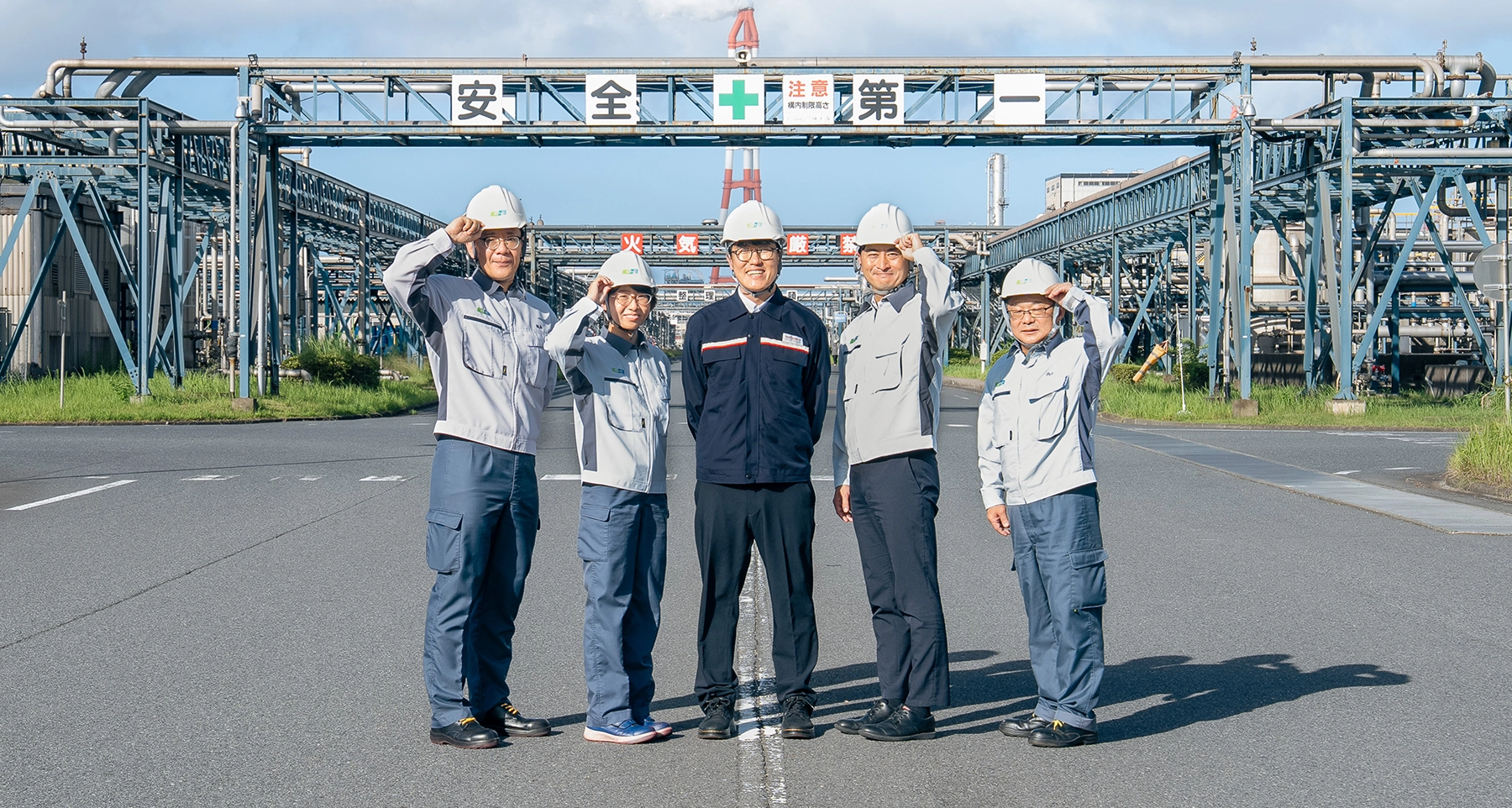
When DIC acquired the pigment business in 2021, DIC’s Kashima Plant and Sun Chemical’s Ulsan Plant in South Korea became part of the same group. Yet becoming part of the same organization did not automatically create connections between the people working on the shop floor. Although both plants manufactured the same pigments, employees in Kashima and Ulsan knew very little about each other’s facilities, work practices, or people.
To bridge that gap, an employee exchange program was launched in 2024. What began as one-week mutual visits evolved into a six-month exchange program in 2025.
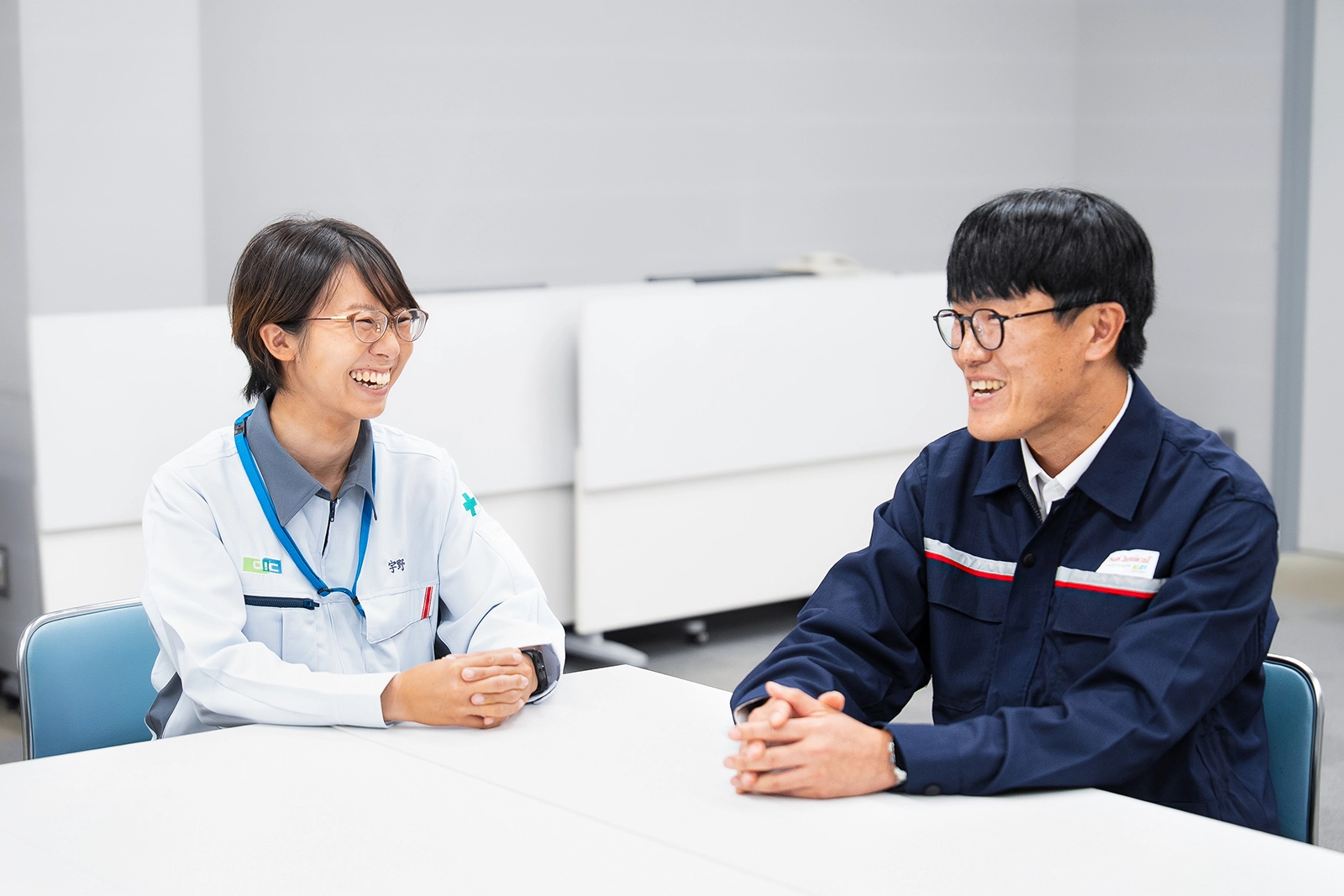
For this article, we spoke with the first two participants of the program: Yumi Uno of the Pigments Production Sec.2, Color Materials Production Dept. at DIC’s Kashima Plant, and JungWoo Lee, Production Manager responsible for pigment production at Sun Chemical’s Ulsan Plant.
Although We Produced the Same Pigments, We Knew Little About Each Other’s Workplace: Why the Cross-Border Exchange Began
──First, could you tell us about your respective roles?
Yumi Uno: I am responsible for pigment quality control at the Kashima Plant. I have also worked on streamlining utility-related facilities that support plant operations.
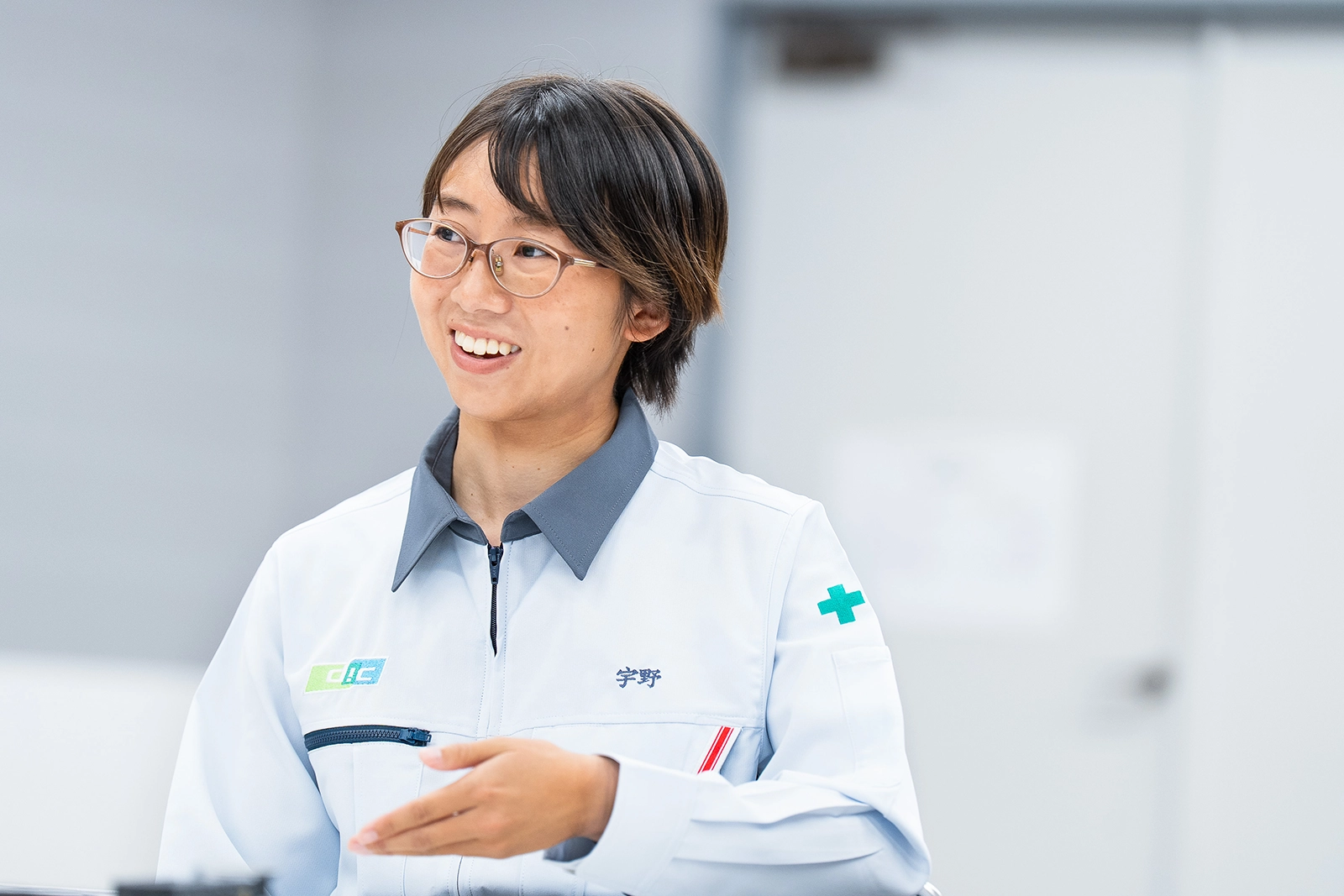
▲Yumi Uno of DIC’s Kashima Plant. An avid surfer, she even borrowed a board and enjoyed surfing at nearby beaches during her assignment in Ulsan.
JungWoo Lee: I am a manager responsible for pigment manufacturing at the Ulsan Plant. I joined the company in 2011 and have worked at this plant for the past 15 years.
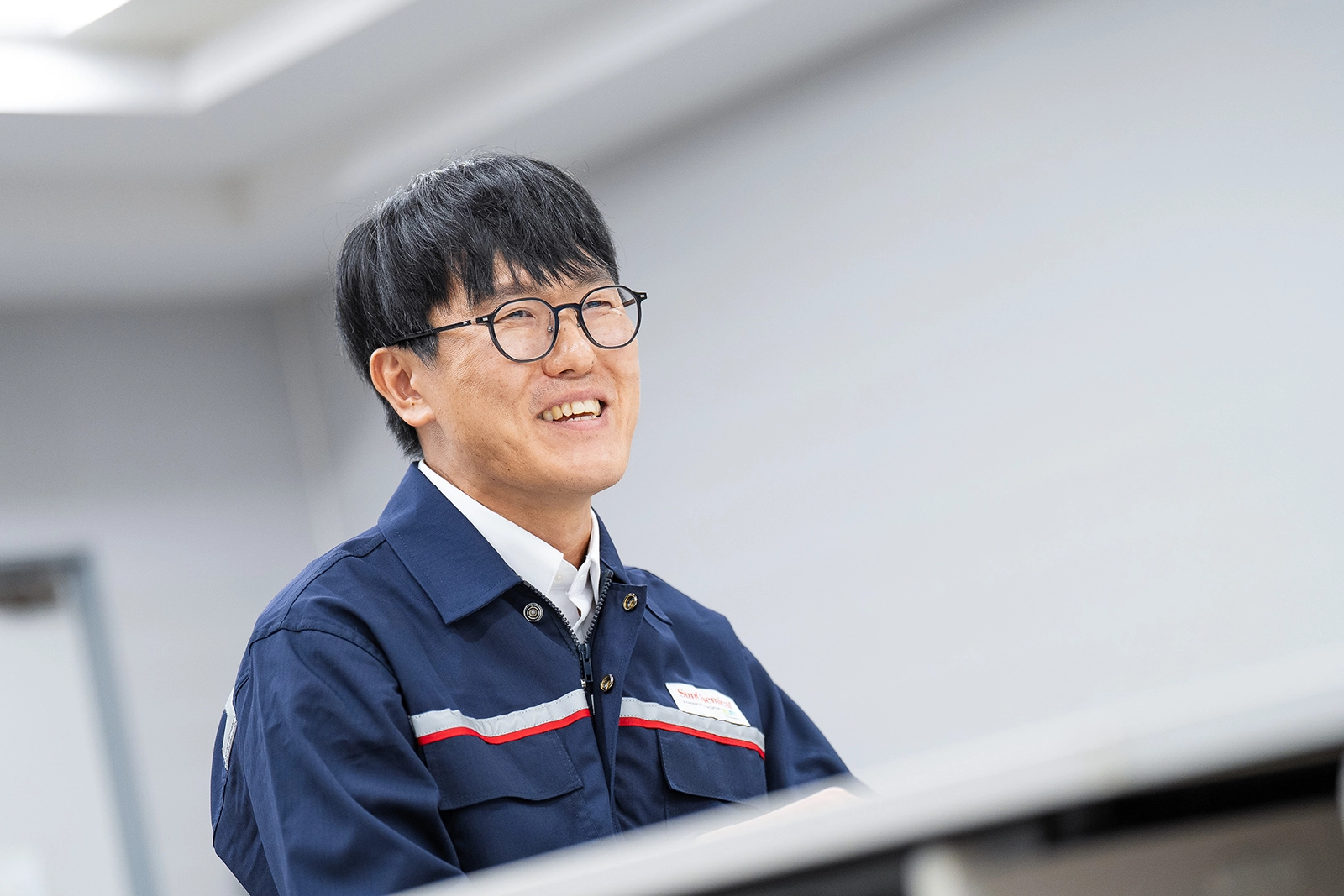
▲JungWoo Lee, Production Manager at Sun Chemical’s Ulsan Plant. A keen runner, he even participated in a local marathon with members of the Kashima Plant team during his stay in Japan.
Uno: Even after becoming part of the same group, at first, we really had little sense of what the other plant was like.
Lee: That’s true. I had never had an opportunity to visit Kashima, so honestly, I had no idea what facilities they had or what kind of people worked there.
Uno: In my case, there had been some communication, but only in writing. I would see messages in English from the Quality Assurance Department saying, “We received this request from overseas.” But that alone did not reveal the situation behind it. I could not see what challenges existed at the other site or who was struggling to solve them.
──So, the exchange program started not with technology sharing, but with the goal of getting to know each other’s workplaces. What were your first thoughts when you heard about it?
Uno: I was worried about whether my language skills would be enough to communicate subtle nuances. I didn’t have much experience studying abroad, either. But I knew exactly what I wanted to learn: how quality is managed, what products are made, how they are produced, and how the plant itself is operated. What about you, Lee-san?
Lee: To be honest, I had some reservations about taking part in a long-term assignment on my own. I have a family, and although I can communicate in English, I would not say I am highly fluent. Japanese was even more challenging. At the same time, I was excited. I had heard that Kashima had a new production line, and I wanted to see firsthand how it had been built and developed.
Working Side by Side: “The Challenges of Manufacturing Are Universal”
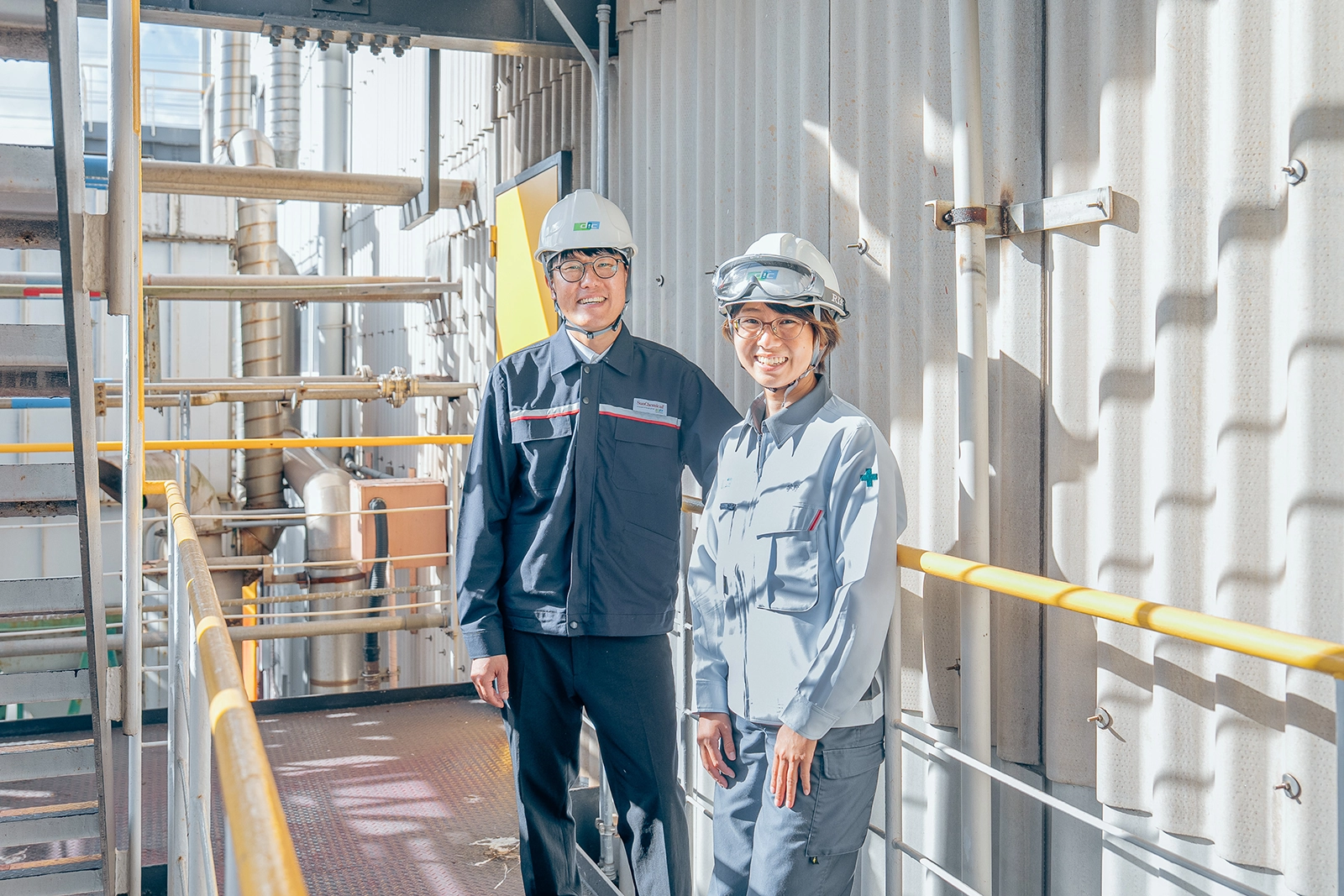
──Lee, you arrived in Kashima in August 2025, and Ms. Uno departed for Ulsan the following month. I understand that the schedules were deliberately arranged to overlap for the first month so that the two of you could spend time working together at the same site. Opportunities for employees working in manufacturing to undertake long-term training overseas are still relatively rare. How did you overcome the language barrier?
Lee: I wanted to get close not only to managers but also to people working on the shop floor, so I visited the work site many times. As is the case in Ulsan, not every technician speaks English, so at first we communicated using drawings and diagrams, gestures, and translation tools.
The moment I felt that I had grown closer to the Japanese team was during some work on the shop floor on a hot summer day. An unexpected issue occurred, requiring us to replace a part of equipment. We could not immediately find a contractor who could do the job, and we were short-staffed internally as well. In the end, we completed the work ourselves together with the site team. It was tough, but that was the moment I felt a real sense of connection.
Afterward, we had dinner and drinks together. That was the first time we actually talked about what kind of work I do in Ulsan. I feel that day became the turning point that helped break down all kinds of barriers between us.
Uno: The challenges of manufacturing are universal. Equipment failures and unexpected problems are unavoidable wherever products are made.
Lee: The basic process of making pigments is the same everywhere. Language skills are important, but they are not everything. When you work together on the same manufacturing challenges, there’s a lot you can understand about one another.
Uno: So it wasn’t nationality but professional expertise that became your common language.
Lee: I also attended many nomikai (informal after-work gatherings) with colleagues in Japan. There were four or five official ones, and I honestly lost count after that. I often invited people to dinner myself because I wanted to get to know them better. Spending time together outside work allowed me to experience the warmth and hospitality of my Japanese colleagues again and again.
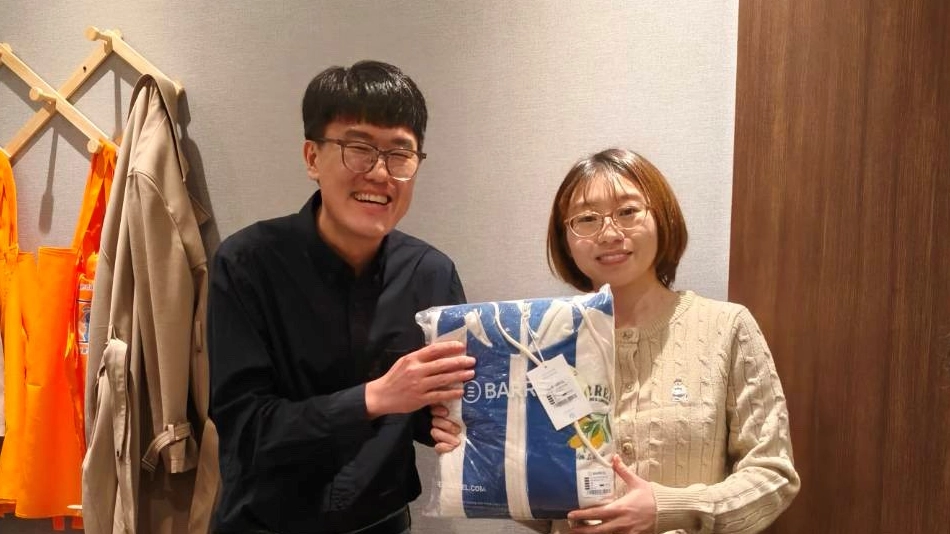
▲Team gathering during the exchange program.
Building Trust Beyond Work: Learning from Colleagues in Ulsan
Uno: For me as well, sharing meals became the starting point for building relationships. Even something as simple as the employee cafeteria was completely different from what I was used to in Japan.
Colleagues showed me how everything worked, and I think those small interactions gradually brought us closer.
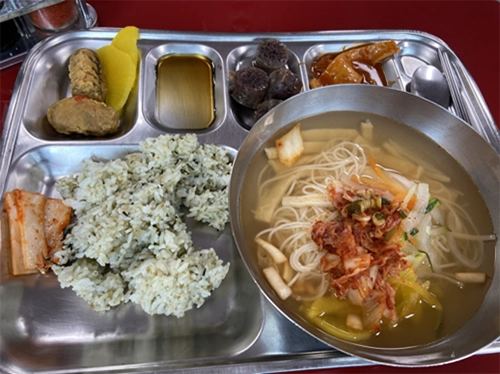
▲The employee cafeteria at the Ulsan Plant. Meals are self-served, and colleagues taught Uno how to do it when she arrived.
From there, we chatted casually, had coffee together, and spent time together outside work. It made me realize that some forms of trust can only be built beyond formal business relationships.
Lee: Did you learn anything through those interactions outside work?
Uno: Yes. There was a colleague close to my age whose desk happened to be near mine, who wasn’t involved in the exchange program. As we exchanged casual conversations every day, we gradually became friends. As we talked about work, I was impressed by that person’s seriousness and commitment. Seeing the ambition and professional mindset of someone from my own generation working in a different environment was incredibly inspiring.
Lee: That is exactly the kind of inspiration that you can’t get from work alone.
Uno: Another thing that left a strong impression on me was the sense of professionalism among the people at the Ulsan Plant working in a global environment. Beyond their focus on language skills, there is a shared mindset throughout the organization that each individual represents Ulsan.
Everyone participates in global meetings, and thinks about the role they should play within Asia as Ulsan’s representatives. As a result, decisions are made quickly. When something needs to be decided, the people present generally determine the direction on the spot. There is very little tendency to postpone decisions because someone is absent. I was particularly impressed by how seldom decisions were left for later.
This experience has influenced my own approach to work since returning to Japan. If someone asks me something, I answer in my own words, and I try to make decisions on the spot whenever possible. I believe that each of these attitudes contributes to true collaboration across locations.
When You Know the Person Behind the Name, Work Changes: Collaboration Recognized with the Top Award
──What other changes have you noticed since returning?
Uno: I have become the person at Kashima who knows the most about the Ulsan Plant, so colleagues now come to me whenever something comes up. In the past, I think people used to feel a little hesitant about reaching out to an overseas site. Today, people casually say, “Let’s ask Uno first.” People now feel much more comfortable reaching out. I’m genuinely happy that people rely on me, and it really boosts my confidence.
I have also noticed the impact of the exchange in our daily communication. At Kashima, we’ve started explaining our improvement activities and taking questions in English as well. Little by little, I’m beginning to see the results of the exchange program. How about in Ulsan?
Lee: Kashima Plant’s technical capabilities are outstanding. Although the production process itself is similar, the plant incorporates facilities that bring together extensive expertise in automation and production engineering. Being able to see how those systems are actually operated was extremely valuable. I was equally impressed by the organizational structure and operational methods used to maintain quality. There was a great deal we could learn from them.
That is why I proposed holding a presentation forum for younger employees every three months so that the knowledge gained through this exchange can be shared more widely. Other Ulsan employees who visited Kashima have also expressed a desire to incorporate what they learned there into their own work.
Uno: In fact, communication between the two plants on both technical and commercial matters has already increased as a result of this exchange.
Lee: Because site-level global communication has become much more active, we are now able to compare different approaches used at Kashima and Ulsan and identify which methods work best.
──In February 2026, this initiative received the top award in the Collaboration category of The DIC Way Vision & Core Values Awards, which recognize outstanding actions aligned with The DIC Way’s five Core Values.
Being the Kind of Person Others Want to Work With: Expanding True Collaboration Across National and Organizational Borders
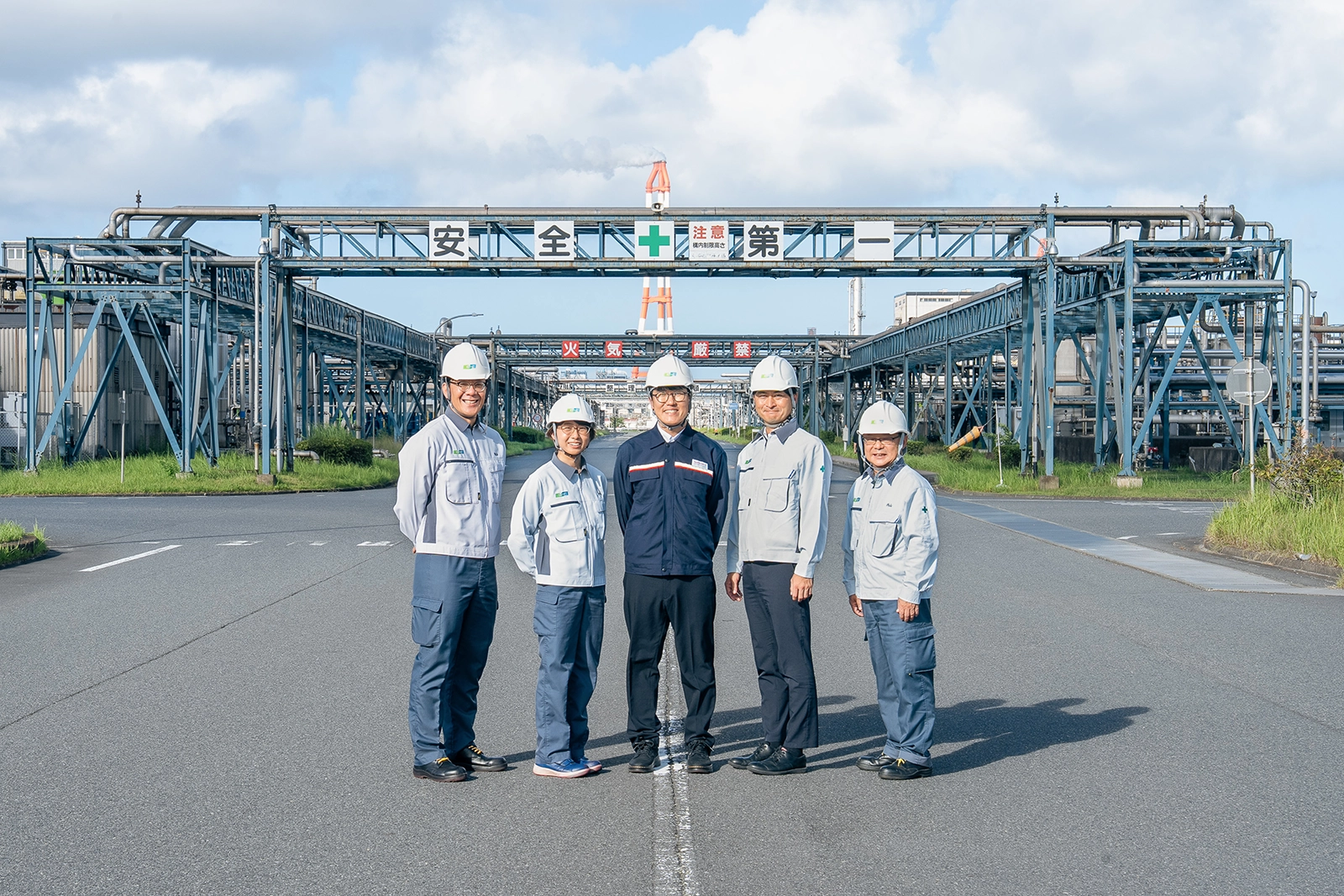
▲With colleagues who worked together at the Kashima Plant.
──Finally, now that the six-month exchange has come to an end, what are your honest reflections?
Lee: It was a tremendous opportunity for my career. After spending 15 years in Ulsan, I was able to broaden my perspective by experiencing new processes and facilities. But the greatest outcome was not technology or knowledge. It was the friendship that developed between Kashima and Ulsan.
Uno: Although our languages, cultures, and company histories differ, there’s still a shared sense of what it means to be “DIC.” To me, people in both Kashima and Ulsan are hardworking, dependable, and sincere. They are the kinds of partners you genuinely want to work with.
Lee: I feel the same way. One of The DIC Way Core Values is integrity, and I experienced that firsthand. People were open and willing to share information without holding anything back. I worked at the Ulsan Plant since the BASF days and later experienced the transition when the plant later became part of Sun Chemical within the DIC Group. Yet the core priorities of safety, quality, and customer satisfaction never changed. That is why I felt comfortable in Kashima from the start.
Uno: Even though the company name changed, the fundamental values remained. Based on this experience, what do you think is most important for collaboration across national and organizational borders?
Lee: As Ms. Uno said, I believe the most important thing is to be someone others feel they want to work with. Understanding one another, sharing information openly, and creating better outcomes together through collaboration. This program is one example of what that can look like.
When I spent some time at DIC headquarters in Tokyo, I had opportunities to speak with colleagues responsible for product and production strategy. What I realized then was that one of the pigment business’s greatest strengths is its global supply network, which enables us to provide stable supply to customers across Japan, Korea, and Europe. I see the exchange between Kashima and Ulsan as one of the initiatives that supports that strength.
That is why I do not want to keep what I’ve learned to myself. I would like to establish regular opportunities for teams to share successful practices and learn from one another. By learning how others approach their work and sharing these experiences with younger employees and new colleagues, I believe we can further strengthen connections across the entire group.
Uno: I do not want the relationships we’ve built through this program to end as a simple personnel exchange. Kashima and Ulsan each have different equipment, technologies, and ways of working. By sharing those strengths more proactively, we can achieve tangible results in quality improvement, productivity enhancement, and cost competitiveness. I believe collaboration can expand beyond pigment manufacturing into technology, production, and sales, enabling DIC and Sun Chemical to work more closely together to create new value.
Lee: I also see this exchange not as the goal, but as a starting point. Six months ago, we did not even know each other’s names or faces. Today, we can immediately reach out to one another whenever support is needed. By building on these connections, we can share our superior technologies and best practices, and work together to tackle challenges that neither plant could solve on their own. As more people across countries and sites become the kind of colleagues others want to work with, those connections can lead to tangible improvements and the creation of new business value. I believe it is only when we reach that point we achieve true collaboration across the entire group, including DIC and Sun Chemical.
