WATCHMaking the Invisible Visible
From the Unexpected to the Essential: A Scientist’s Career Journey Behind the Technology Powering Generative AI
Generative AI continues to advance at a remarkable pace. One of the technologies supporting its performance behind the scenes is DIC’s active ester-based epoxy curing agent.
Kazuo Arita, who was appointed the Fellow at DIC in October 2026, has spent many years researching and commercializing this technology, which helps reduce signal loss in high-speed communications. Although he has received numerous awards for his achievements, his career has been anything but straightforward.
Unexpected assignments. Research that did not progress as planned. Out of hundred ideas, only one or two succeed. Yet by tackling the challenges in front of him and steadily building both expertise and trust, Arita eventually helped develop a new technology that now supports the age of generative AI.
Arita's relentless journey in the field of R&D offers valuable insights into how setbacks can be transformed into opportunities and how professionals can create their own path toward the work they are truly passionate about.
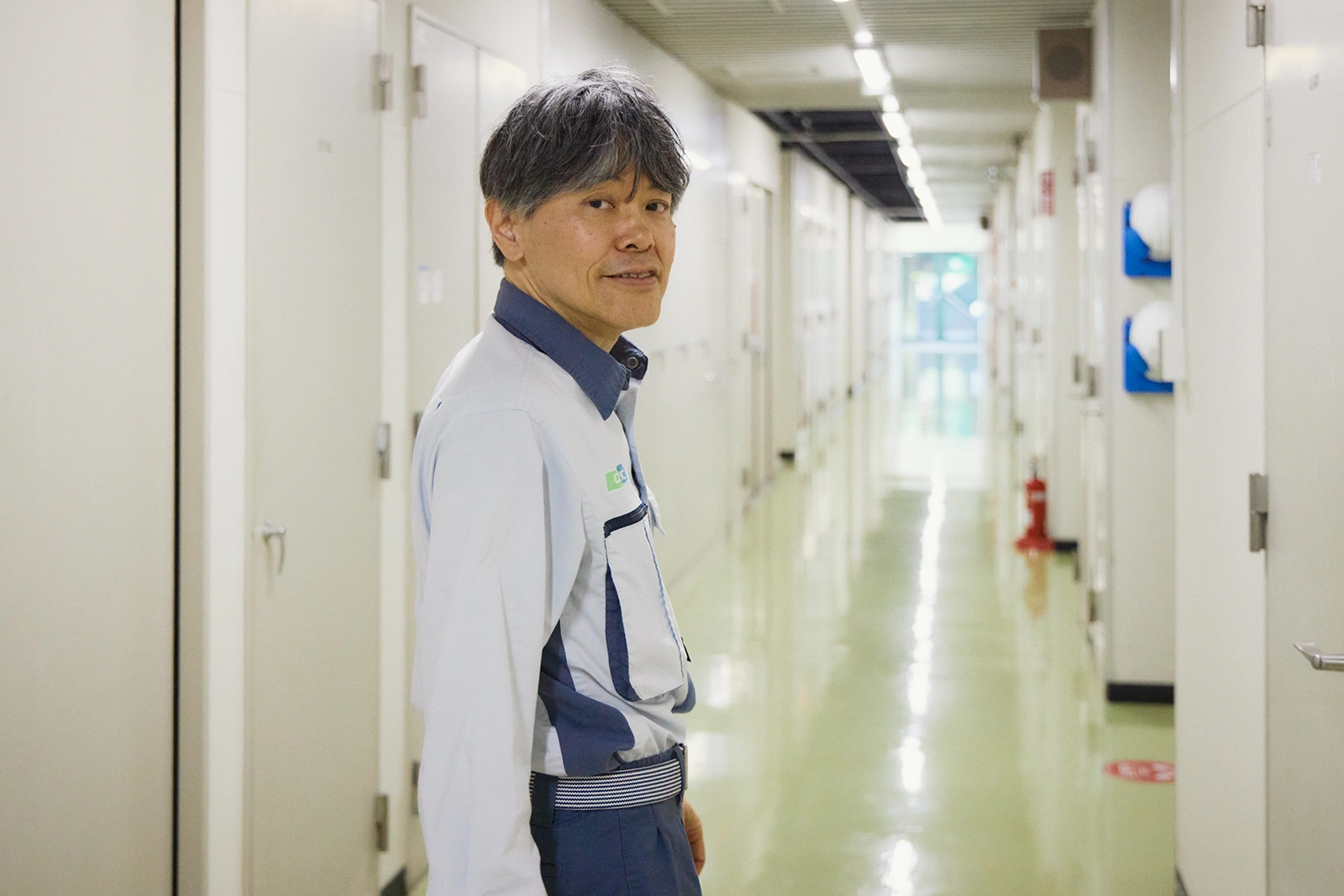
Kazuo Arita
Fellow, R&D Management Unit, DIC Corporation
Having joined Dainippon Ink and Chemicals, Inc. (now DIC Corporation) in April 1994, Arita has worked on the development of epoxy resin manufacturing processes, specialty epoxy resins for semiconductor encapsulation materials, and specialty epoxy resins and curing agents for package substrates. He is currently engaged in research and development of advanced heat-resistant network polymers at DIC’s Central Research Laboratories. He received a doctoral degree from Yokohama National University in 2015 and was appointed the Fellow at DIC in October 2026.
Persistence, Patience, and Steady Effort: How a Technology Supporting Generative AI Came to Life
— Before we talk about active ester-based epoxy curing agents, could you first explain what exactly is epoxy resin as a material?
Arita: Epoxy resin is a type of plastic known for its excellent adhesion, heat resistance, and electrical insulation properties. It is widely used in applications ranging from adhesives and coatings to electrical and electronic devices, automobiles, and aircraft.
One of its defining characteristics is that it hardens through a chemical reaction triggered by mixing the epoxy resin, known as the base resin, with a curing agent. You may have seen strong adhesives sold at home improvement stores that require mixing “Part A” and “Part B” before use. Those products are familiar examples of epoxy resin systems.
In electronics, epoxy resins have long been used in the green printed circuit boards found in computers and other devices. Epoxy resin, which has good electrical insulating properties, serves as an insulating material, preventing copper circuits from coming into contact and causing a short circuit.
▲Epoxy resin, valued for its heat resistance and adhesive properties, quietly supports a wide range of industries, from electronic circuit boards to automotive components.
— Why was a new curing agent needed for epoxy resin?
Arita: Conventional epoxy resins tend to accumulate electrical charge. In electronic devices designed for high-speed communications, this can cause signal loss during data transmission.
Think about how static electricity builds up in the human body during winter, causing a small shock when you touch something. It’s a simplified analogy, but something similar can occur inside circuit boards of electronic devices.
To address this challenge, DIC decided to use active esters in the curing agents combined with epoxy resins. This approach reduces the tendency of the material to accumulate electrical charge while preserving the inherent processability and adhesive performance of epoxy resins. By minimizing signal transmission loss and providing excellent heat resistance, the technology is now being used in circuit boards for 5G communications equipment and generative AI systems.
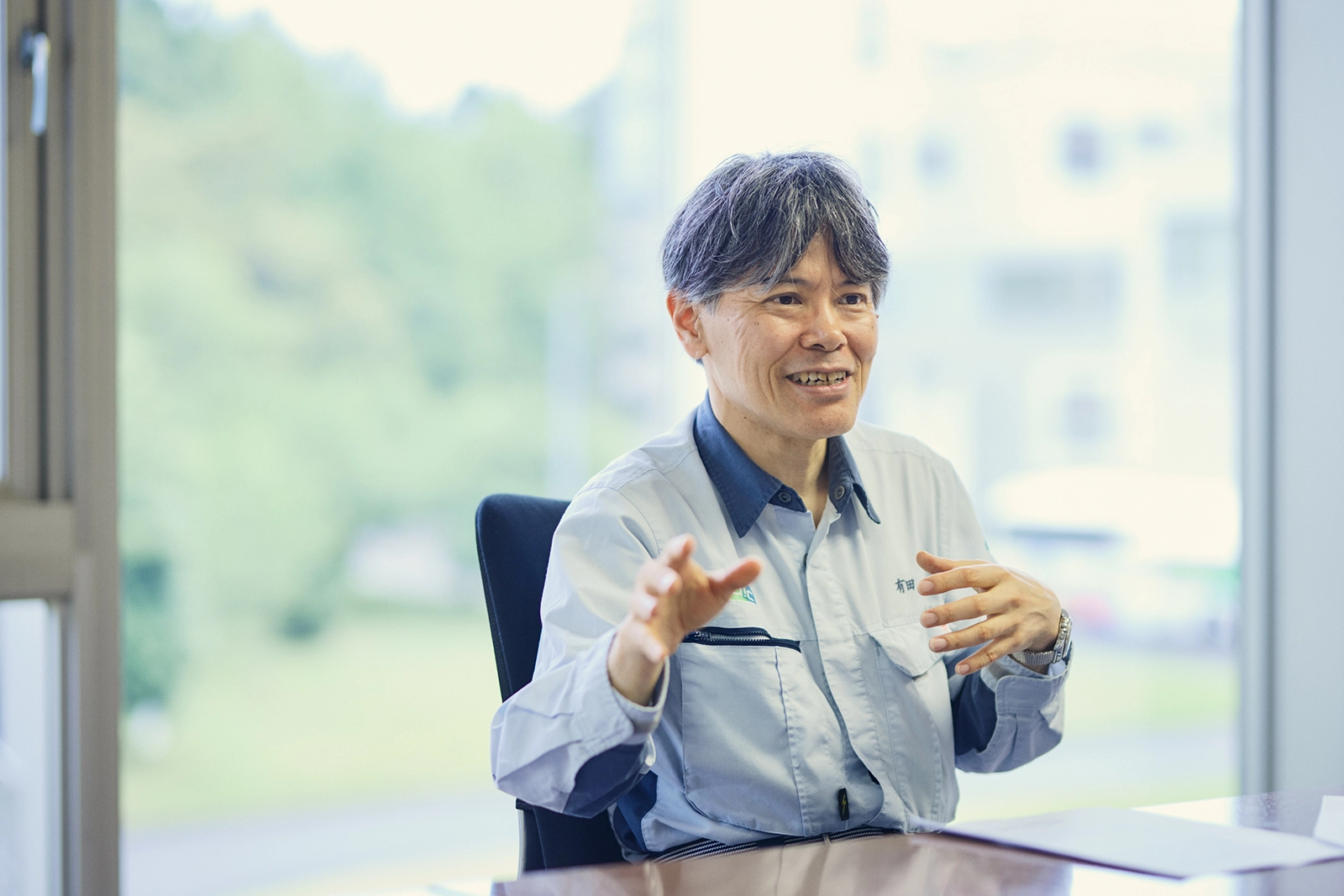
— Was the use of active esters in curing agents a technology originally invented by DIC?
Arita: No. The technology itself was first reported by a university researcher in 1991. However, the active esters available at the time had poor solubility in solvents and also lacked sufficient durability. Many companies began researching the technology but eventually abandoned their efforts. DIC, however, continued its work patiently and persistently from around 2000 onward.
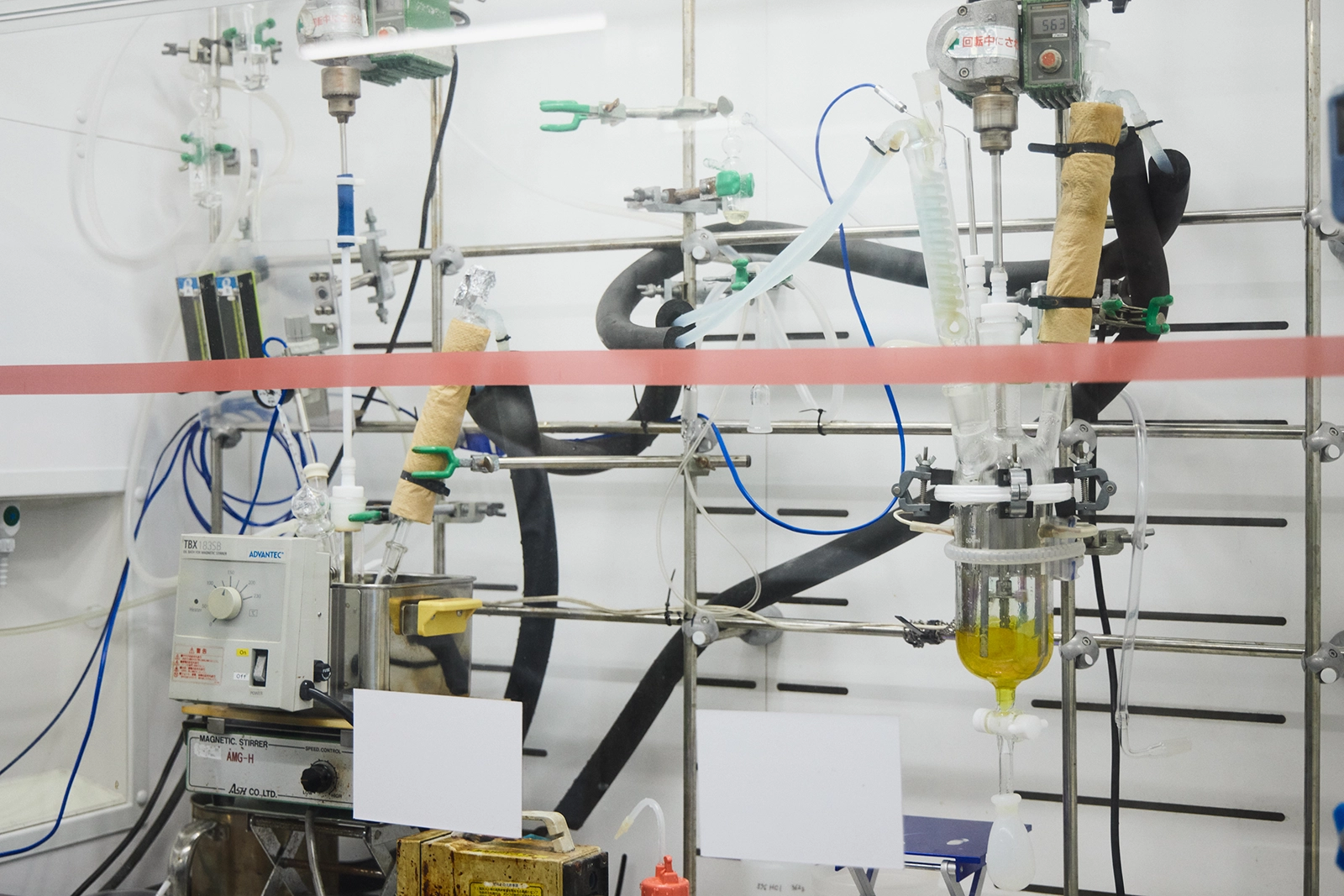
I took over the project in 2008. At the time, the material could be produced successfully in laboratory flasks, but we could not achieve the same quality in the large-scale reactors used at the factory. My first assignment was to establish a manufacturing process capable of supporting mass production.
Later, I came up with a new molecular structure with significantly higher performance than the original material. The first generation of active esters was suitable for high-speed communications circuit boards, but it could not meet the performance requirements of circuit boards used in generative AI applications. My younger colleagues took that idea and subsequently developed the technology for mass production. Thanks to their efforts, as generative AI becomes increasingly widespread, the range of applications for this technology continues to expand.
From “Why Me?” to Earning Trust and Freedom to Innovate
— What did you think when you were first assigned to the active ester project?
Arita: To be honest, my first reaction was, “Why am I the one being assigned to this?” (laughs).
I had been working with epoxy resins since joining the company, which was one reason I was selected for the project. However, I did not have extensive knowledge of active esters at the time.
On top of that, the technology worked in the laboratory but had not yet been commercialized at the factory scale. Frankly, it felt like I had been given a rather thankless assignment.
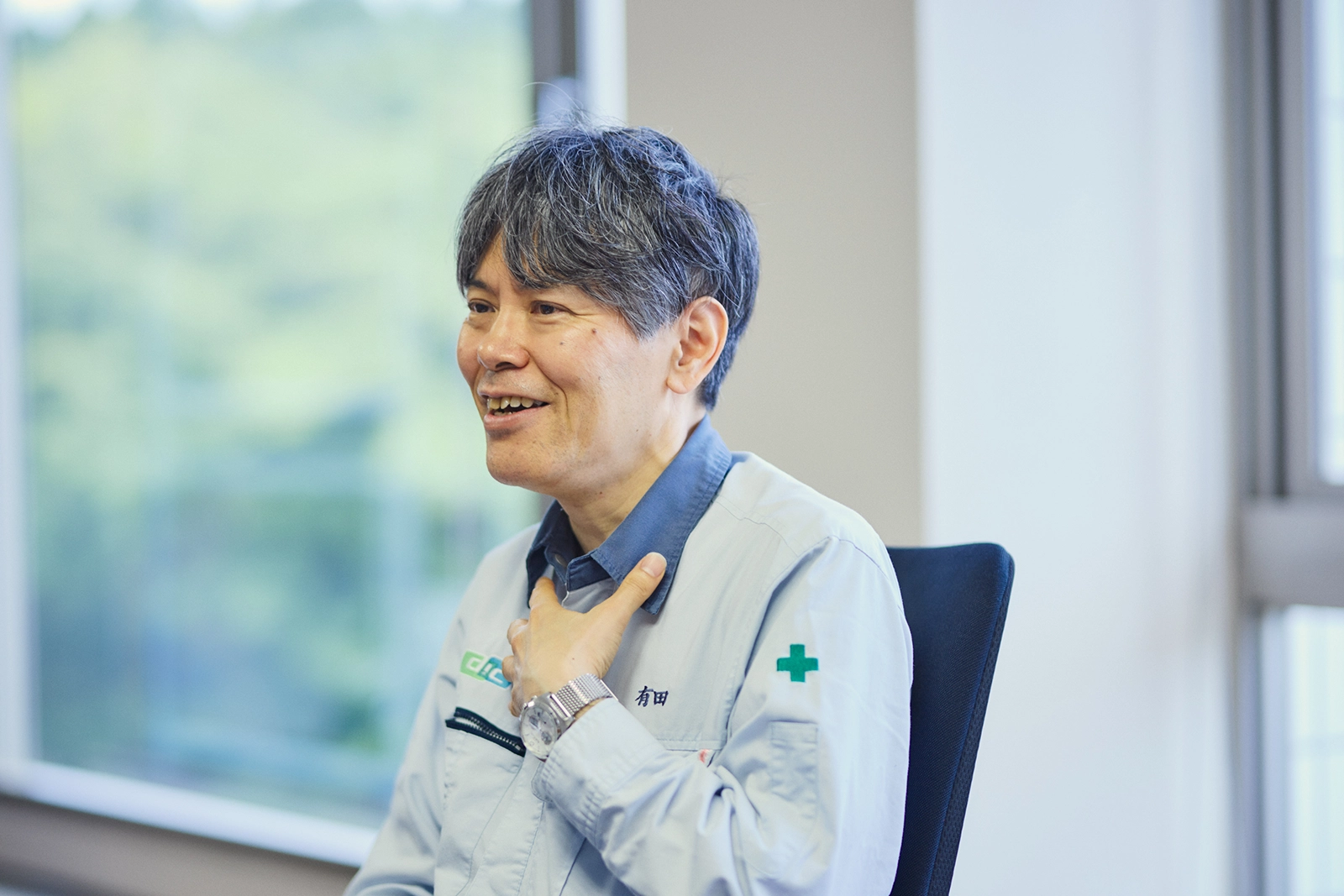
— Was the path toward commercialization as difficult as it sounds?
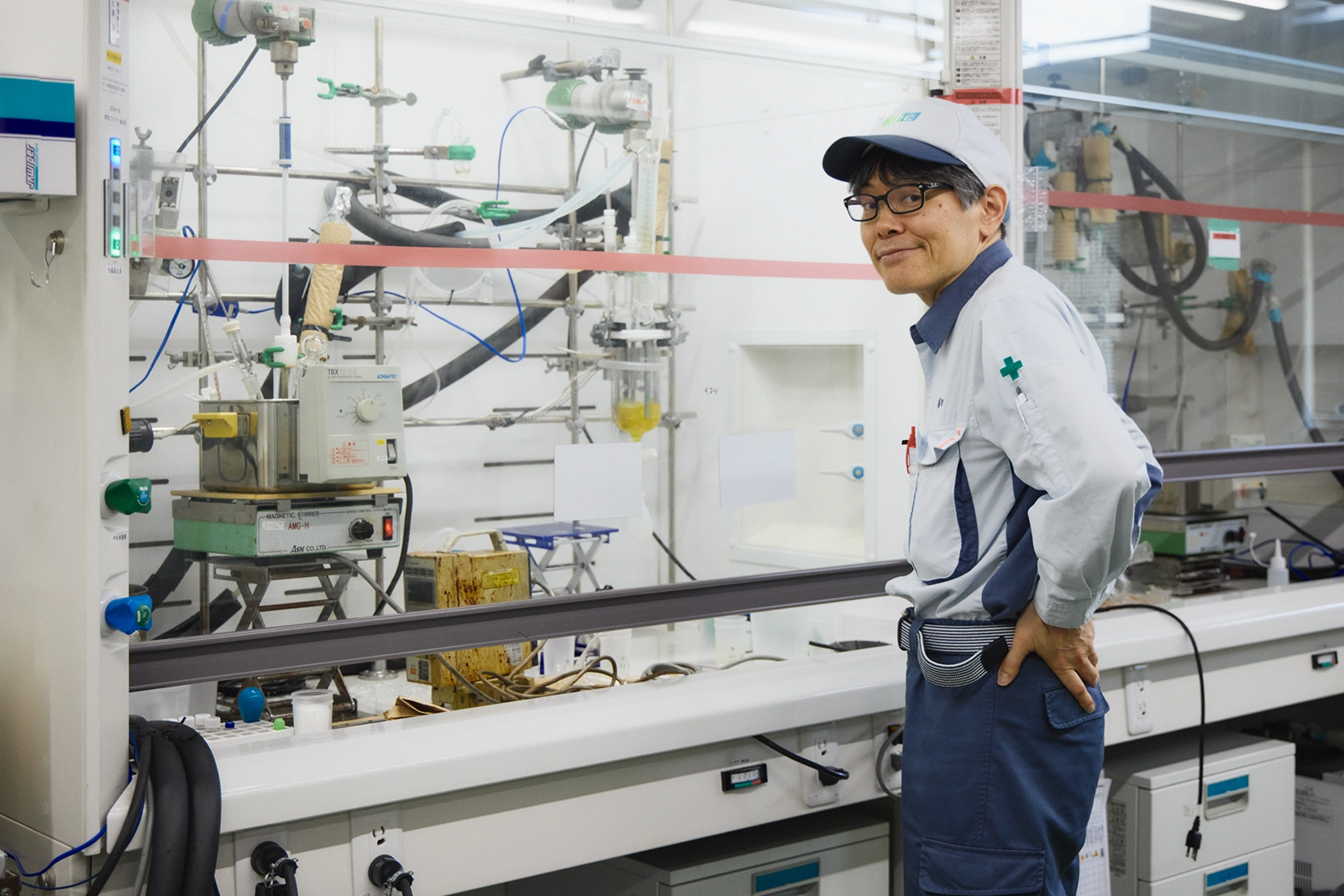
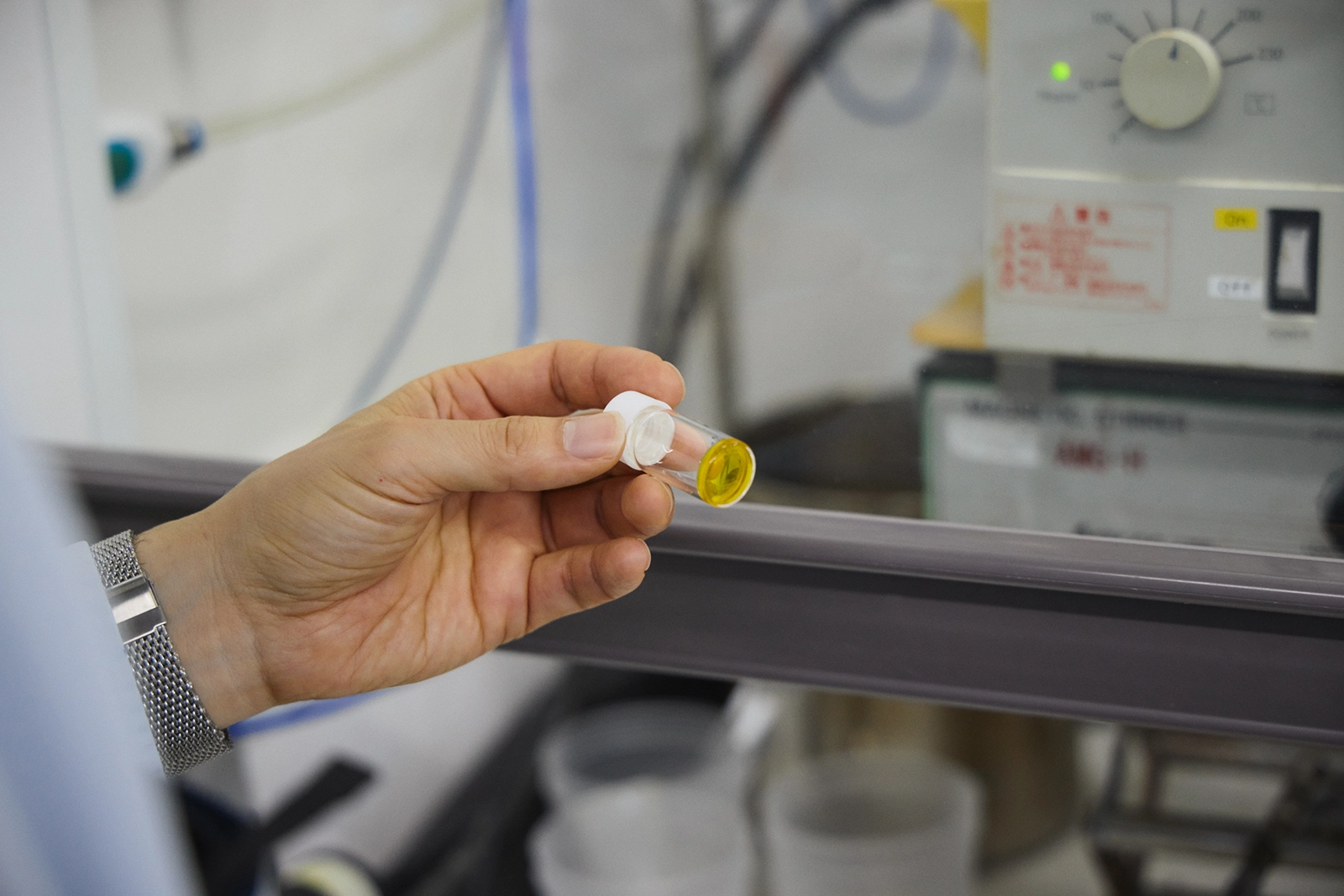
Arita: It was full of challenges. One step of the manufacturing process required dissolving the product in oil while dissolving the impurities into water to separate them.
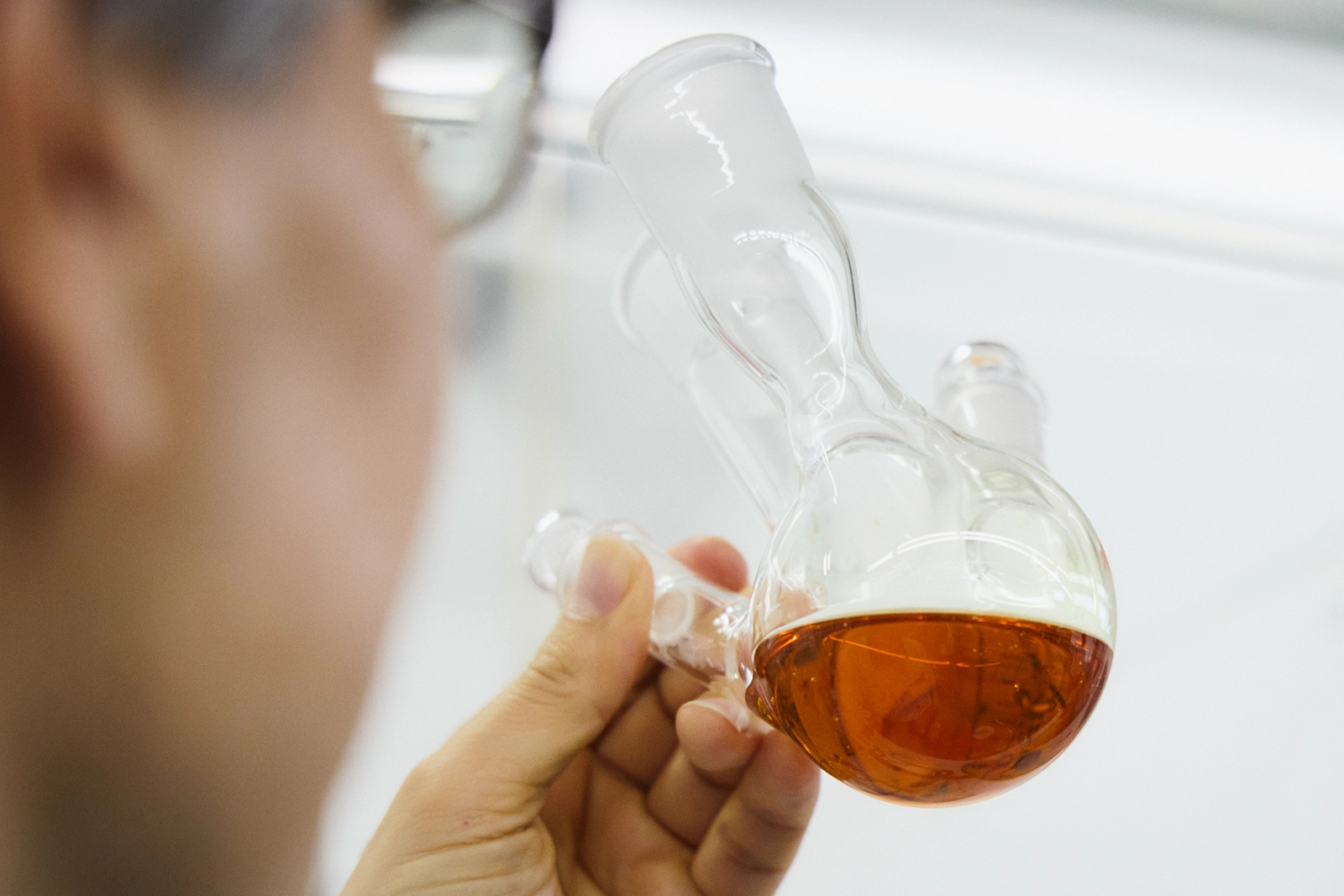
With active esters, however, the water and oil remained mixed together and do not separate easily. The process worked in a small laboratory flask, but we were unable to reproduce it in a 700-liter reactor at the pilot plant.
Since I had no other choice, I came up with a workaround of separating the contents into drums and left them for three or four days. Once the water and oil separated naturally, we transferred the material back into the reactor.
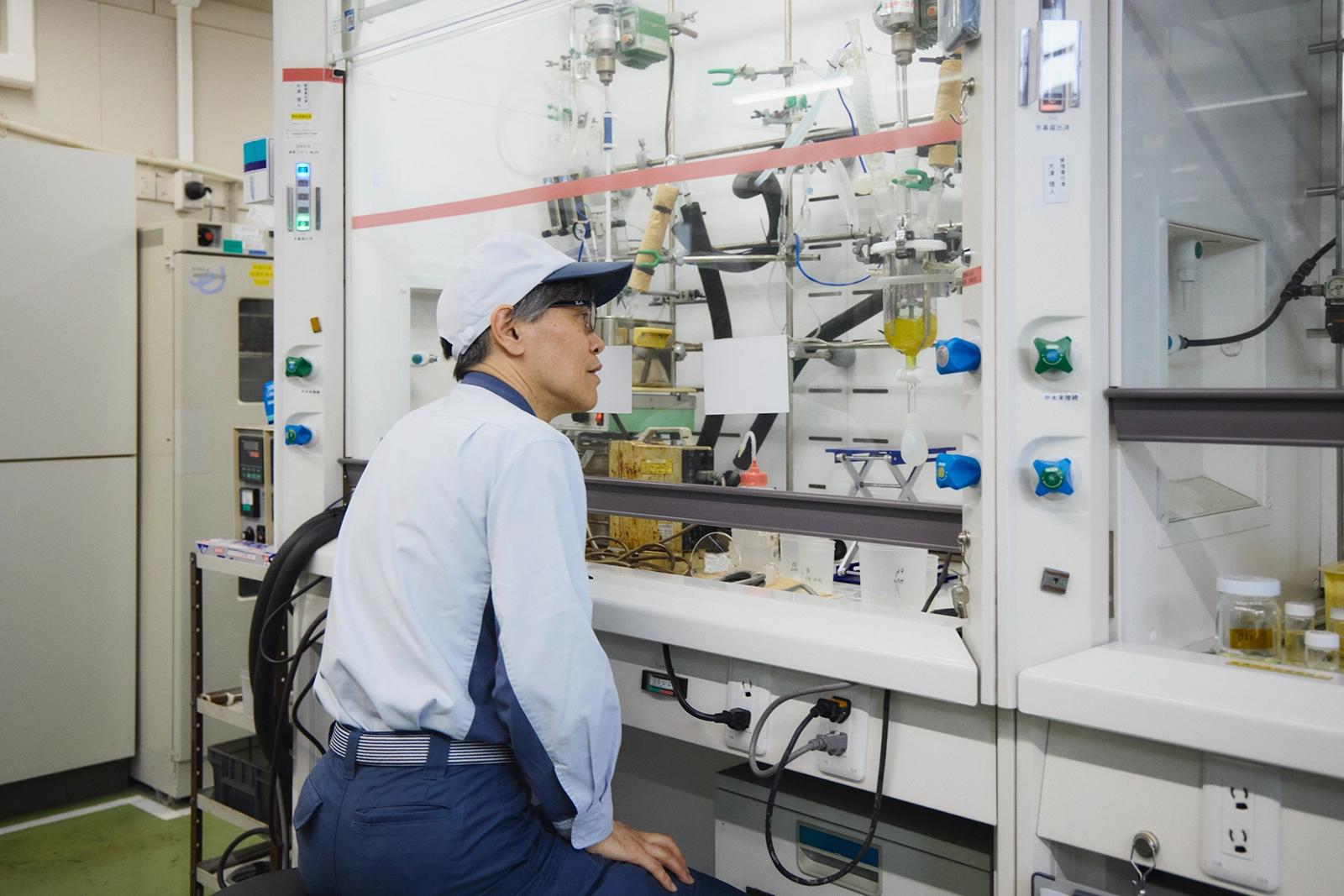
The manufacturing team had to actually do this work. Feeling a bit guilty, I often put on a hard hat and joined them in the work myself. Even then, things often did not go as planned, and there were moments when I was tempted to give up, thinking, “There’s no way this can ever be mass-produced!”
— What kept you from giving up?
Arita: The more I worked with active esters, the more convinced I became that they offered capabilities unavailable in conventional materials. I developed a strong determination to bring the technology into practical use, no matter what it took.
Another major turning point came when I realized similarities between the manufacturing processes I had worked on for epoxy resins and those required for active esters.
For many years, I had been involved in developing processes for producing epoxy resins more efficiently and with consistent quality. By applying that knowledge to active esters, I was able to identify solutions that eventually overcame the challenges involved in mass production.
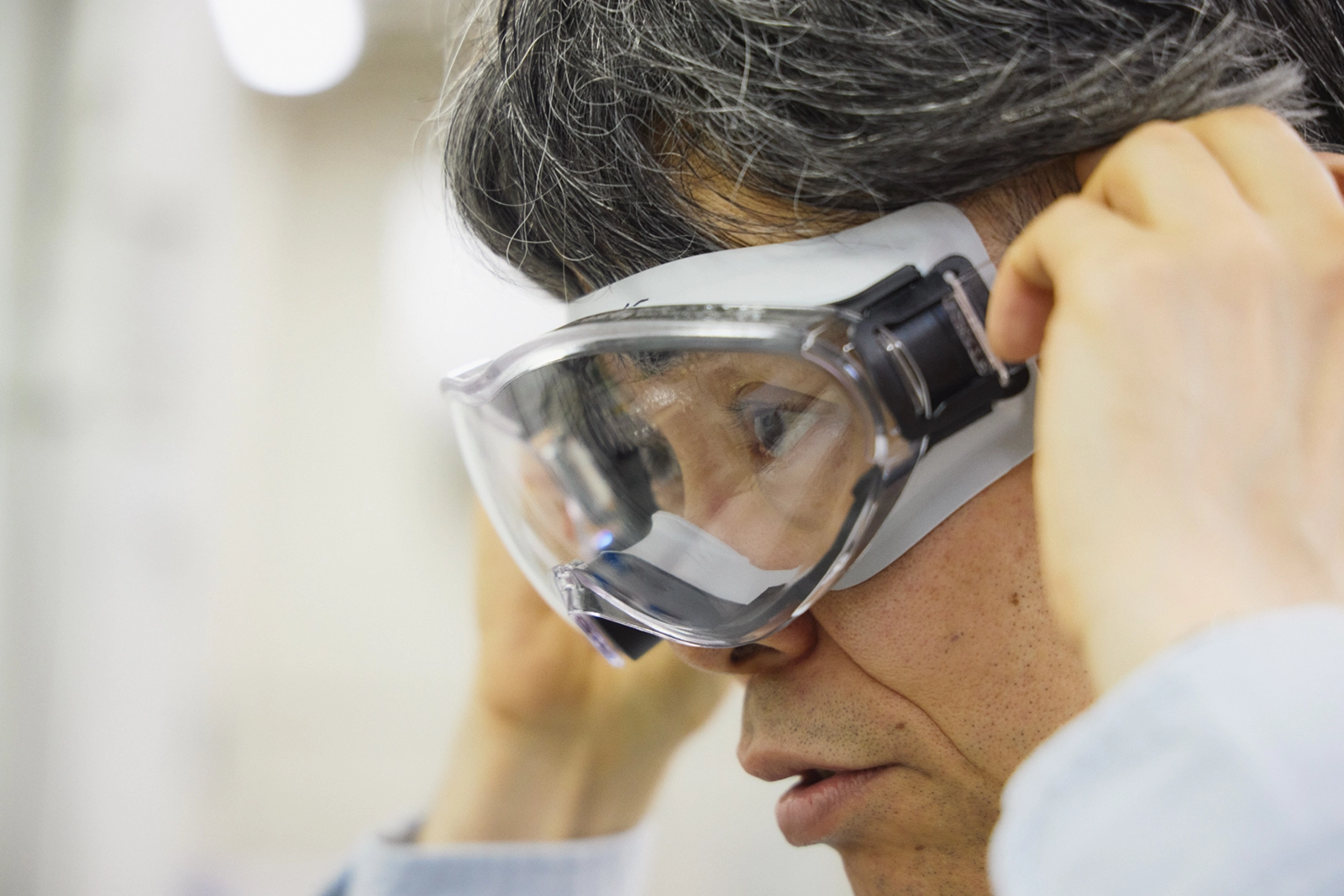
— People often become discouraged when assigned work they did not choose. Yet such work may also lead to future success and career opportunities, right?
Arita: Yes. The truth is that very few people begin their careers doing exactly what they want to do from the start. What matters is giving your best to the work entrusted to you, delivering results that exceed expectations, and earning the trust of those around you.
I’m not trying to preach an old-fashioned lesson about simply enduring hardships. Rather, I believe that trust and a certain degree of autonomy are essential for researchers who want to achieve meaningful results.
When people trust you, they are more likely to listen to your ideas, and you will gain a great deal of autonomy. You will be able to propose what you believe is right and voice objections if you question a particular policy.
The development of the new molecular structure I mentioned earlier was a perfect example of what became possible through that autonomy. Rather than stopping at the mass production of active esters, I wanted to add an original idea of my own. That desire led me to begin developing a new generation of materials. By steadily working on the tasks in front of me, I eventually earned the opportunity to pursue the challenges I had truly wanted to take on.
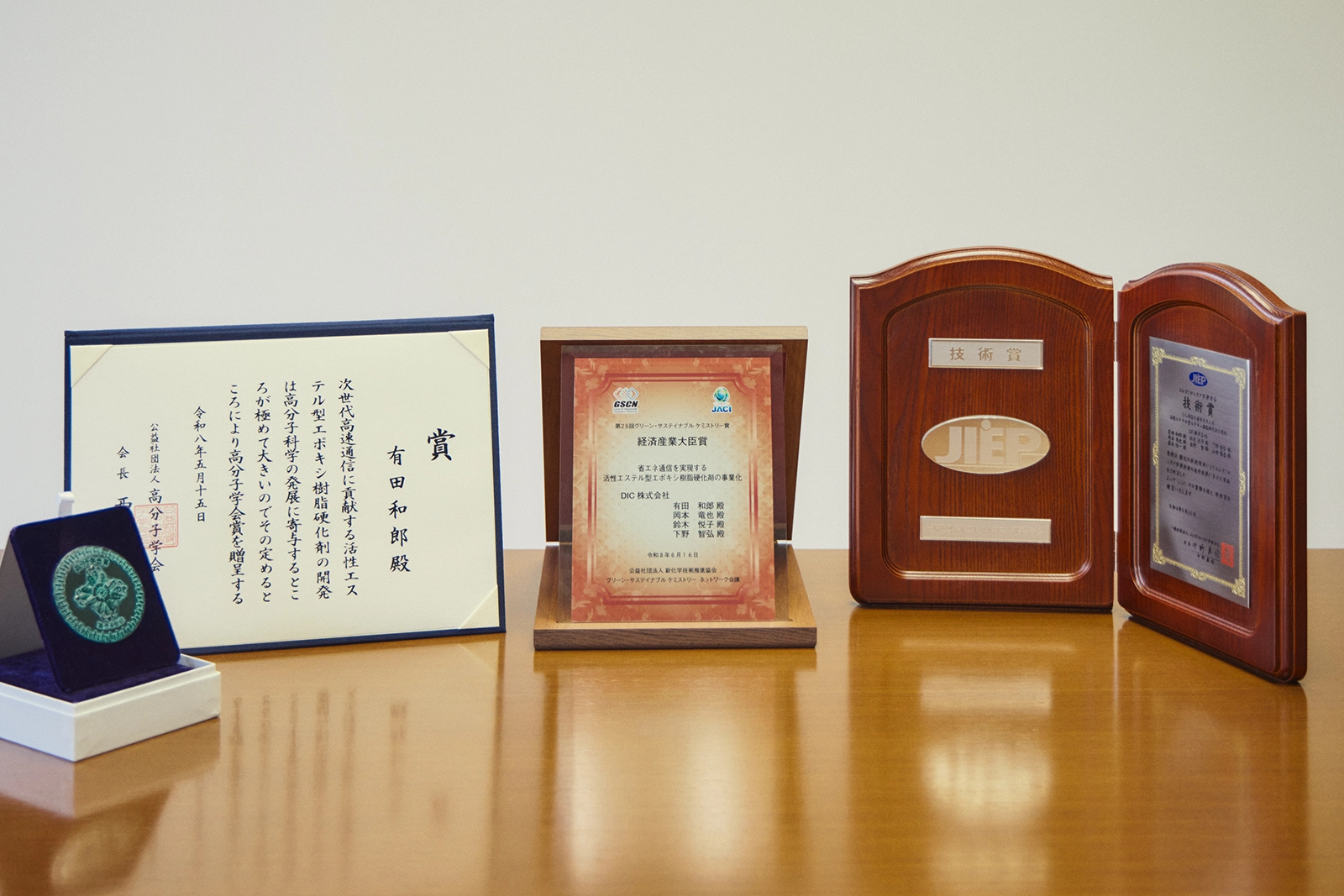
▲Certificates, medals, and plaques for the 2025 SPSJ Award for Technical Development, the 25th GSC Award (METI Minister’s Award), and the 2021 JIEP Technical Award.
“I’m Not a Genius, So I Learn by Building on What Already Works”: Arita’s Approach to Finding Breakthroughs
— When new ideas are hard to come by, how do you look for a breakthrough?
Arita: When I find myself stuck, I usually try four things: applying an existing idea somewhere new, modifying it, turning a conventional approach around, or combining two or more ideas. I look for technologies or knowledge that can serve as models and try applying them in a different field. I imitate them while changing certain elements, challenge conventional assumptions, or combine multiple ideas to create something new.
At the heart of all these processes is imitation. I’m not a genius, so I can’t simply start with a blank canvas and create something entirely new. I need to find things I can learn from and continually expose myself to high-quality input.
— So, in order to challenge conventional wisdom, you first need to understand it.
Arita: Exactly. The theories proposed by leading researchers and the methods developed through the experience of those who came before us have already been tested by countless people. The key to a breakthrough may exist somewhere beyond those established paths.
At the same time, if you don’t understand methods regarded as conventional wisdom, you won’t recognize what lies outside them. It may sound contradictory, but I believe both are necessary: steadily accumulating knowledge and experience while also being willing to question what conventional wisdom suggests.
Of course, doing the opposite does not guarantee success. In my own experience, even when I come up with one hundred ideas, perhaps only one or two prove successful. Most fail. That’s precisely why I make a point of trying them at least once. Even so, I believe that the places most people avoid because they seem unlikely to succeed may hold possibilities that no one has discovered yet.
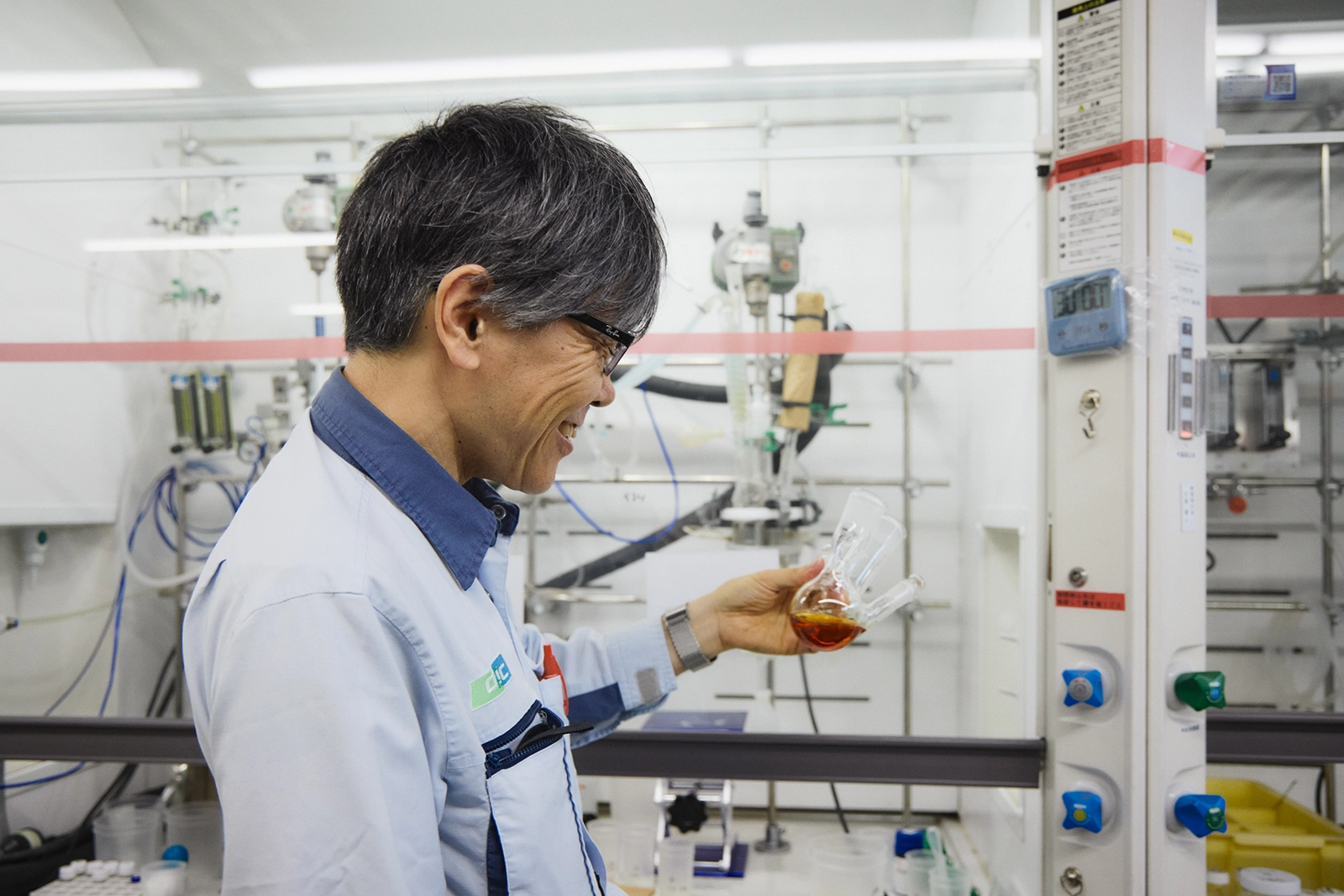
— What kinds of input help you to come up with new ideas?
Arita: Of course, I read academic papers and study technologies accumulated within the company, but I also feel that even in everyday life, I’m unconsciously looking for things that might inspire research ideas.
— Can you share an example of something you encountered in everyday life that led to a new idea?
Arita: Plastic models, for example. I’ve enjoyed building them since I was a child, and I still do occasionally.
Did you know that some modern robot model kits are extremely sophisticated, designed to give their joint a much wider range of movement? Some enthusiasts even modify them using flexible, wire-like materials for the skeleton, allowing the joints to move freely. Looking at those designs once made me wonder, “What would happen if we used more flexible materials to form the links in chemical bonds?”
That’s why I make a habit of writing down ideas as soon as they occur to me. Sometimes chemical structural formulas even appear in my dreams, so I keep a notebook and pencil next to my bed. (laughs)
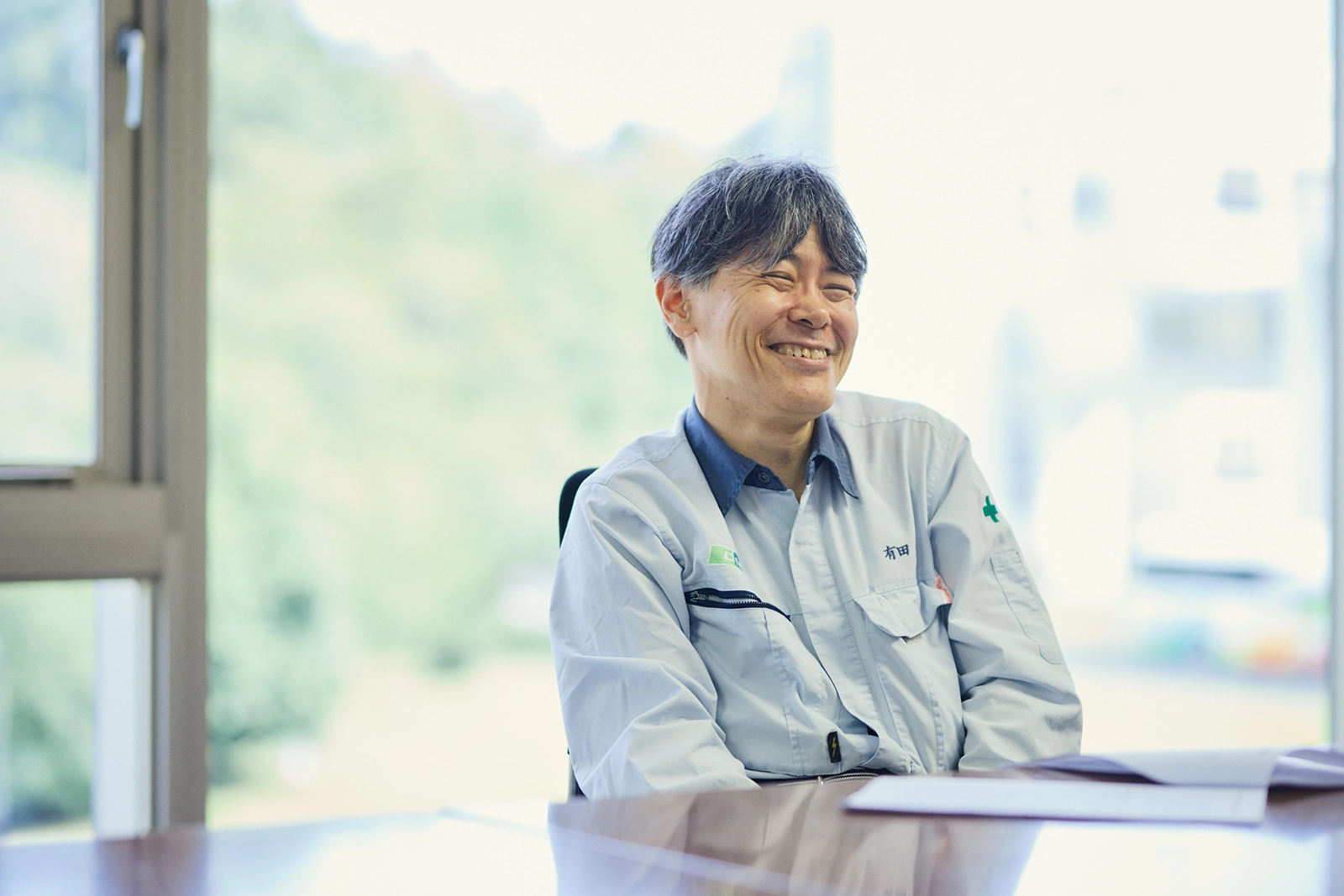
A Single Photograph That Sparked a New Challenge: Recycling
— What kind of research are you working on today?
Arita: I’m currently working on creating new possibilities for epoxy resins, which have traditionally been difficult to recycle. Once conventional epoxy resins cure and harden, they cannot return to their original state. Their durability and heat resistance are major advantages, but at the same time, these characteristics make them difficult to recycle and reuse for other applications
To address this challenge, we developed a fundamental technology that allows cured epoxy resins to change shape and be reused while maintaining their durability. Although commercialization has not yet been achieved, this technology has the potential to challenge the conventional assumption that epoxy resins cannot be reused once cured.
— What inspired you to pursue recyclable epoxy resins?
Arita: It began with a photograph I saw in a newspaper article around 2020. The image showed people in Ghana burning electronic waste in an effort to recover valuable metals.
At the time, active ester-based epoxy curing agents, which I had helped develop, were beginning to gain wider adoption as a material for high-speed communication equipment. I felt a strong sense of excitement knowing that our materials were contributing to technological progress.
However, when I saw that photograph, I felt as though I had been confronted with the ultimate destination of the fruits of my research. Our materials were not necessarily among the waste being burned in Ghana, but the contrast with the excitement I had been feeling was so shocking that I remember tears welling up in my eyes.
Until then, my focus had been almost entirely on creating high-performance materials and advancing technology. Recycling had never been a major interest of mine. In fact, I may have viewed it negatively because of the enormous efforts and cost involved. But that photograph changed my perspective and made me see the issue as something I needed to address personally.

— Does that mean practical application is close at hand once the underlying technology is complete?
Arita: Unfortunately, it’s not that simple. Recycling cannot be achieved just by developing the material itself. Used products must be collected, sorted, and processed so they can be reused. Without that entire system in place, no matter how reusable the material itself may be, it won’t actually circulate within society.
We need to involve many different companies and organizations and addressing issues that technology alone cannot solve. We’ve established the fundamental technology, but right now we’ve run up against the next barrier beyond that. Still, that doesn’t mean we’ve stopped the research. We continue our work on recycling while watching the trends in the society, and at the same time, we’re exploring ways to apply the technologies we developed to achieve other performance goals.
Rather than focusing on a single possibility, we build upon what we have learned and expand into new areas. That’s something I've done repeatedly throughout my career. Today, I’ve entrusted the recyclable epoxy resin project to younger researchers while I take on new research challenges of my own.
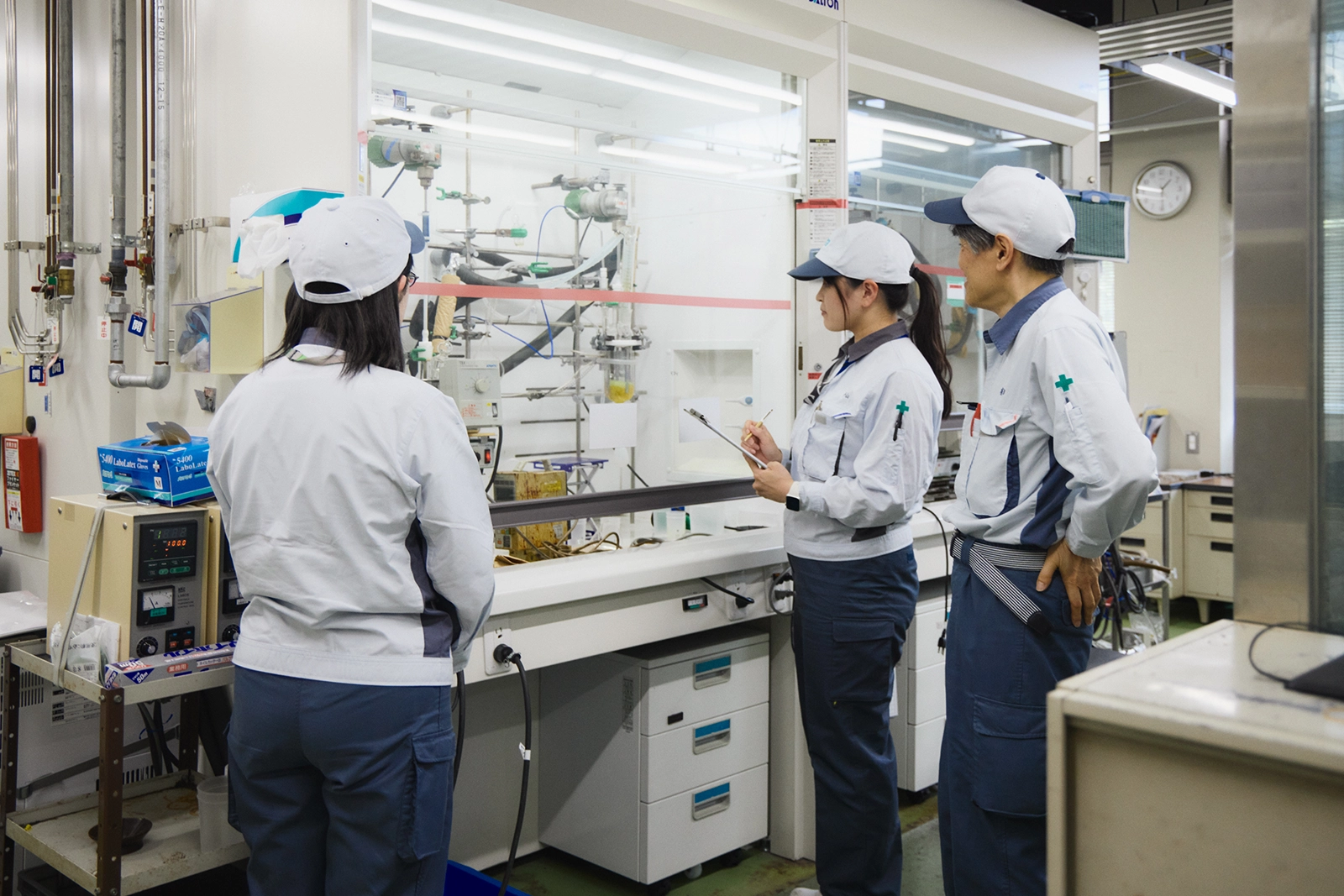
Helping the Next Generation Discover That Failure Is Never Wasted
— When mentoring younger researchers, what do you keep in mind?
Arita: When younger researchers are struggling after an unsuccessful experiment, I don’t simply tell them, “You’ll do better next time.” Instead, I try to offer specific hypotheses and perspectives based on what we know at that moment. For example, I might say, “This didn’t work for the intended application, but if you look at it from the opposite perspective, perhaps it could work for a different application.”
As researchers, we must avoid fearing failure more than necessary and instead use what we learn from it to move on to the next challenge. That’s why I want younger team members to experience many moments when they realize, “That failure wasn’t wasted after all.” That’s how I built my own career as well.
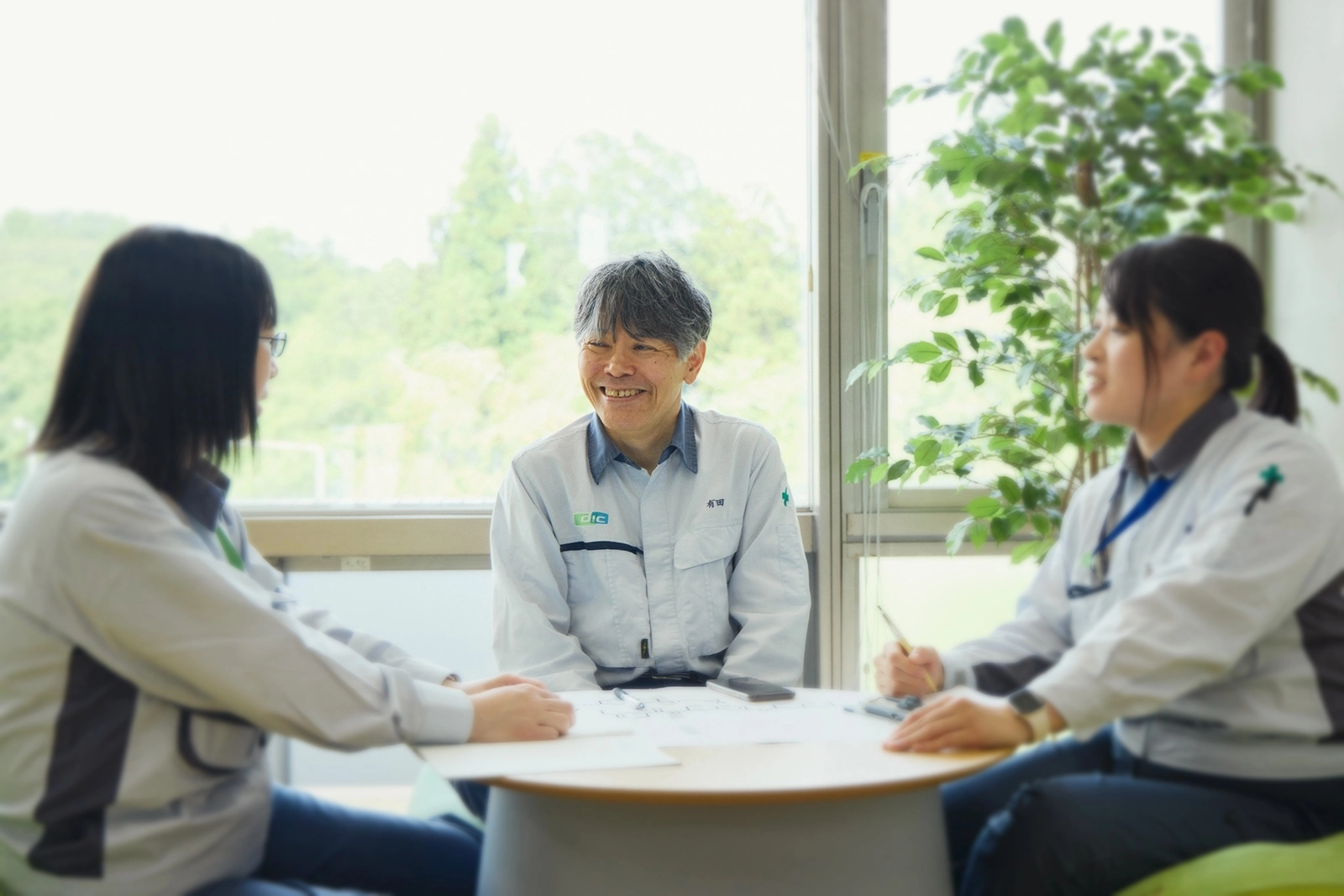
▲Discussion among researchers at DIC’s Central Research Laboratories.
— Looking ahead, how would you like to continue your work as a researcher?
Arita: Throughout my career, I have benefited from the knowledge and expertise of many people, including university mentors, senior colleagues, specialists in manufacturing, sales, and quality assurance, as well as younger researchers. I’ve received those insights from others and carried them forward. Now, I want to pass on what I’ve gained to the next generation of researches.
That doesn’t mean I want them to follow my methods exactly. Some people enjoy experimenting with every new idea that comes to mind, as I do. Others excel at carefully building up analyzing data. I'd be happy if each person could leverage their own strengths, add their own ideas to the technologies they inherit, and carry them forward even further.
As for me, I intend to keep working at the forefront of research. Whether I’m 60, 70, or even 80 years old, I hope to remain the kind of scientist who is always eager to try something new and explore the next possibility.