WATCHMaking the Invisible Visible
Bringing Many Voices Together to Find One Answer: The Story Behind DIC’s TOKYO PACK 2026 Exhibition
Eight departments. Twenty-six exhibition themes. Different products, different customers, and different perspectives. How could they all be brought together into a single proposal from DIC? For nearly a year, Mizue Iwasaki and Xin Zhao of the Business Planning Department in DIC’s Packaging & Graphic Business Group worked to find the answer.
DIC participated in TOKYO PACK 2026, one of Japan’s largest international packaging exhibitions under the theme “Enveloping Value, Creating the Future”. By combining the DIC Group’s diverse products and technologies with the strengths of its partner companies, DIC presented comprehensive packaging solutions designed to address customer challenges. Highlights at the exhibition include hands-on technology experiences using augmented reality and live demonstrations developed in collaboration with partner companies.
Some colleagues initially expressed concerns about how they could take on the project when their regular responsibilities already kept them busy. What Iwasaki and Zhao set out to accomplish over the course of a year, however, was far more than simply planning and running a trade show. This article takes a look behind the scenes of DIC’s TOKYO PACK 2026 exhibition and explores how they made it a reality.
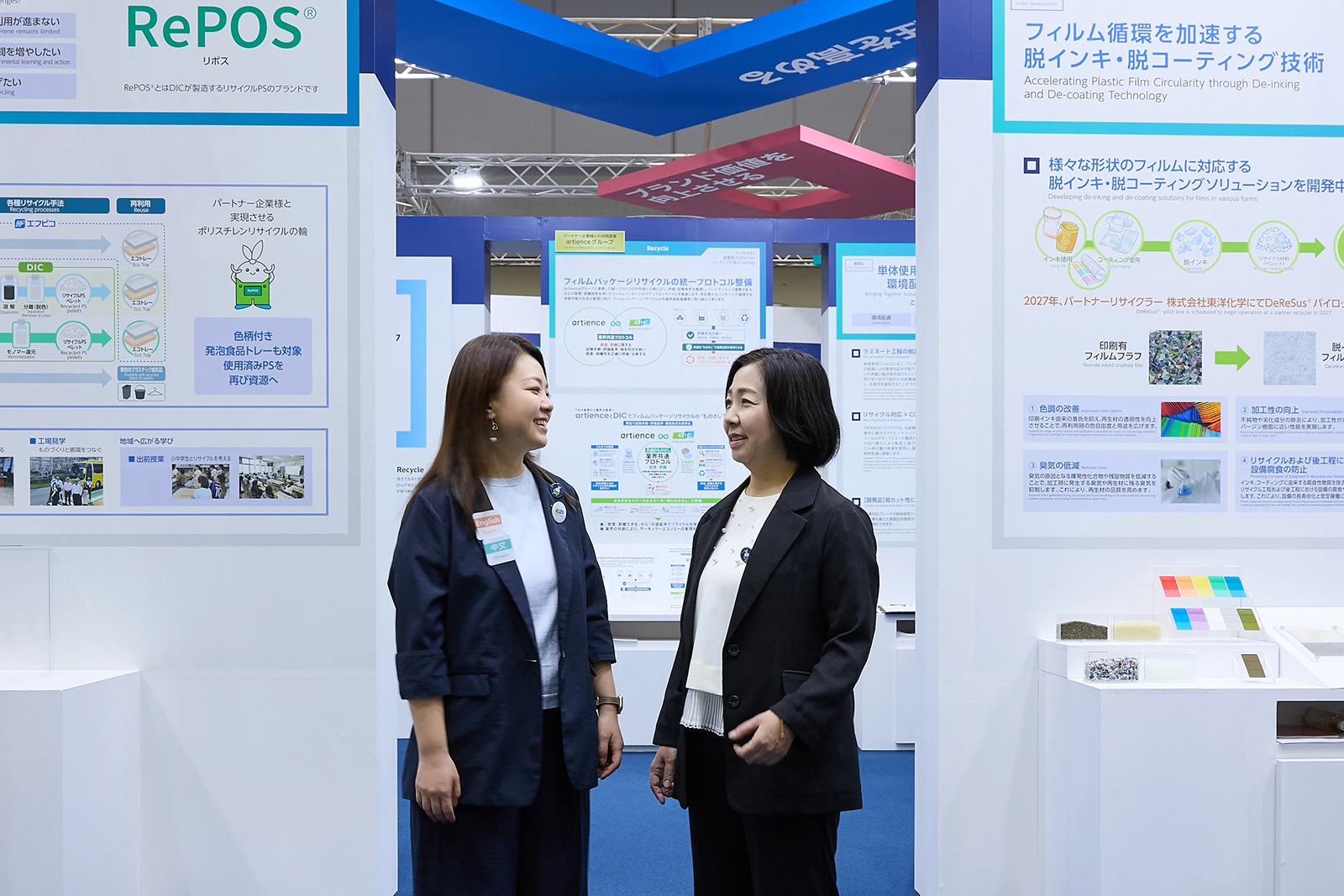
▲Profiles
Mizue Iwasaki
Manager, Packaging & Graphic Business Planning Dept., Packaging & Graphic Business Group, DIC Corporation
Iwasaki has worked in a wide range of roles, including sales, administration, trade show planning and production, and executive support. For more than 10 years, she has been involved in planning and operating exhibitions, leading initiatives to develop integrated proposals that bring together DIC’s diverse products and technologies.
Xin Zhao
Packaging & Graphic Business Planning Dept., Packaging & Graphic Business Group, DIC Corporation
After working in the Finance Department, Zhao moved into new business development and marketing. Her responsibilities cover market research, digital initiatives, and coordination with stakeholders in Japan and overseas. At TOKYO PACK 2026, she is serving as a member of the exhibition organizing team for the first time, participating in the overall planning and management of the exhibition.
From “Nice to Have” to “Essential”: A Turning Point for the Packaging Industry
──Before we discuss TOKYO PACK 2026, could you first tell us about the state of the industry? With raw material prices rising, changes in packaging have become noticeable even in everyday life. What changes are currently taking place in the packaging industry?
Zhao: Interest in environmental measures has been growing for some time. More recently, with factors such as rising raw material prices, I feel there is an even stronger demand to reduce environmental impact while also balancing costs and productivity.
Packaging is expected not only to provide the quality and functionality needed to protect its contents, but also to deliver a range of other benefits, including environmental performance and economic efficiency. Saying that something is simply “good for the environment” is no longer enough. Solving multiple challenges at the same time has become more important than ever.
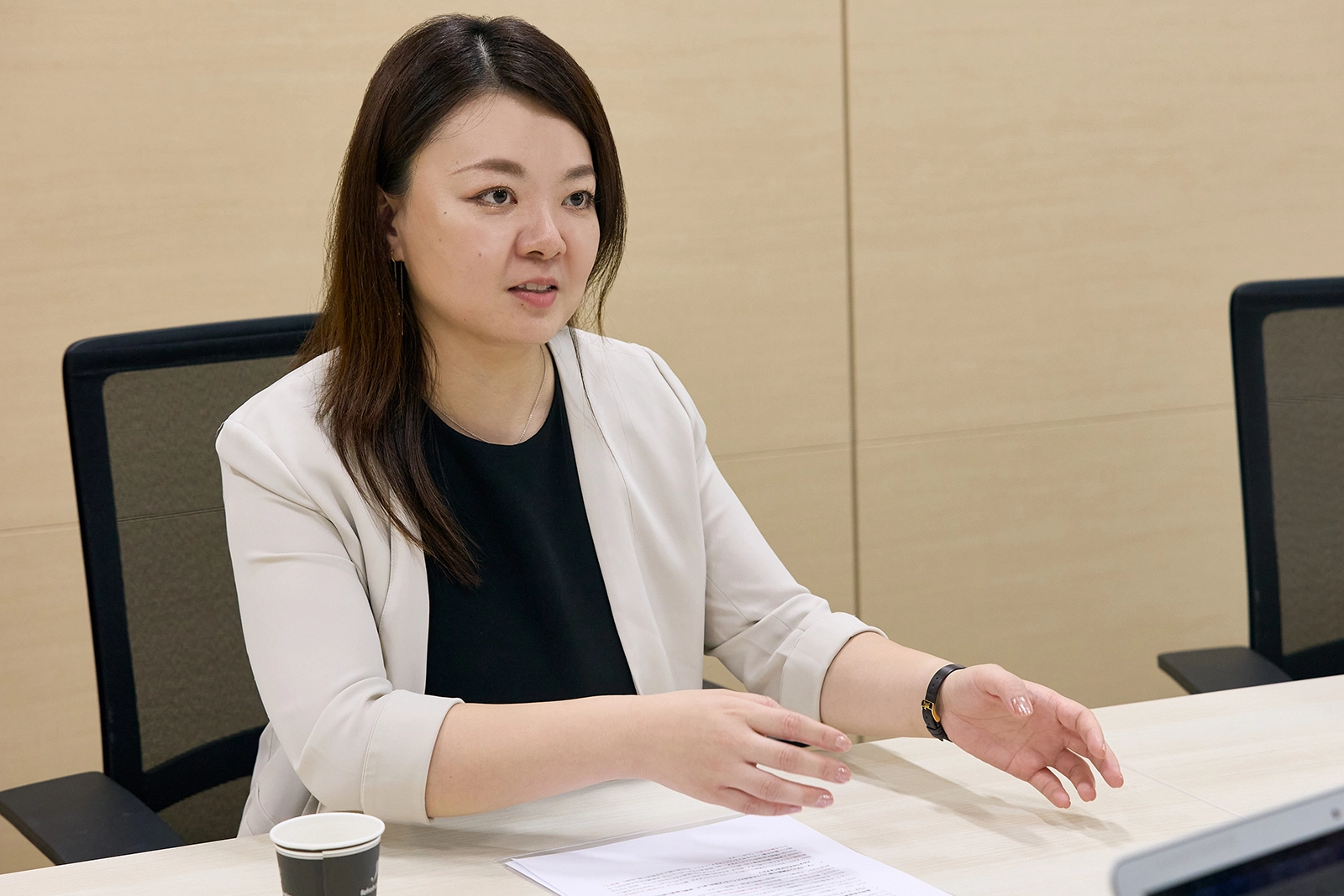
▲Xin Zhao, Packaging & Graphic Business Planning Dept., Packaging & Graphic Business Group
Iwasaki: For companies, postponing environmental initiatives is no longer a realistic option. The European Union’s Packaging and Packaging Waste Regulation, or PPWR,*1 has begun to apply, affecting Japanese companies that handle products for the EU market.
Until now, companies have differed in how actively they address environmental issues. Going forward, however, environmental measures will no longer be merely desirable. They will become essential for continuing business operations. At the same time, this presents an opportunity. As every company is required to change, the development of new technologies and services will accelerate.
*1:PPWR stands for the Packaging and Packaging Waste Regulation, an EU regulation that establishes requirements for reducing packaging waste and promoting the reuse and recycling of packaging materials.
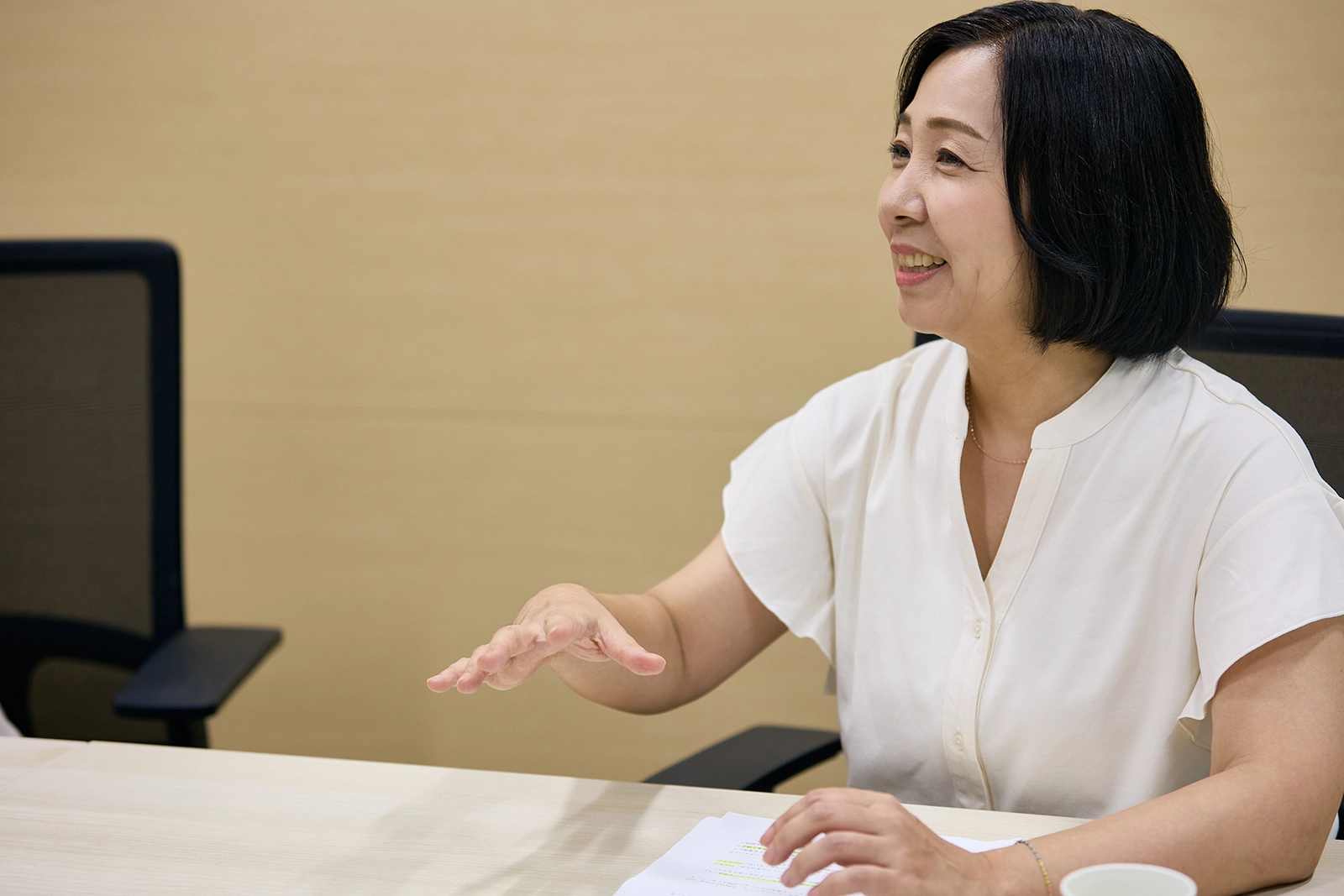
▲Mizue Iwasaki, Manager, Packaging & Graphic Business Planning Dept., Packaging & Graphic Business Group
──Are DIC’s “5Rs” intended to provide a framework for responding to these changes?
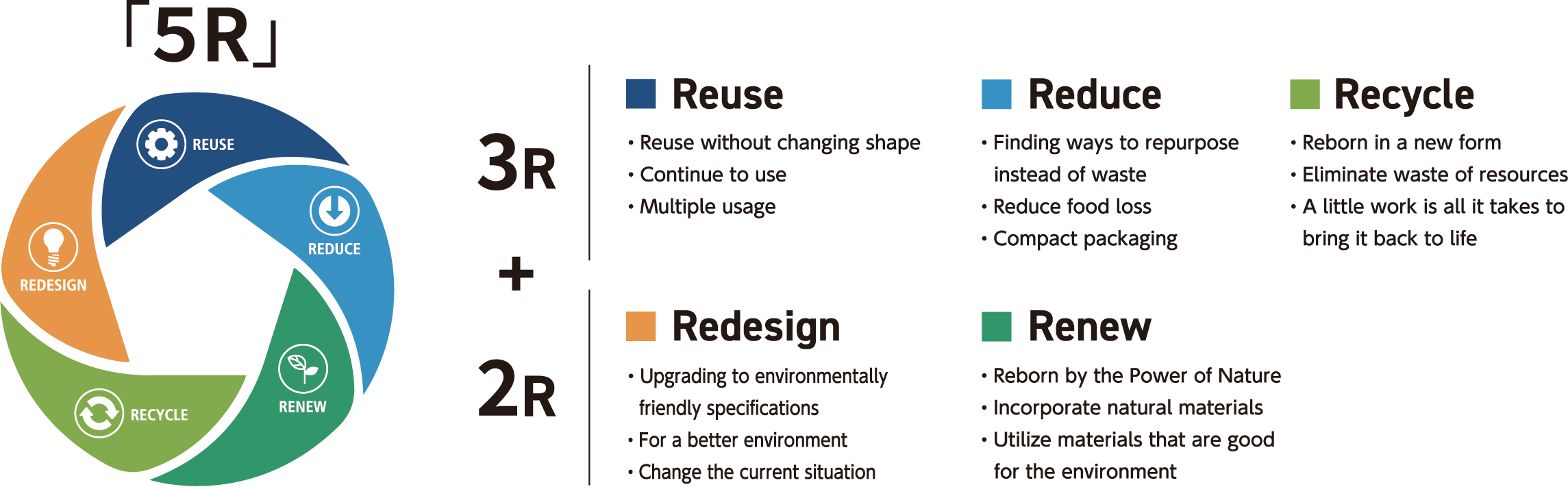
Iwasaki: Yes. DIC advocates the “5Rs” as a framework for realizing sustainable packaging. This framework adds Renew and Redesign to the conventional 3Rs of Reduce, Reuse, and Recycle.
What makes this approach distinctive is that it goes beyond simply circulating resources to include the use of renewable materials and designing packaging from the outset for easier circulation.
Not a Display of Products, but a Display of Solutions: The Aim of Comprehensive Packaging Solutions
──Against the backdrop of these changes in the industry, DIC is exhibiting at TOKYO PACK 2026, which opened on October 14, 2026. What does this event mean for DIC?
Zhao: It is not simply a venue for displaying and promoting our products. In our day-to-day sales activities, each department often interacts with customers regarding the products for which it is responsible. Here, we bring DIC’s products and technologies together and propose integrated solutions through our comprehensive packaging solutions approach.
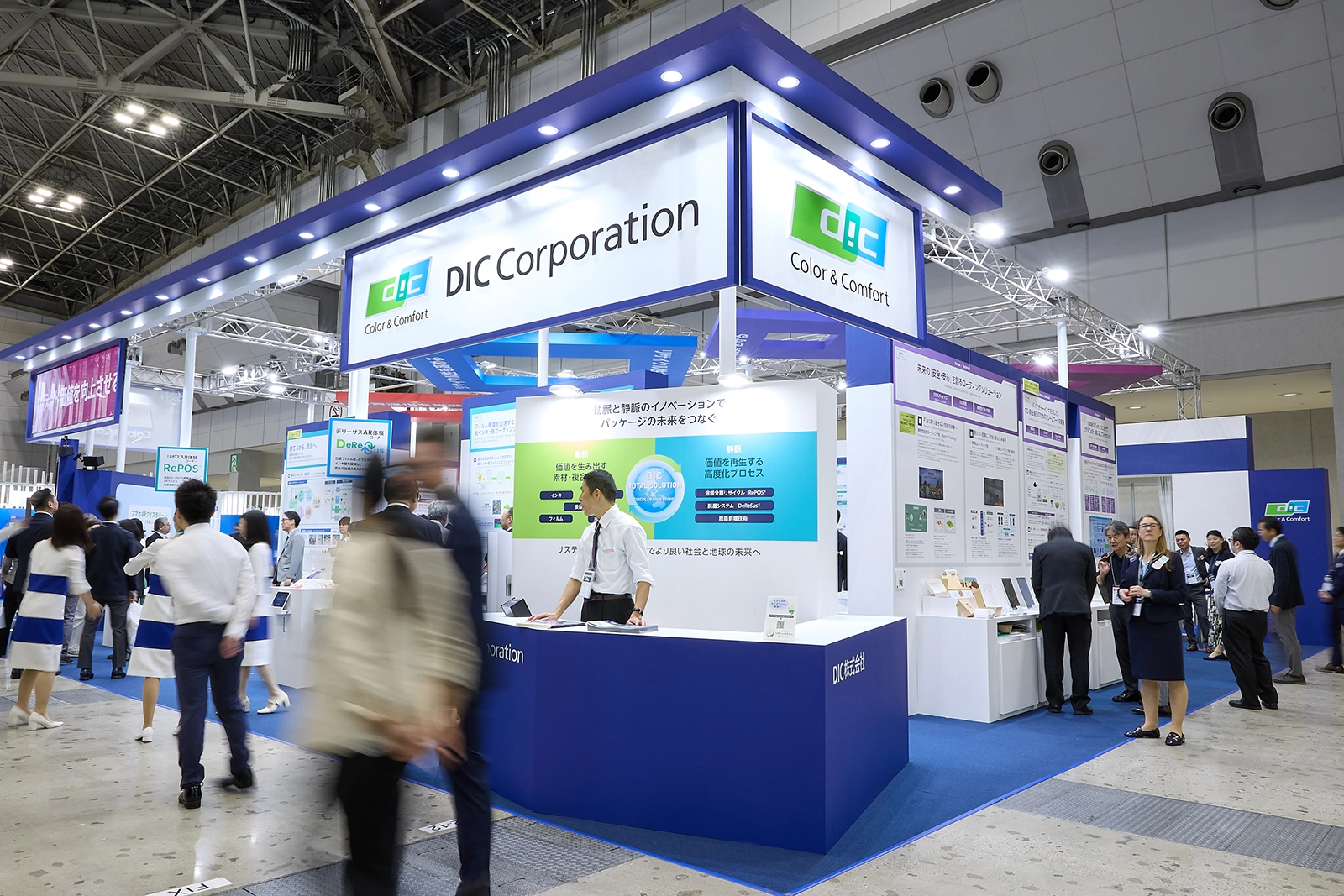
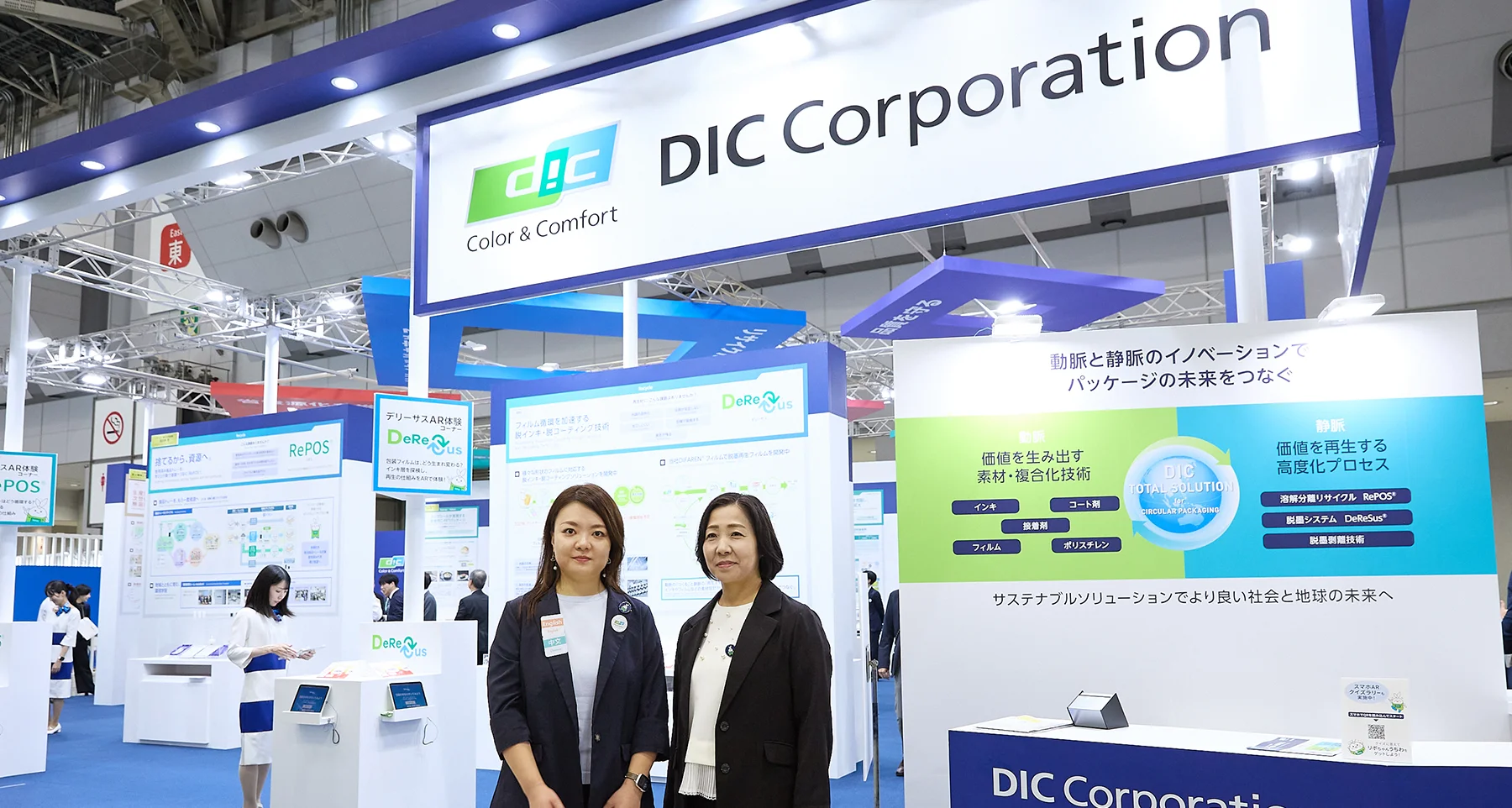
▲The DIC booth
──What does “comprehensive packaging solutions” mean?
Iwasaki: Rather than simply selling individual products, we work together with our customers to find out how we can combine DIC technologies to address their specific challenges. Comprehensive packaging solutions is the embodiment of that approach.
Zhao: Packaging is made by combining many different materials, including films, inks, adhesives, and resins. Customers are not simply looking to replace one ink with another product. They need solutions that consider the package as a whole, such as improving recyclability or reducing the amount of material used while still protecting the contents.
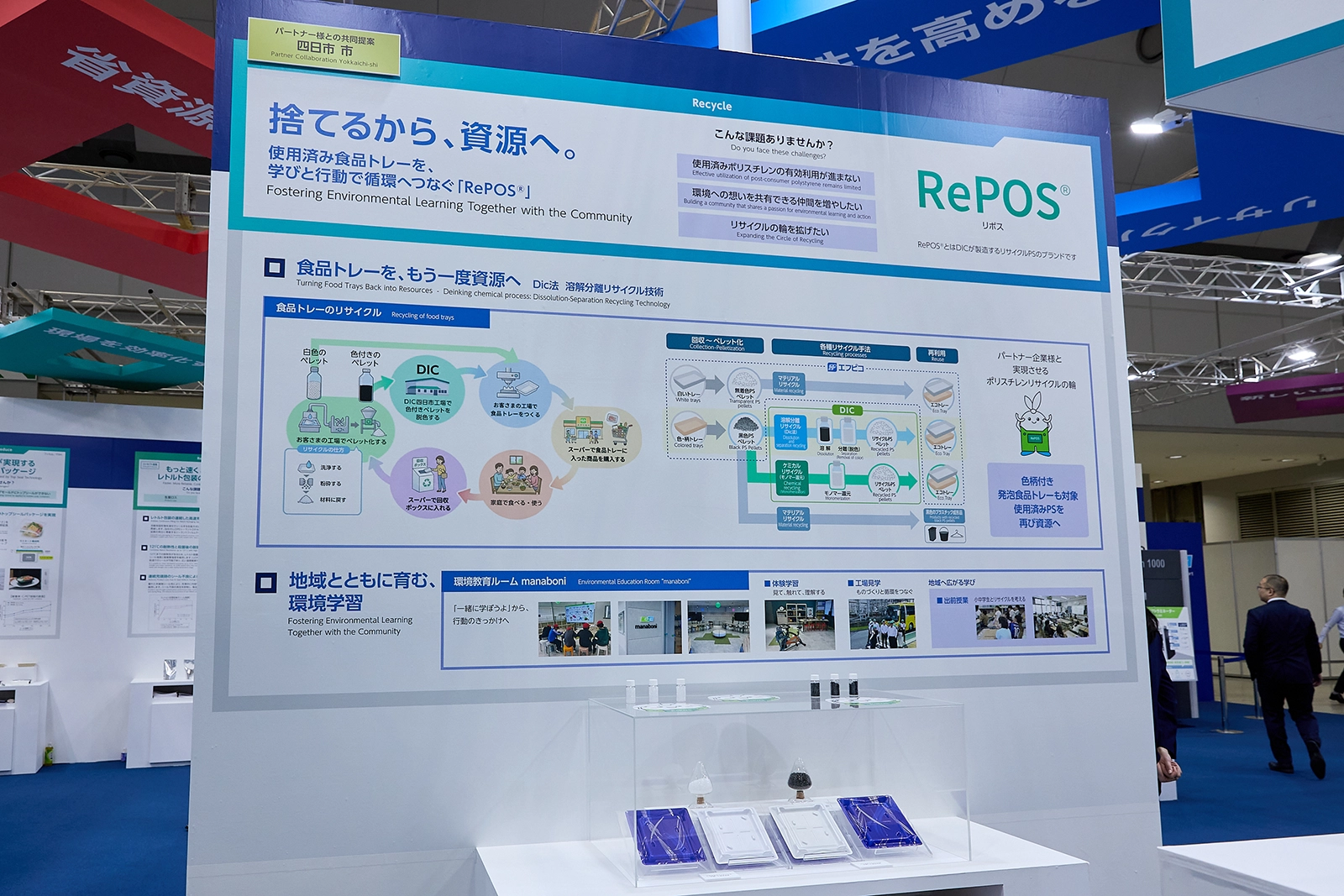
Iwasaki: Because DIC handles a wide range of packaging materials, we have extensive knowledge of how they can be combined. For example, when a customer wants to improve recyclability, we can propose a package designed for easier recycling by combining a mono-material packaging*2 which uses a single material for the film structure, with inks and adhesives that are less likely to interfere with recycling.
*2:An approach that uses a single material for the components of a package to improve recyclability.
──This also seems like a valuable opportunity to see how customers respond to DIC’s proposals in a real-world setting.
Zhao: Yes. Data from articles on our websites and attendance at our webinars can show which topics interest our customers. Numbers alone, however, cannot tell us why they are interested or what circumstances and challenges lie behind that interest.
At exhibitions, we can speak directly with visitors. We also use these opportunities to gather feedback on projects that are still under development and to adjust the direction of our research, development and commercialization.
Iwasaki: In our regular sales activities, our customers are primarily converters,*3 or companies that process materials such as films into finished packaging. However, food and household goods manufacturers further down the supply chain are closer to consumers and are therefore well placed to identify changes in the market and future needs.
Exhibitions attract a wide range of people involved in the packaging industry, including these manufacturers. One of the greatest benefits of participating is the opportunity to hear directly from people we rarely have direct contact with and to identify market changes and emerging needs.
*3:Converters are companies that print, laminate, form bags, or otherwise process materials such as film and paper into finished packaging.
Eight Departments, 26 Themes: Bringing Different Perspectives into One Exhibition
──How did you proceed with the preparations?
Iwasaki: We started preparing about a year ago. Our first priority was to establish an overarching theme that clearly expressed what we wanted to communicate as DIC. The Business Development Group decided on the theme “Enveloping Value, Creating the Future” shared it with departments involved in packaging, and invited each department to propose topics it wanted to exhibit.
We received 26 themes from eight internal departments. Each department, however, handles different products, including inks, films, adhesives, polystyrene, and coatings, and each has its own strategy and customers. Naturally, what each wanted to communicate at the exhibition was also different.
We therefore held working sessions with each team to discuss not only product features but also the value each theme can provide to customers. We repeatedly discussed details such as what to put on the display panels and which samples to show. In this way, we gradually brought all 26 themes together under a unified concept while preserving the distinctive value of each theme.
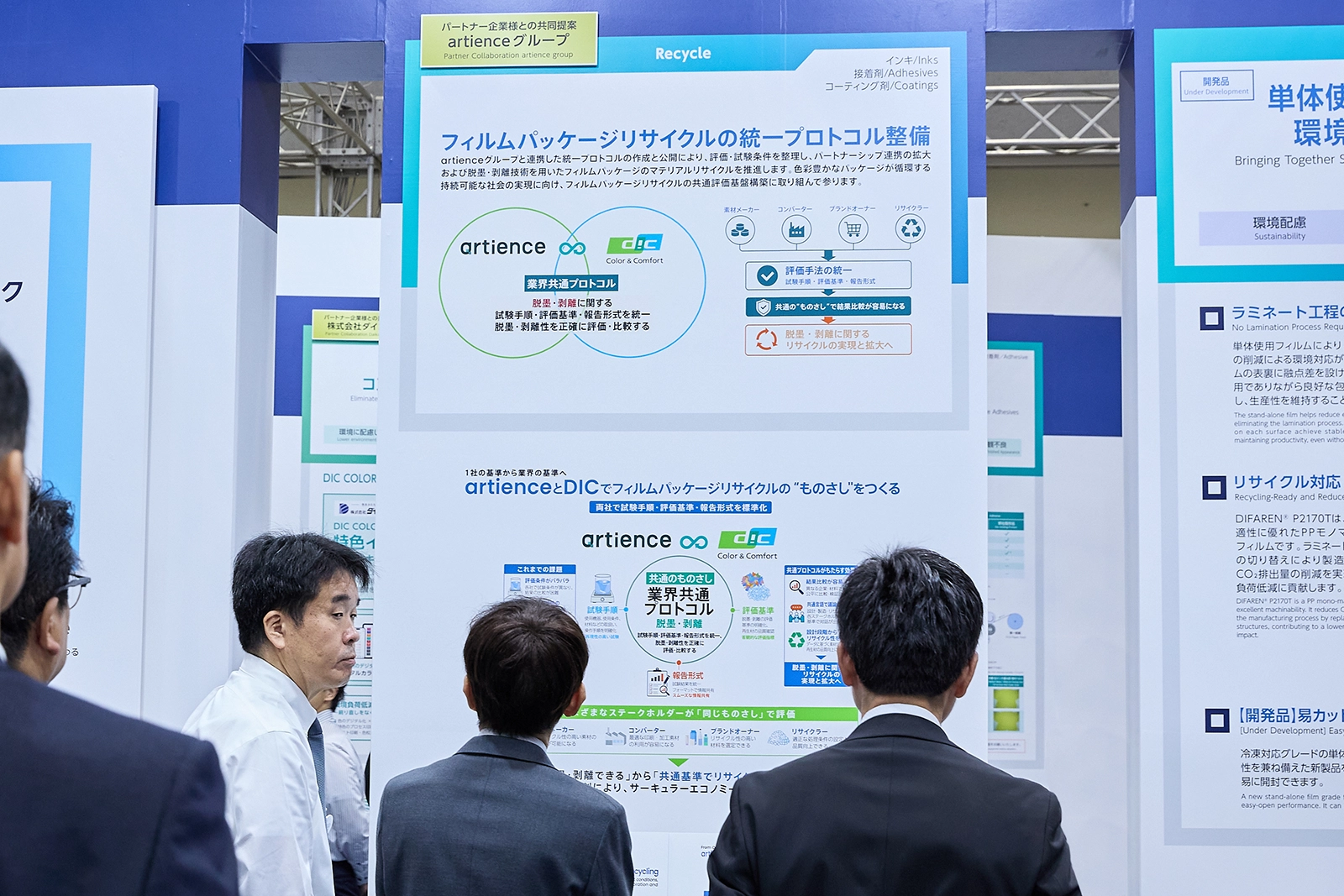
▲DIC and artience established a common protocol for evaluating the recyclability of film packaging.
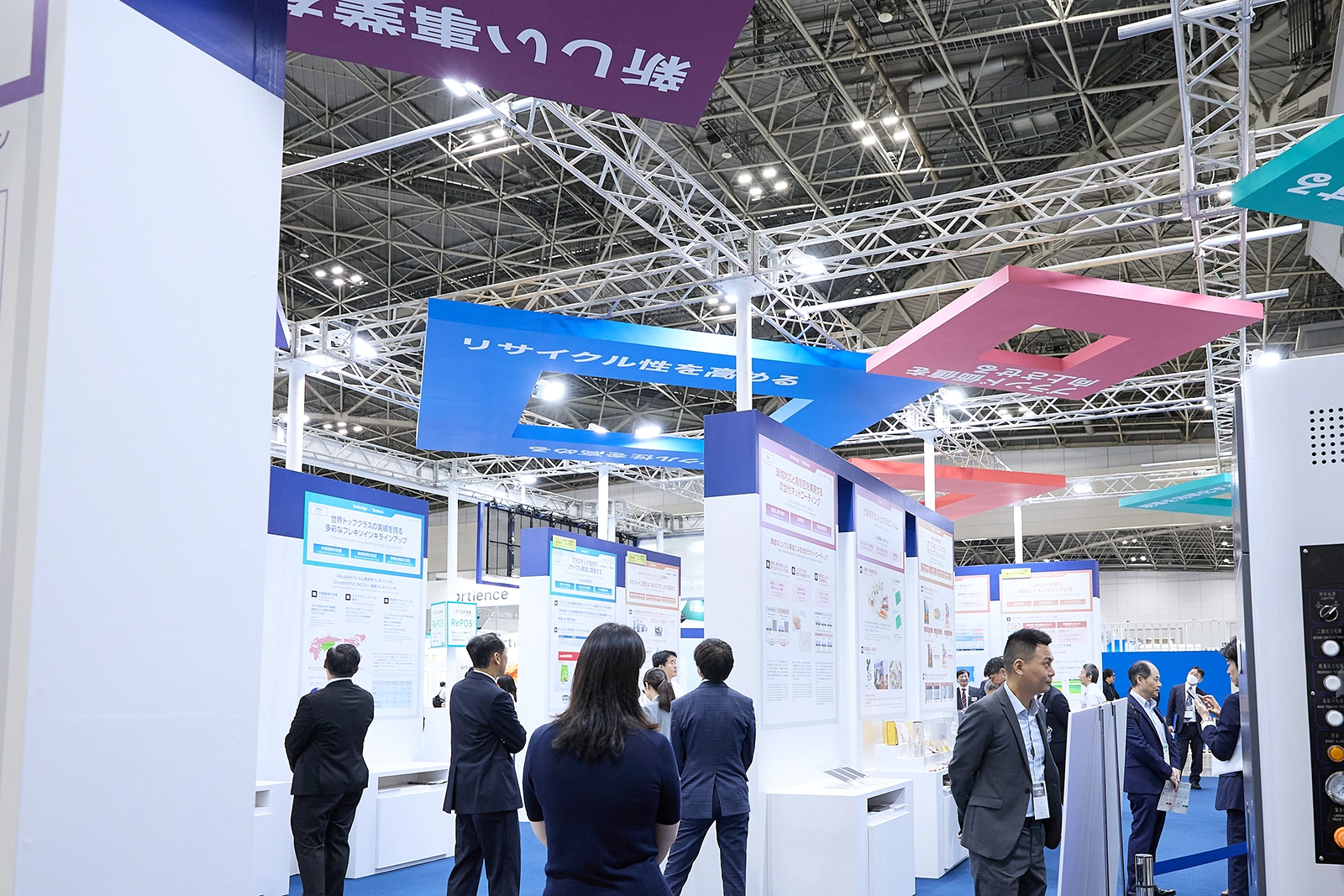
▲Six exhibition zones embody the theme “Enveloping Value, Creating the Future”
──With so many stakeholders involved, you had to bring together themes that were heading in different directions. That must have been challenging.
Zhao: When I participated at TOKYO PACK 2024, I was responsible for a single exhibit. This time, I joined the organizing team and was responsible for overseeing the entire exhibition for the first time. The experience has shown me how important it is to look beyond individual exhibits and consider the exhibition as a whole.
Each department has products and technologies it wants to showcase. The organizing team's role is not simply to line them up. Rather, we have to organize their different messages and structure the exhibition around the value DIC wants to deliver to customers.
We had to maintain a balance between individual requests and the overall exhibition while keeping all 26 themes in perspective, including booth design, communications, and seminar operations.
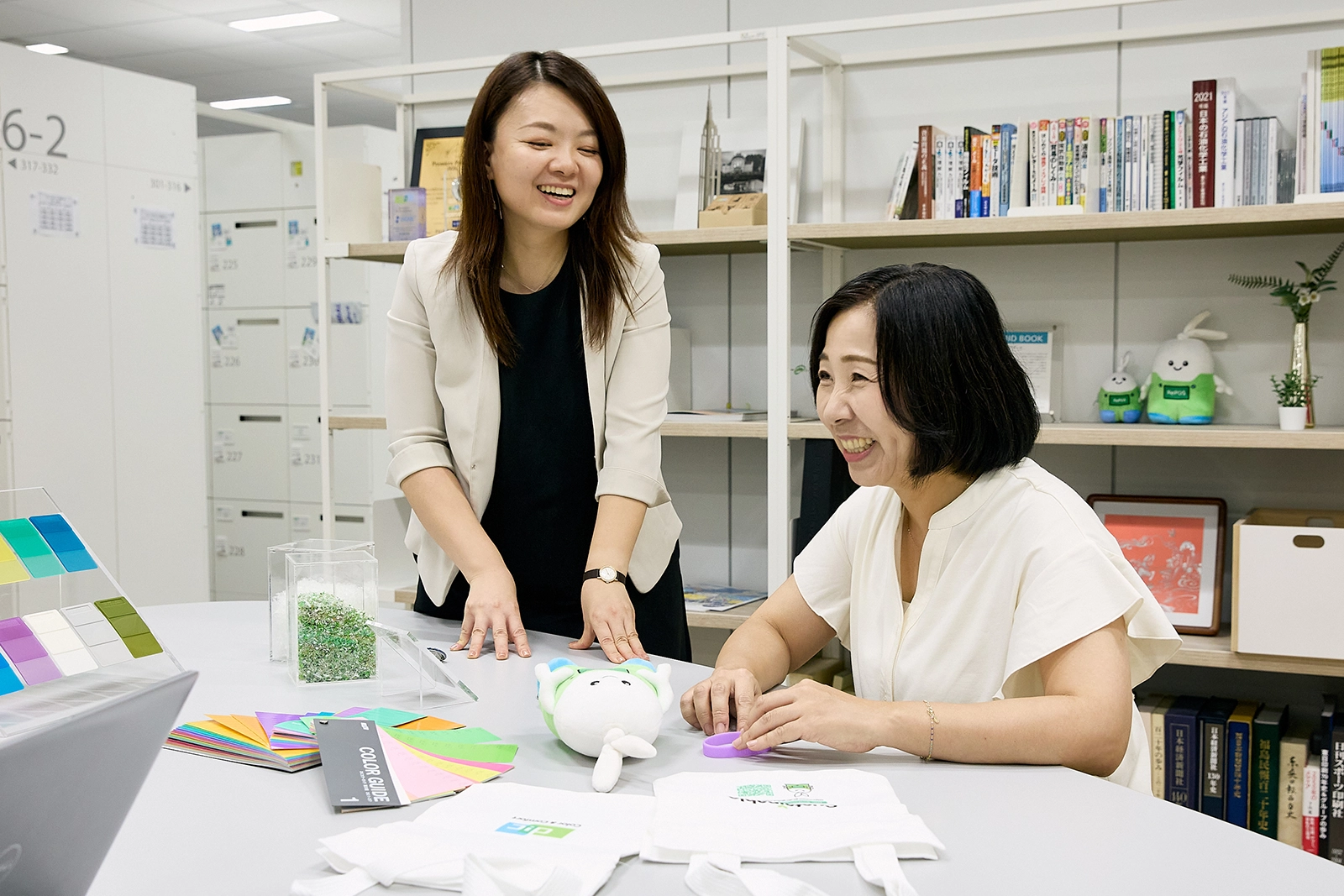
Iwasaki: Preparing promotional items was one area where both cost and quality posed challenges. A Thai colleague in our group connected us with a company in Thailand. By drawing on the strengths of our team members in Japan and overseas, we gradually brought each element of the exhibition to life.
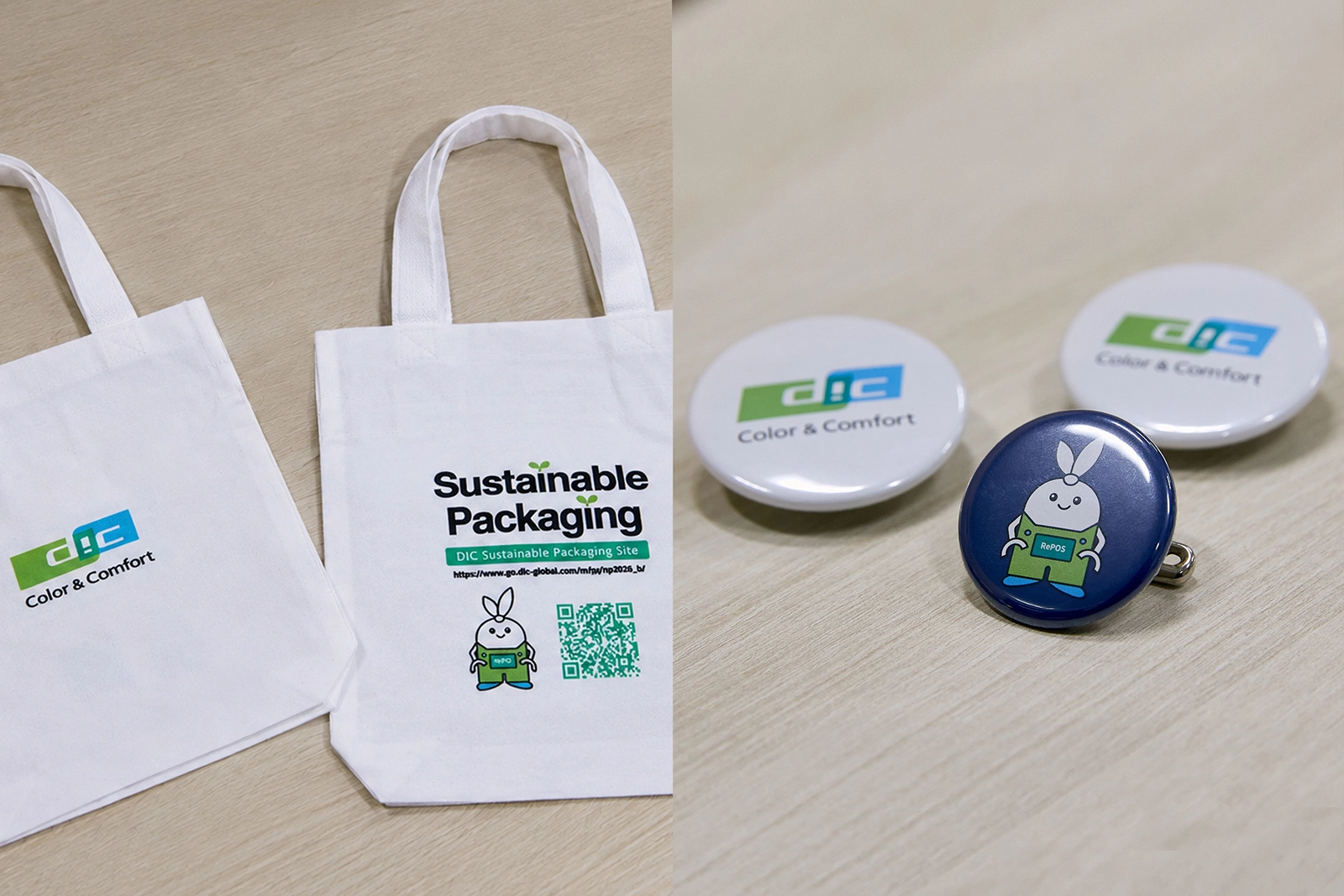
▲Promotional items, including tote bags and pin badges, were produced for the event.
──Securing cooperation from other departments within the company does not sound easy either.
Iwasaki: That is true. In the past, some colleagues said they were already busy with their regular work and did not want additional responsibilities. We therefore took time to speak individually with departments that were hesitant to participate. We carefully explained that exhibitions are not merely a public relations opportunity. They are also part of our sales and marketing activities that can support market research and the validation of development concepts.
Some people initially felt that participating would be a burden. Once an exhibit is actually held, however, it can generate a greater response than expected. Seeing visitors’ reactions firsthand can change internal attitudes and encourage people to try again next time. Through these experiences, people within the company have increasingly come to view exhibitions as opportunities that can lead to business.
Different Career Paths, One Shared Strength: Connecting People
──What strengths did each of you bring to the preparations for this exhibition?
Zhao: Working together this time has made me appreciate once again the value of experience Iwasaki has accumulated over the years. I have learned a great deal from the way she keeps sight of the whole exhibition, connects stakeholders, and anticipates what needs to be done.
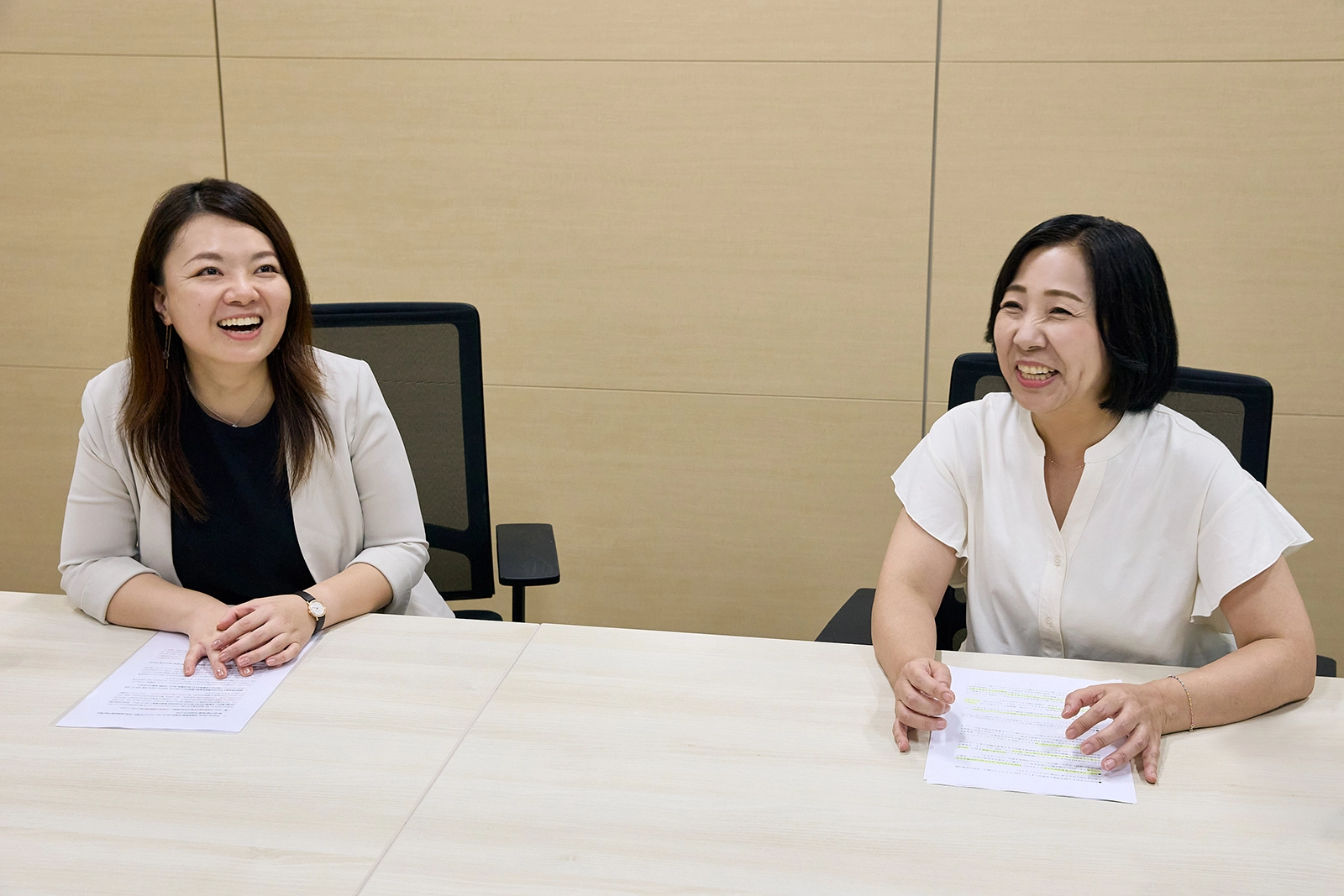
Iwasaki: Thank you. [Laughs] Through my career, I have worked in many different roles, including sales, administration, exhibition production, and executive secretary. I think having experience on both sides, as someone responsible for producing exhibitions and commissioning them is useful in my current work.
Moreover, an exhibition cannot be organized by product departments alone. We coordinate with overseas group companies, related internal departments, and many other stakeholders. Because my work has involved many opportunities to connect different people and technologies rather than selling specific products, I may have developed the ability to see the whole picture.
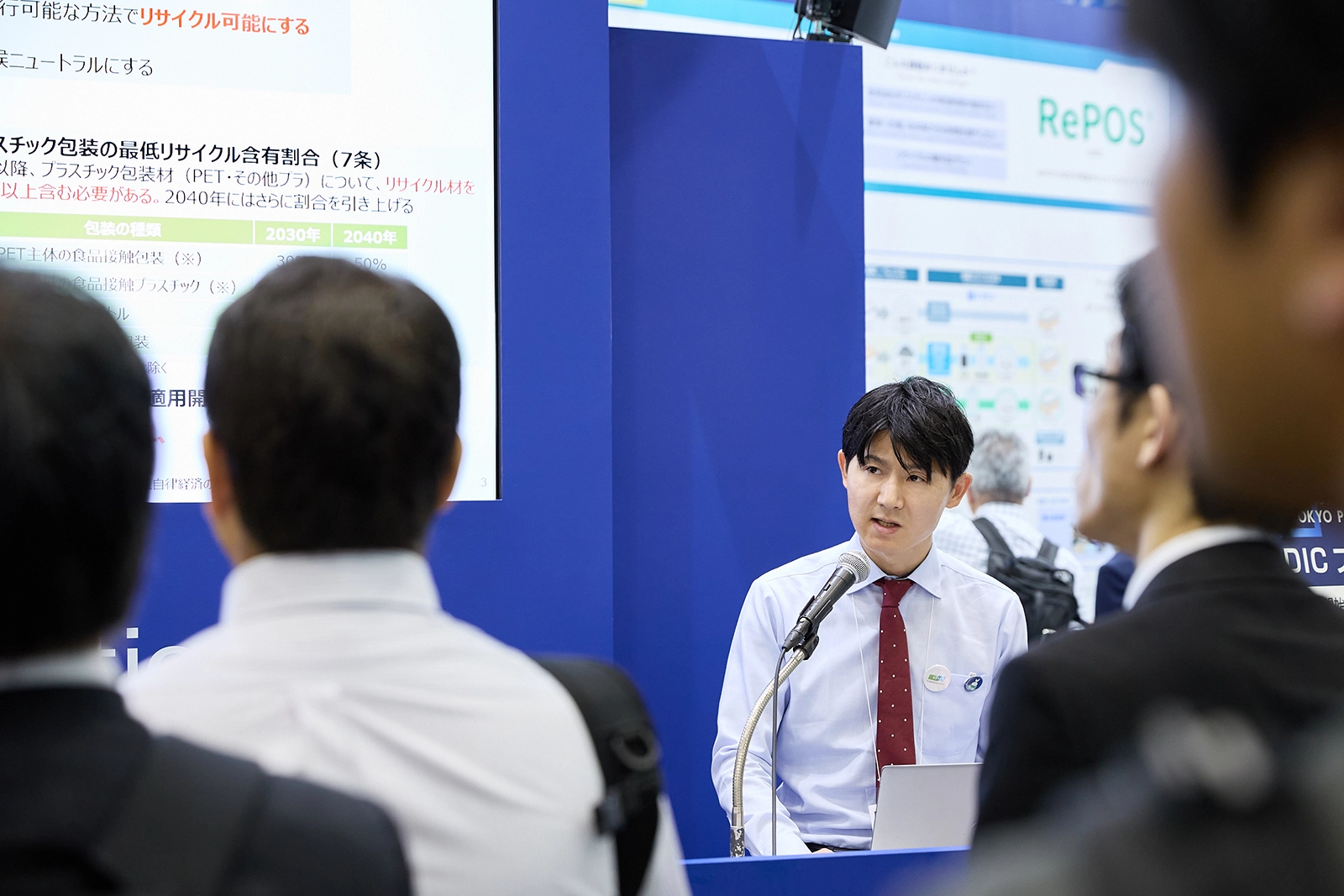
▲Seven different mini-seminars are held at the venue each day.
Iwasaki: In addition to her ability to communicate in English and Chinese, Zhao is skilled at researching and analyzing overseas information and markets and at working with new digital tools. She has used those strengths to support every aspect of the preparations, which has been a tremendous help.
Zhao: I studied accounting at university and joined DIC’s Finance Department after graduation. I later moved into new business development and now I am responsible for marketing in the Packaging & Graphic Business Group. At first glance, these roles may seem very different. Looking back, however, I feel that the broad perspective on business and markets that I developed in each role is proving valuable in my current work.
I believe that my background as someone from China who has worked in Japan while collaborating with colleagues overseas has also become a strength. It helps me understand different positions and perspectives and connect people and information.
Attending interpack 2026, the international packaging exhibition held in Germany this year, was another valuable opportunity to see overseas market trends and new initiatives firsthand. I gained many insights from approaches that differ from those in Japan, including how exhibits are presented, how companies communicate with customers, and how digital tools are used. I hope to incorporate these global perspectives into my current work.
Beyond What One Company Can Achieve: The Power of Co-Creation
──What ideas or features are unique to this year’s exhibition?
Zhao: Rather than organizing the exhibits by product, we created six zones based on customer challenges, such as improving recyclability and promoting resource conservation.
Another major feature is co-creation with partner companies in Japan and overseas. We are also showcasing joint solutions with companies that bring different technologies and strengths in areas such as equipment and materials. The challenges facing the packaging industry are too complex for any one company to solve alone. By bringing together complementary technologies and expertise across company boundaries, we can develop solutions that would otherwise be difficult to achieve.
We have also introduced mini-seminars led by the people responsible for each exhibition theme to help visitors better understand the technologies and speak directly with the specialists involved.
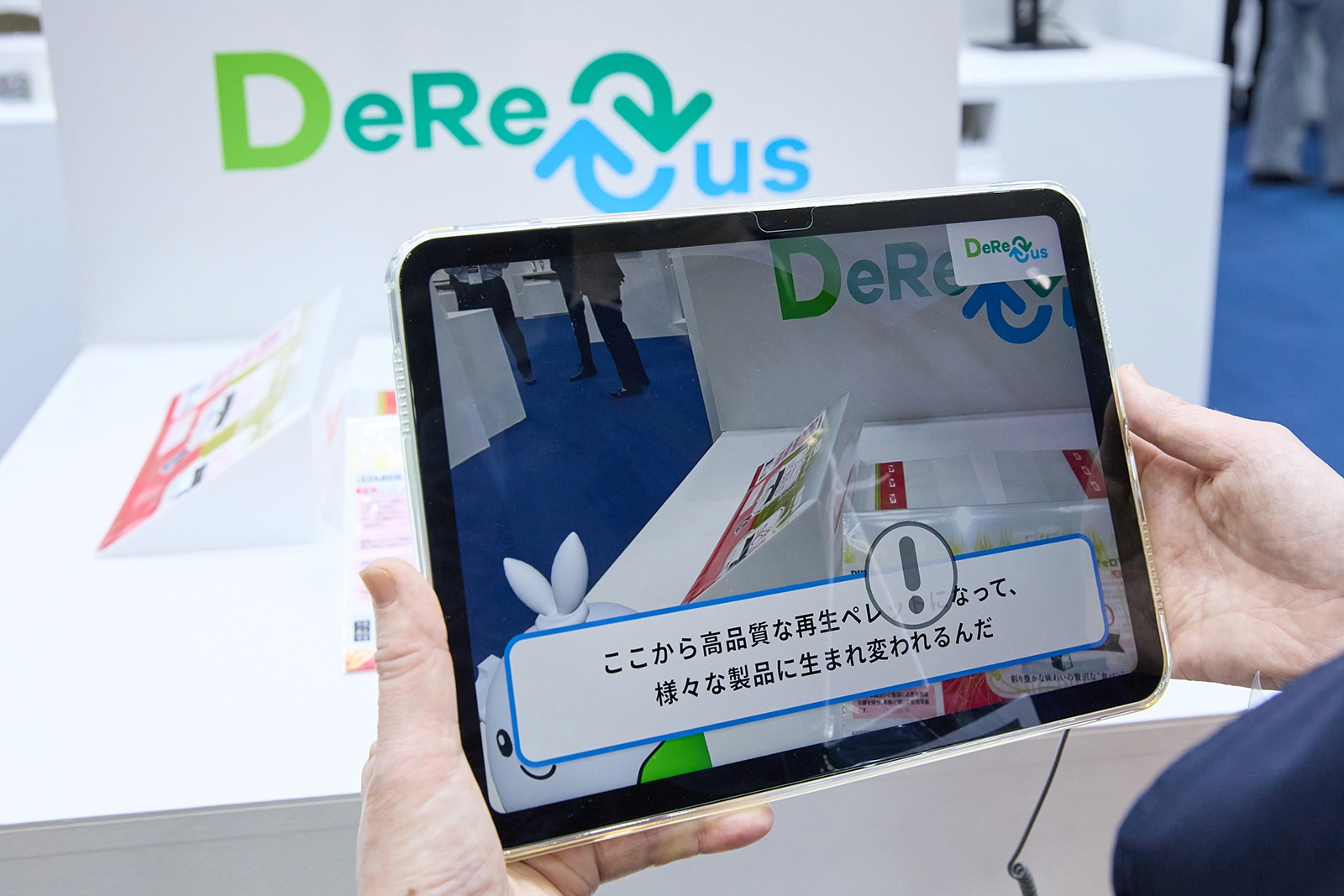
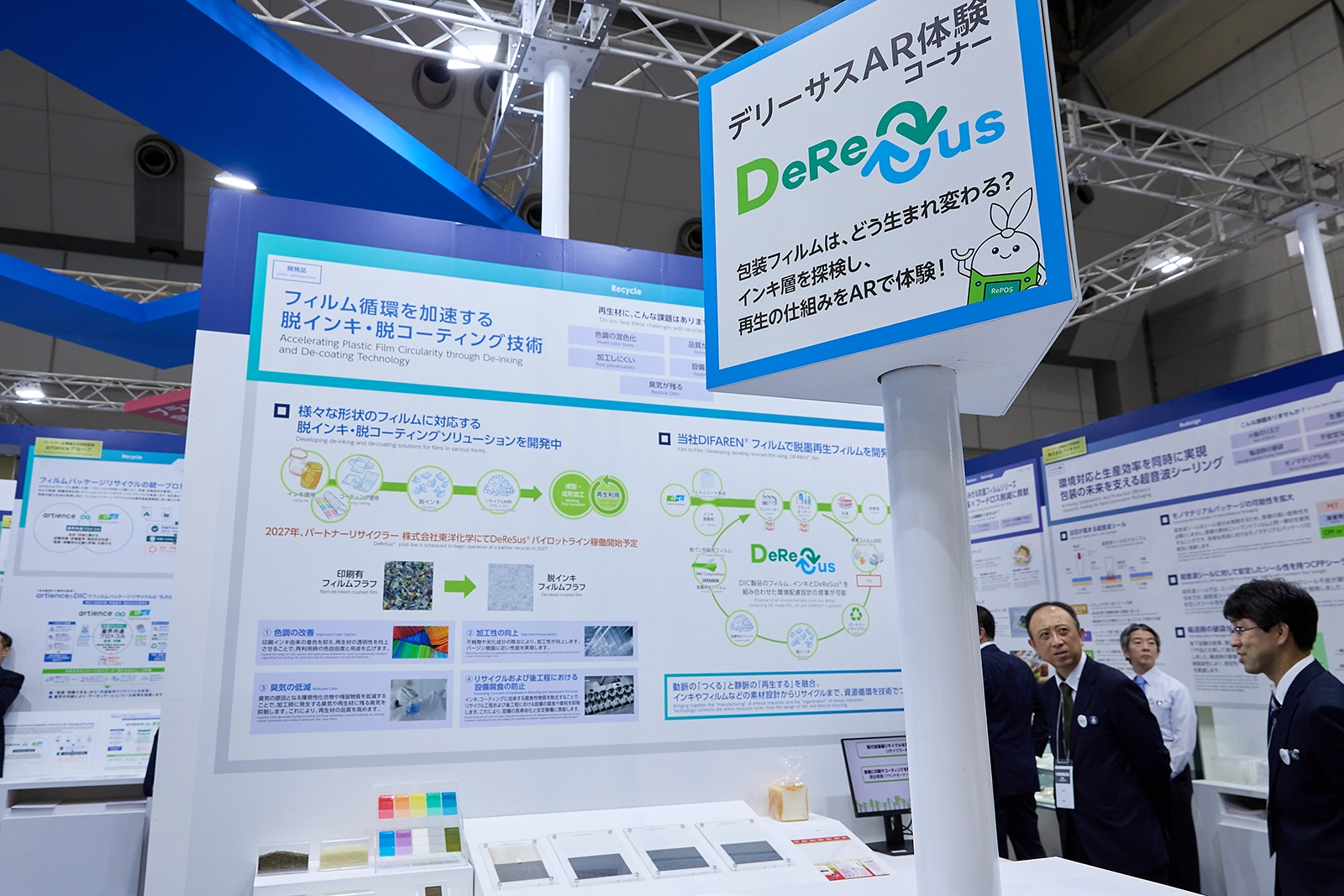
▲More than just viewing: DIC solutions can be experienced through AR.
Iwasaki: One example is an augmented reality experience using tablet devices. Through three-dimensional images displayed on the screen, visitors can explore technologies that are normally difficult to see, including the inside of a factory and the DeReSus® process, which removes printing ink and coatings from films recovered from used packaging and converts them into high-quality recycled resin.
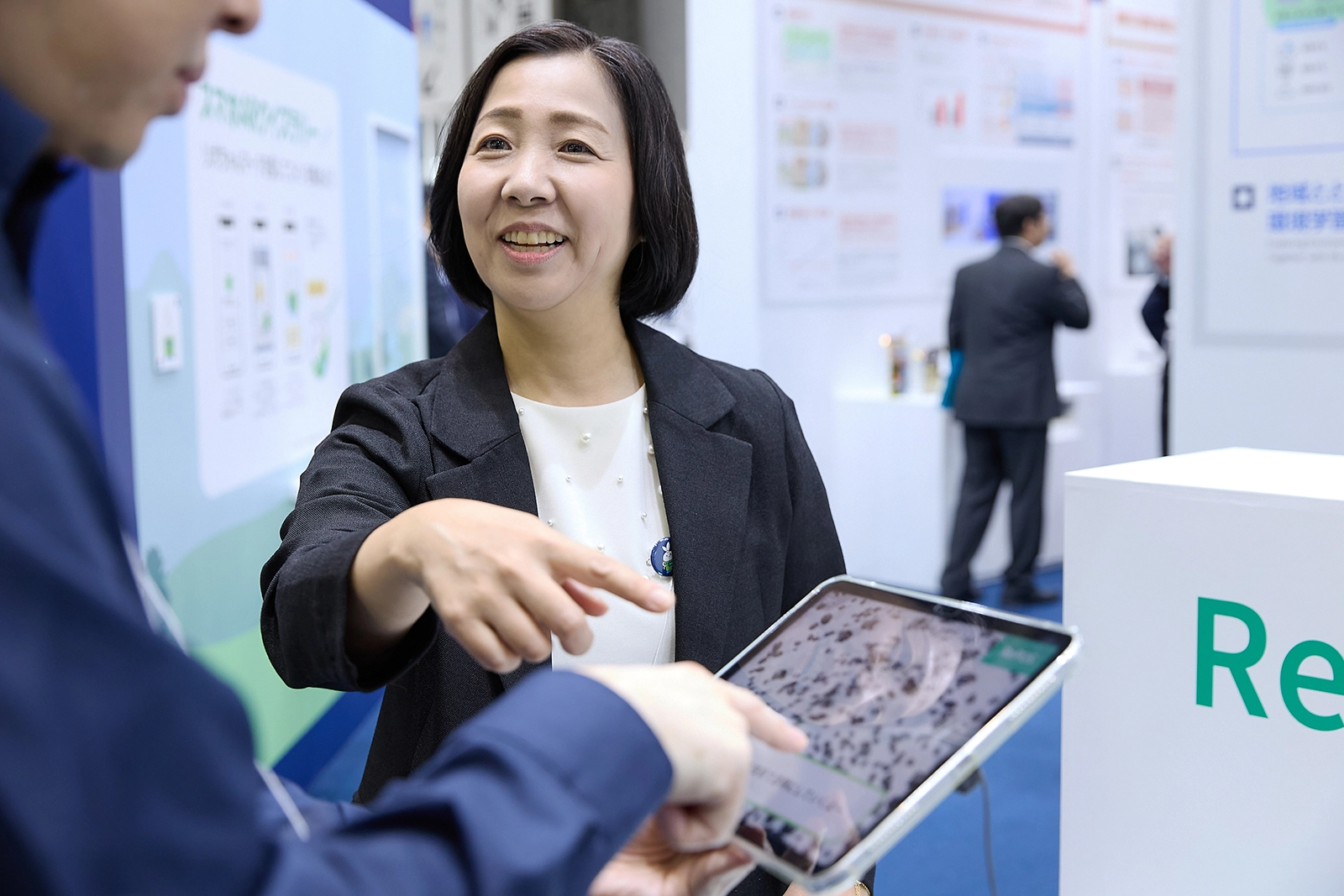
Iwasaki: Technology can be difficult to communicate through words and display panels alone. We wanted visitors to gain an intuitive understanding of how our technologies work and the value they offer by actively interacting with the images on the screen, rather than simply looking at them.
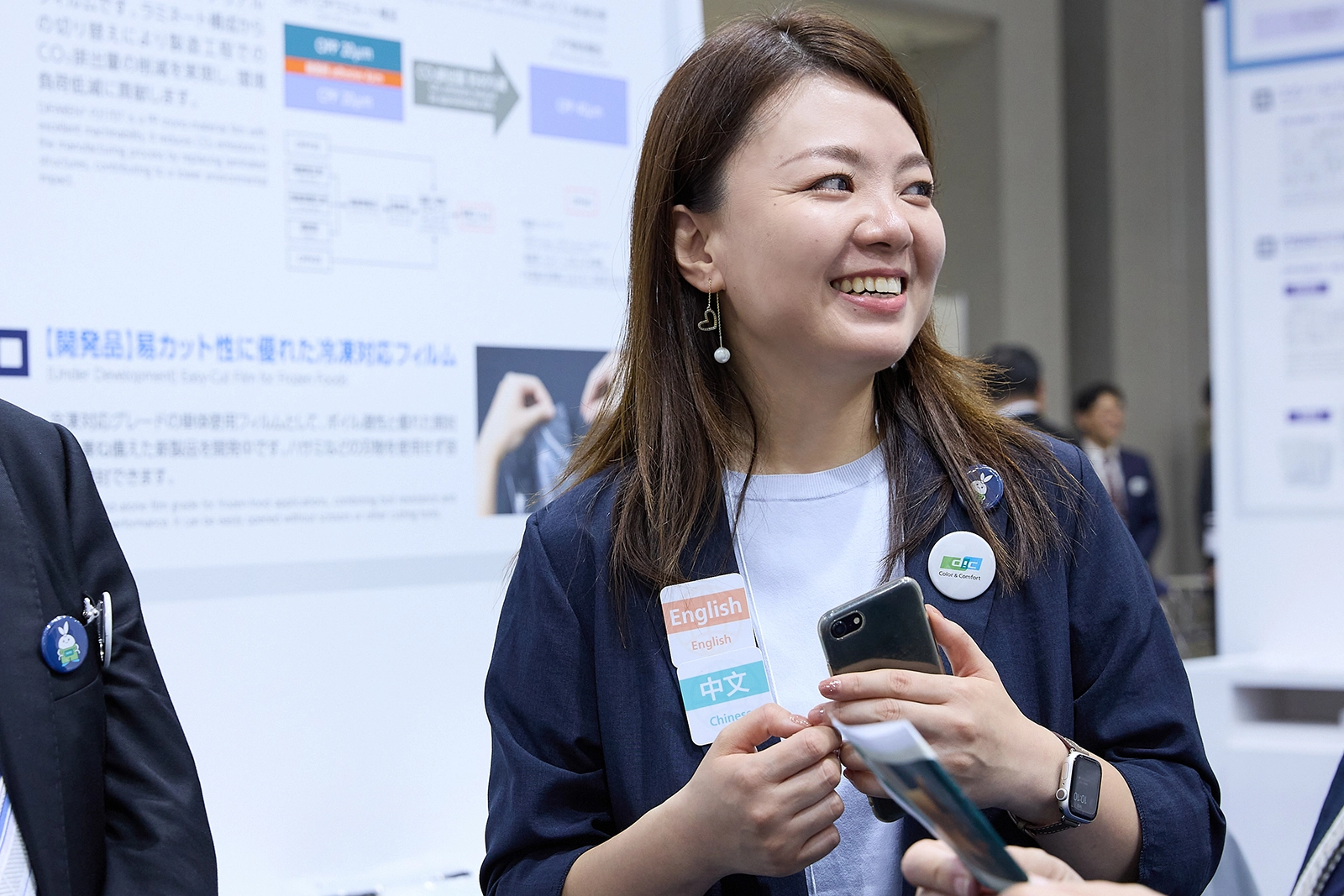
Zhao: As one example of this co-creation, I would particularly encourage visitors to see an exhibit developed in collaboration with an overseas equipment manufacturer. We have set up a demonstration area that combines DIC’s solvent-free adhesive with a solventless laminator, a machine that bonds films together, allowing visitors to see the equipment in operation.
──How would you like to build on the experience gained from this exhibition in your future work?
Iwasaki: At future TOKYO PACK exhibitions, I would like us to introduce something new each time. At the same time, I want us to look beyond Japan to exhibitions overseas and expand the opportunities to showcase DIC’s technologies and solutions.
The ways we connect with customers are also becoming more diverse, including in-person events. By making the most of the distinctive characteristics of each, I hope we can communicate the value DIC offers to more people.
Zhao: A circular economy for packaging*4 cannot be achieved by a single company. Companies throughout the value chain need to contribute their respective strengths and work together.
Going forward, I do not want exhibitions to end as one-off events. I want to connect the customer feedback and market needs we gather there with our next proposals and development activities. By connecting people and information across national and departmental boundaries, I hope to work with a wide range of partners to create new businesses and generate new value.
*4:A circular economy is an economic system in which products and materials are kept in circulation and used continuously, rather than following a linear model of extracting resources, making products, and disposing of them.