 Compliance and Safety
- Proposals for lead-free alternatives
- Documentation aligned with major regulations (SDS and compliance tables)
Color & Display
Automotive
Color
House Equipment / Infrastructure
Functional Materials
We offer high-performance pigments optimized for automotive, industrial, and decorative coating applications.

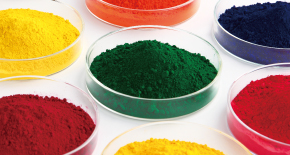
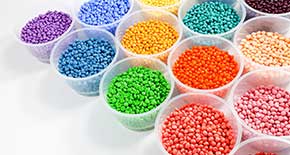
Coating pigments are required to provide a range of functions according to the application, including weather resistance, chemical resistance, hiding power and heat resistance, in addition to color and design appeal. We offer organic and inorganic pigments, as well as effect pigments such as pearlescent and metallic pigments, for automotive exteriors, architecture and building materials, industrial equipment, infrastructure and heavy-duty corrosion protection, wood and furniture, appliances and housings, and many other substrates. We also offer pigments for heat-shielding applications using near-infrared (NIR) control, lead-free products and natural mica sourced through ethical and environmentally responsible methods. Natural mica is traceable from our own mine in the United States.
Compliance and Safety
 Quality and Supply Capability
 Technical Support
 Reliability Information (E-E-A-T)
We offer a range of lead-free pigments and support product selection according to the application and required performance.
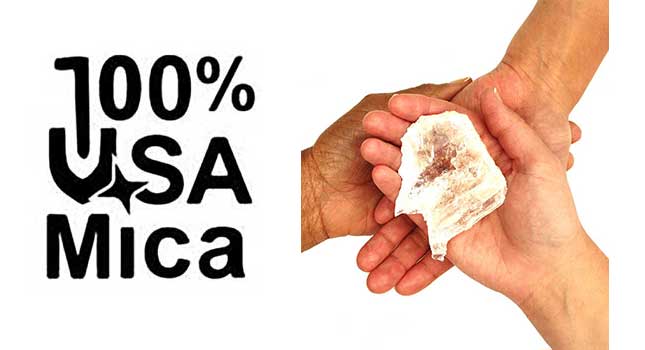
Sun Chemical sources natural mica from its own mine in Hartwell, Georgia, USA. Sourcing from our own mine enables traceability of the raw-material origin.
Pigments that control near-infrared (NIR) light help suppress temperature rise in coatings. Using Spectrasense or Sicopal enables designs that reduce solar heat buildup even in relatively dark colors.

Consumers are increasingly interested in how ingredients for cosmetics and personal care products are sourced, how transparent supply chains are, and how seriously companies approach sustainability. Around 60% of the world’s mica used in pearlescent pigments is said to come from India, and child labor in the supply chain has been widely reported as a serious social issue. Sun Chemical’s mica is mined 100% from our own U.S. mines, and we ensure environmentally responsible mine operations, ethical labor practices, and full traceability of raw materials.
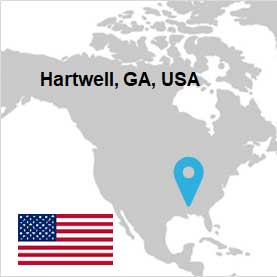
100% made in the USA / sourced from our own U.S. mine

100% ethical operations with full traceability
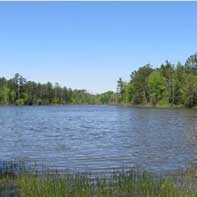
Environmental stewardship and sustainable operations
• Mica is sourced from Sun Chemical’s own mine in Hartwell, Georgia, with the entire process fully controlled from mining through shipment.High-quality pearlescent pigments are produced using raw materials with a high level of transparency.
Reference: “the Truth about Mica”

Combining organic, inorganic and effect pigments with excellent weather resistance and high chroma creates vivid, premium finishes. Add heat-shielding and NIR-control functions to vibrant designs.

We offer pigments that meet industrial performance requirements such as weather, heat and chemical resistance. Our lead-free pigments can also be used as alternatives to lead chromate, supporting coating design according to the application and required performance.

We offer a broad range of organic, inorganic and hybrid pigments for architectural applications and support versatile color design. The lineup includes lead-free pigments as lead-chromate alternatives, NIR-control pigments for heat shielding and treated pigments for water-based coatings.
Discover the latest color trends for automotive, two-wheeler, and architectural/industrial coating applications.
 Trend.1
In this two-wheeler color trend feature, we show real examples of how new pigments enable fresh expressive possibilities—and how far they can elevate the sculptural beauty of motorcycles. Explore an innovative world of colors you’ll want to bring into two-wheeler design.
 Trend.2
Color design is inspired by creative ideas, emerging trends, and desired color effects. This series brings inspiration to life through coating formulations featuring our pigments and effects. Discover our latest color trends and technologies, along with products and solutions designed to meet a wide range of needs.
 Trend.3
Using three perspectives—“Nature,” “Technology,” and “Virtual Freedom”—we explain the latest global trends in automotive coatings. We also propose new design possibilities enabled by pigment innovation, along with effect colors you can explore digitally.
| Product / Brand | Color | Details | Color Space | Color Index | Product Group | Delivery Form | Transparency | Effect | Performance | Appearance | Requirements | Sustainability |
|---|
Select Brand: DISPERSE, or open it from the list via “Details”.
| Series | Product code | C.I. No | Features |
|---|---|---|---|
| SD Series | DISPERSE BLACK SD-9020 | P.Bk. 7 | Surfactant dispersion – Carbon black |
| ES Series | DISPERSE RED ES-1059 | γ-P.V. 19 (Y type) | Surfactant dispersion (low-VOC type) – Quinacridone red |
| ES Series | DISPERSE BROWN ES-8004 | P.R. 101(Opaque) | Surfactant dispersion (low-VOC type) – Red iron oxide |
| ES Series | DISPERSE OCHER ES-4007 | P.Y. 42(Opaque) | Surfactant dispersion (low-VOC type) – Ocher |
| ES Series | DISPERSE YELLOW ES-4062 | P.Y. 154 | Surfactant dispersion (low-VOC type) – Benzimidazolone |
| ES Series | DISPERSE BLUE ES-6105 | P.B. 15:3 | Surfactant dispersion (low-VOC type) – Phthalocyanine blue (β) |
| ES Series | DISPERSE BLACK ES-9001 | P.Bk. 7 | Surfactant dispersion (low-VOC type) – Carbon black |
| HG Series | DISPERSE GREEN HG-501 | P.G. 7 | Acrylic resin dispersion – Phthalocyanine green |
| HG Series | DISPERSE BLACK HG-911 | P.Bk. 7 | Acrylic resin dispersion – Carbon black |
| HG Series | DISPERSE RED HG-150 | γ-P.V. 19 (Y type) | Acrylic resin dispersion – Quinacridone red |
| HG Series | DISPERSE YELLOW HG-420 | P.Y. 42(Opaque) | Acrylic resin dispersion – Ocher |
| HG Series | DISPERSE YELLOW HG-464 | P.Y. 154 | Acrylic resin dispersion – Benzimidazolone |
| HG Series | DISPERSE WHITE HG-730 | P.W. 6 | Acrylic resin dispersion – Titanium dioxide |
*All product names listed on this page are trademarks of the DIC Group.

Common inquiries about coating pigments.
Coating pigments are fine particulate colorants that provide color and hiding power to coatings. They include organic pigments, inorganic pigments, and effect pigments. In general, organic and inorganic pigments are used after a dispersion step to achieve uniform color development, and pigments are selected according to the application requirements, including weatherability and coating system design.
Organic pigments are often selected for applications that prioritize vivid color and transparency, while inorganic pigments are used where weatherability, heat resistance, and hiding power are required. In practice, they are frequently combined—depending on the application and coating design—to balance color expression, durability, and appearance.
To improve weatherability, it is important to select pigments with excellent lightfastness—such as inorganic pigments and high-performance organic pigments—and to suppress degradation caused by UV and heat. In addition to pigment selection, choosing weather-resistant resin systems and using light stabilizers and/or UV absorbers can further reduce ΔE color change.
Please contact us via the contact form. PCF (Product Carbon Footprint) information is available in real time through the Pigment Finder.
Please contact us via the contact form.
Please contact us via the contact form.
Please contact us via the contact form.
A quick guide to the abbreviations and terms frequently used on this page.