
With Employees 



- Goals and Achievements of Major Initiatives
- Basic Approach to Human Resources Management
- 1. Reinforce Management of Human Capital
- 2. Three Strategic Priorities
- 3. Talent Management: Personnel System, Global Human Resources Framework and Group Human Resources Governance
- 4. DIC’s Approach to Diversity
- 5. Respect for Human Rights
- 6. Work–Life Balance/Occupational Health
- Ties with Employees
Goals and Achievements of Major Initiatives
Foster human resources.
| Goals for fiscal year 2023 | Systematically foster Group management candidates and future global leaders. |
|---|---|
| Achievements in fiscal year 2023 |
|
| Evaluation | ★ |
| Goals for fiscal year 2024 |
|
Ensure mobility (hiring, retention and succession).
| Goals for fiscal year 2023 | Enhance the “Job Challenge” system. |
|---|---|
| Achievements in fiscal year 2023 | The “Job Challenge +” program (internal recruitment system) was introduced. A total of 12 individuals took advantage of this new system, beginning in July, to take on jobs in other departments concurrently with their existing responsibilities. (DIC) |
| Evaluation | ★★ |
| Goals for fiscal year 2024 | Enhance the “Job Challenge” and “Job Challenge +” systems. (DIC) |
| Goals for fiscal year 2023 | Promote department-specific human resources portfolio planning. |
|---|---|
| Achievements in fiscal year 2023 | Despite promoting department-specific human resources portfolio planning for key Group positions, estimating the quality and number of human resources that will be required over the medium to long term proved difficult. (DIC) |
| Evaluation | ★ |
| Goals for fiscal year 2024 |
|
Improve engagement and organizational cohesiveness.
| Goals for fiscal year 2023 | Encourage one-on-one meetings to enhance internal communications. |
|---|---|
| Achievements in fiscal year 2023 | With the aim of establishing one-on-one meetings as standard, monitoring of implementation and deployment of best practices were implemented and a dedicated one-on-one meeting portal site was created. (DIC and DIC Graphics) |
| Evaluation | ★★ |
| Goals for fiscal year 2024 | Encourage one-on-one meetings to enhance internal communications, team building and people management capabilities. (DIC and DIC Graphics) |
| Goals for fiscal year 2023 | Deploy CliftonStrengths®* for team building. |
|---|---|
| Achievements in fiscal year 2023 | Team building activities were conducted to promote the sharing of individual strengths with employees’ own departments and teams. (DIC and DIC Graphics) |
| Evaluation | ★★ |
| Goals for fiscal year 2024 | Encourage one-on-one meetings to enhance internal communications, team building and people management capabilities. (DIC and DIC Graphics) |
| Goals for fiscal year 2023 | Advance career support measures to assist the efforts of employees to design their own careers. |
|---|---|
| Achievements in fiscal year 2023 | A support system involving interviews with in-house career consultants was launched and interviews were conducted with 102 individuals. Follow-up interviews were conducted with participants in age group–specific career training (335 individuals). (DIC Group in Japan) |
| Evaluation | ★★ |
| Goals for fiscal year 2024 | Advance career support measures to assist the efforts of employees to design their own careers. (DIC Group in Japan) |
Reinforce human resources systemic governance
| Goals for fiscal year 2023 | Examine deployment of a global human resources information system in Japan and elsewhere in Asia. |
|---|---|
| Achievements in fiscal year 2023 | A global human resources information system is necessary over the medium to long term from the perspective of effective global organizational management. However, due to cost and other considerations, deployment in fiscal year 2023 was postponed and remains under consideration. (DIC Group in Japan) |
| Evaluation | ★ |
| Goals for fiscal year 2024 | Continue to consider the introduction of a global human resources information system. (DIC Group in Japan) |
| Goals for fiscal year 2023 | Build a management system for human resources–related KPIs based on ISO 30414. |
|---|---|
| Achievements in fiscal year 2023 | Core human capital management KPIs were identified, a list was created, and data that can be collected now and that will be collected in the future was determined. Plans are to disclose a portion of this data publicly. (DIC Group) |
| Evaluation | ★★ |
| Goals for fiscal year 2024 | Build a management system for human resources–related KPIs. (DIC Group) |
Promote diversity.
| Goals for fiscal year 2023 | Continue to implement measures to promote diversity (training for female employees in leadership roles, career support for employees who are foreign nationals). |
|---|---|
| Achievements in fiscal year 2023 | With the goal of creating role models, a mentoring system for female employees was established with female employees in management positions as mentors. Issues facing employees who are foreign nationals were identified through two-on-two interviews between employees and the diversity secretariat. (DIC) |
| Evaluation | ★★ |
| Goals for fiscal year 2024 | Continue to implement measures to promote diversity (training for female employees in leadership roles, career support for employees who are foreign nationals, job opportunities for individuals with disabilities). (DIC Group in Japan) |
| Goals for fiscal year 2023 | Advance collaboration between DIC and its special-purpose subsidiary. Increase the percentage of the total labor force accounted for by individuals with disabilities at corporate headquarters, sites, and subsidiaries and affiliates. |
|---|---|
| Achievements in fiscal year 2023 | The percentage of the total labor force accounted for by individuals with disabilities was 2.36%, falling short of the 2.4%-plus target level. (DIC Group in Japan) |
| Evaluation | ★ |
| Goals for fiscal year 2024 | Continue to implement measures to promote diversity (training for female employees in leadership roles, career support for employees who are foreign nationals, job opportunities for individuals with disabilities). (DIC Group in Japan) |
Guarantee human rights.
| Goals for fiscal year 2023 | Reconsider and designate human rights– related risks and take steps to promote awareness Companywide. |
|---|---|
| Achievements in fiscal year 2023 | Efforts to promote human rights awareness were promoted at 65 sites belonging to 13 DIC Group companies in Japan. In tandem with self-inspections for compliance with labor laws, human rights due diligence was conducted with survey items added regarding foreign nationals, who are at high risk of human rights violations in Japan. No issues were identified as a result of human rights due diligence. (DIC Group in Japan) |
| Evaluation | ★★ |
| Goals for fiscal year 2024 | Conduct human rights due diligence in line with updates to the DIC Group Human Rights Policy. |
Support a healthy work–life balance.
| Goals for fiscal year 2023 | Create workplace environments conducive to new work styles. |
|---|---|
| Achievements in fiscal year 2023 | In January, the construction of new active floors for business group employees—phase one of an overall plan to renovate corporate headquarters—was completed. In February, activity-based working (ABW), a new work style that allows employees to choose from a variety of locations, settings and support functions according to the nature of the work they are performing, was launched. A review was conducted after three months and improvements to facilities and administrative procedures were made based on feedback received regarding perceived issues. (DIC) |
| Evaluation | ★★ |
| Goals for fiscal year 2024 |
| Goals for fiscal year 2023 | Continue to implement corporate health management measures. |
|---|---|
| Achievements in fiscal year 2023 | Steps were taken to strengthen the system for post-corporate health check follow-ups by nurses and human resources departments for individuals determined to require additional testing or treatment to prevent their condition from worsening. Stress check results were analyzed and applied to implement workplace improvements. The status of health management measures was communicated widely to the general public. (DIC) |
| Evaluation | ★★ |
| Goals for fiscal year 2024 | Continue to implement corporate health management measures. (DIC) |
- Evaluations are based on self-evaluations of current progress.
Key: ★★★ = Excellent; ★★ = Satisfactory; ★ = Still needs work - CliftonStrengths® is a registered trademark of Gallup, Inc.
Basic Approach to Human Resources Management
To ensure its vision statement, “We improve the human condition by safely delivering color and comfort for sustainable prosperity—Color & Comfort,” permeates the work of all employees, the DIC Group aims to be a highly engaged organization in which a broad spectrum of individuals work together with a sense of unity to amplify social value. Recognizing human resources as capital critical to the execution of strategies, the Group is committed to respecting human rights and guaranteeing the safety of all employees, as well as to creating work environments that empower its diverse employees to fully realize their potential, and strives to create systems and an infrastructure that support autonomous growth. The Group also strives to foster human resources who can play an active global role and contribute to greater organizational cohesiveness.
1. Reinforce Management of Human Capital
① Build a Strategic Human Resources Portfolio that Maximizes the Value of Human Capital
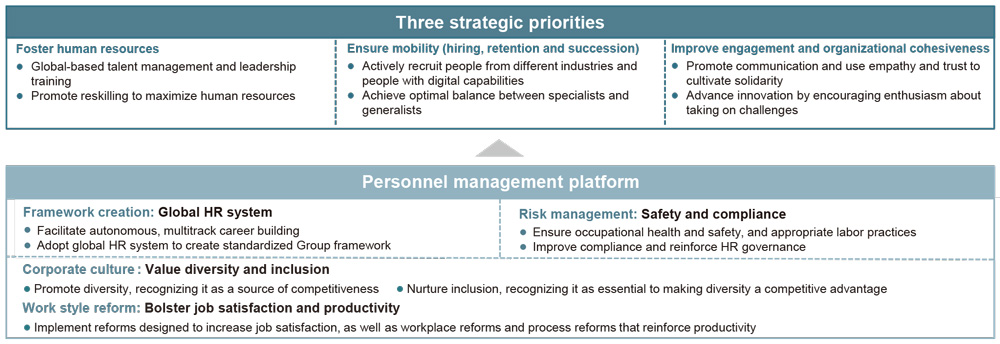
In line with The DIC Way, formulated to represent the DIC Group’s fundamental management policy, DIC in Japan works with regional headquarters overseeing operations in Greater China, the Asia–Pacific region, and the Americas, Europe and Africa to promote the effective management of human resources. In the DIC Vision 2030 long-term management plan, announced in February 2022, the Group’s basic strategy for human resources and diversity is to reinforce its management of human capital. The plan recognizes human resources as capital that is crucial to the execution of management strategies, and identifies three strategic priorities for building a strategic human resources portfolio that maximizes the value of human capital and calls for the building of a personnel management platform that underpins these priorities.
The DIC Group is promoting the swift implementation of measures in line with these strategic priorities, which are to foster human resources, ensure mobility (hiring, retention and succession), and improve engagement and organizational cohesiveness, seeing these as essential to building an ideal human resources portfolio that will ensure the Group achieves the goals of DIC Vision 2030. The Group is also working to build a new personnel management platform by advancing initiatives to reinforce its human capital from the perspectives of framework creation, risk management and corporate culture/work style reform.
DIC Vision 2030: Three Strategic Priorities and a Personnel Management Platform
②WSR 2020
In fiscal year 2022, Work Style Revolution (WSR) 2020, launched in fiscal year 2020 with the aim of ensuring job satisfaction and productivity, was transformed into an all executive–led committee in which all employees participate. In addition to seeking to resolve existing issues, all executives have committed themselves to a fundamental revamping of work styles in response to a continuously evolving environment. In fiscal year 2023, measures to reinforce management of human capital were also taken up, in line with DIC Vision 2030, as well as themes such as changes in corporate culture and related issues, with the goal of strengthening the win–win relationship between DIC and employees.
WSR 2020 Committee Reforms and Targets
-
Job Satisfaction Improvement Reforms
Create workplaces that embody The DIC Way by encouraging enthusiasm about taking on various challenges, evaluating performance fairly and recognizing personal value.
Workplace Reforms
Realize work environments that motivate employees to achieve Company, department/division and individual objectives, and make it possible for them to work comfortably and productively, anytime and anywhere, in collaboration with team members, colleagues and related parties.
Process Reforms
Dramatically improve the productivity of individuals, departments/ divisions and the entire Company and reinforce the Group’s competitiveness by leveraging DX to revamp existing work styles and business processes and by building new business models.
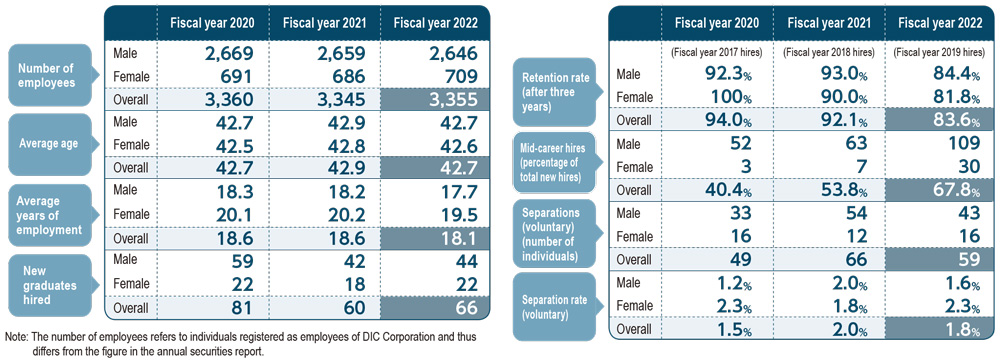
③ Basic Personnel Statistics (DIC)
2. Three Strategic Priorities
The DIC Group’s basic strategy for human resources and diversity is to reinforce its management of human capital. This reflects the Group’s belief that maximizing the value of human capital is crucial to promote business portfolio transformation and establishing a more robust global management configuration, two of the principal strategies of the DIC Vision 2030 longterm management plan. In line with this basic strategy, the Group is promoting measures in line with three strategic priorities, which are to foster human resources, ensure mobility (hiring, retention and succession), and improve engagement and organizational cohesiveness.
1. Foster Human Resources
① Global-Based Talent Management
One of the basic strategies outlined in DIC Vision 2030 is to establish a more robust global management configuration. Guided by this strategy, corporate headquarters in Japan and regional headquarters overseeing operations in the Americas and Europe, Greater China and the Asia–Pacific region work together to promote a variety of global talent management initiatives. In fiscal year 2023, the Group began formulating a competency model for managementlevel human resources and launched global talent pooling.
② Leadership Training
DIC chooses talented employees with the goal of systematically cultivating the leaders of the future and dispatches them to a variety of external institutions providing training in diverse areas, including liberal arts. In addition, to expand the scope of efforts to foster leaders across the DIC Group, the Company is collaborating with regional headquarters to explore the creation of a leadership training program that is aligned with its talent pooling process.
③ Reskilling to Maximize Human Resources
DIC extends support for career building that allows individual employees to design their own careers and provides an arena for them to continuously expand and polish their skills. In addition to traditional self-development programs aimed at the acquisition of skills, the Company offers subscription-based online programs that emphasize reskilling and allow employees to freely choose the courses they need from a wide selection. In fiscal year 2023, the Company’s average spending on education and training per employee amounted to ¥89,436.
Average Spending on Education and Training per Employee (DIC)
| Fiscal year | 2021 | 2022 | 2023 |
|---|---|---|---|
| Total (Yen) | 69,346 | 96,578 | 89,436 |
2. Ensure Mobility (Hiring, Retention and Succession)
DIC recognizes that the realization of business portfolio transformation depends on not only fostering human resources but also on ensuring and improving mobility for DIC Group employees.
① Active Recruiting of Individuals from Different Industries and People with Digital Capabilities
To accelerate the diversification of its human resources portfolio, DIC is stepping up efforts to recruit experienced individuals, primarily from different industries. In fiscal year 2023, the percentage of new recruits that were experienced mid-career hires exceeded 70%. (Calculation: Experienced mid-career hires / (New graduates + Experienced mid-career hires)). The Company is also intensifying efforts to hire people with digital capabilities. Of note, in addition to seeking experienced mid-career individuals who it expects will be able to hit the ground running, DIC will adopt recruitment by job category for new graduates, underscoring its commitment to raising the overall level of its human resources portfolio.
② Support for Autonomous Career Building
As a part of its support for career building, DIC provides “self-career dock” age group–specific training, the objective of which is to encourage career independence. In fiscal year 2023, the Company created the position of career support manager within its human resources department. DIC also has nationally qualified in-house career consultants that conduct career development interviews with interested employees. In addition, the Company follows up age group–specific career training by conducting “self-career dock” interviews with all participants. In fiscal year 2023, career development interviews were conducted with 102 employees, while “self-career dock” interviews were conducted with 335 employees.
To support employees’ desire to forge the career they desire, in fiscal year 2019 DIC launched an in-house recruitment system dubbed “Job Challenge.” In fiscal year 2023, DIC introduced a new system called “Job Challenge +,” which enables employees to attempt a job in another department on a temporary basis while continuing to serve in their current capacity. During the period under review, 12 individuals took advantage of this new system to broaden their careers by taking on jobs in other departments concurrently with their existing responsibilities.
③ Promotion of Succession Planning
DIC promotes succession planning from the perspective of ensuring business continuity and fostering human resources. The Company holds a global human resources management meeting as a forum for human resources and other departments to share information on human resources and related issues, with an important agenda item being succession planning for key positions. Key positions have also been defined for the DIC Group in the PRC and the Asia–Pacific region and a system has been established to create and ensure the successful implementation of succession plans in both regions.
3. Improve Engagement and Organizational Cohesiveness
To increase job satisfaction and productivity for DIC Group employees in Japan, DIC promotes initiatives to improve engagement and organizational cohesiveness, spearheaded by the WSR 2020 Committee, in which all executives participate, with the ultimate goal of strengthening the win–win relationship between the Company and employees.
① Surveys to Assess Engagement
As a WSR 2020 initiative aimed at improving engagement, since fiscal year 2021 DIC has periodically surveyed employees of the DIC Group’s 13 companies in Japan regarding this topic. The findings of these surveys are used not only to assess engagement with employees but also to identify issues to be addressed and formulate countermeasures.
② Cultivation of Solidarity through Communication, Empathy and Trust
One issue highlighted by previous engagement surveys was a lack of communication between superiors and subordinates. In response, in fiscal year 2022 DIC introduced a system of one-on-one meetings with the goal of promoting communications between these two key groups. In fiscal year 2023, the Company deployed a Companywide communications training workshop for management-level employees called “Interactive session: Modern people management practices.” DIC also began conducting Companywide workplace team-building activities, aimed at nurturing interpersonal relations, using the CliftonStrengths® assessment, first introduced by DIC in fiscal year 2022, which to date has been taken by approximately 80% of employees.
3. Talent Management: Personnel System, Global Human Resources Framework and Group Human Resources Governance
1. Personnel System Reforms Aimed at Facilitating Autonomous, Multitrack Career Building
In tandem with its formulation of DIC Vision 2030, in January 2022 DIC revised its personnel system with the objective of enhancing organizational capabilities to support qualitative reforms in existing core businesses and the successful commercialization of new businesses. In revising this system, the Company identified key policies by improving added value and productivity, encouraging a performance- and challenge-oriented focus, and supporting career building, in line with which it dramatically revamped its qualification-based remuneration and evaluation systems. To ensure these systems function effectively as a framework for talent management for all employees, since fiscal year 2022 the Company’s human resources team and individual business groups meet regularly to discuss human resources management, thereby strengthening communication regarding personnel-related issues.
2. Qualification-Based Remuneration System: Encouraging Autonomous Career Building and Maximizing Performance
Job- and Performance-Oriented Qualification-Based Remuneration System
To ensure employees clearly understand DIC’s mission and are able to fully realize their potential, the Company defined rank- and jobspecific roles, necessary abilities, and performance expectations for management-level and regular employees. At the same time, DIC revised its qualification-based remuneration system, making it more job-oriented, disclosing the roles and abilities expected of higherranking employees to make it possible for individual employees to map out their own career prospects. The new system also places greater emphasis on performance, making it possible to reward employees who have achieved significant results at an earlier stage of their career than ever before regardless of their job or academic history.
Promotion of Multitrack Career Building
DIC has established systems for fostering both generalists and specialists to facilitate multitrack career building. As well, the Company created a scheme that divides management-level employees, depending on their particular role/ job, into either people managers or professionals, facilitating promotion in accordance with individual strengths and aptitudes.

3. Evaluation Systems that Inspire Employees to Achieve Results and Take on Challenges
Performance-Based Evaluations
To further advance its emphasis on performance and evaluate the challenges taken on by employees, DIC partially revised its approach to setting targets and completing evaluation sheets, creating a mechanism to facilitate a more quantitative assessment of performance, and reviewed conduct and process assessment procedures to encourage autonomous action. This will make it possible to evaluate the cumulative achievements of employees who have acted autonomously to address complex challenges in a manner that contributes to the achievement of the targets of the DIC Vision 2030 long-term management plan.
Personnel Evaluation System as a Tool for Encouraging Employees to Take on Challenges
To further encourage employees to take on challenges in addition to their existing responsibilities, DIC recently introduced a mechanism whereby points are added to the evaluation of employees who have taken bold steps that have not only yielded short-term results but also contributed to medium- to long-term growth, thereby further motivating them to seek challenges and drive innovation.
Personnel Evaluation System as a Tool for Career Building
DIC has adopted a career goal sheet for employees to plan and track their own career development. Using these sheets allows individuals to take stock of their own careers at present and envision where they want to be in the future by setting goals for one year and three years ahead. This enables employees to design their own careers and set appropriate goals with the assumption that their superiors will comment on career goal sheets and incorporate them into one-on-one meetings to assist them in building fulfilling careers. Career goal sheets are also used in personnel exchanges and other cross-departmental initiatives.
Percentage of participating employees satisfied with one-on-one meetings: 73%
Fair and Impartial Evaluations
Individuals responsible for evaluating performance hold meetings with regular employees to ensure the integrity of evaluations and increase the visibility of standards used to identify talented human resources. In addition to promoting the fair and impartial administration of the evaluation process in each department and division, these evaluator meetings will be used to support key aspects of career building, including job rotations and training.
4. Creation of a Standardized Global Human Resources Framework
With the rapid expansion of its global operations, DIC recognizes that securing and fostering human resources around the world and ensuring the right people are in the right places across the DIC Group are essential to bolstering the value of the Group’s human capital and effectively carrying out its management strategies, and has thus sought to integrate global human resources management. To this end, the Company is promoting the adoption of harmonized personnel systems and management strategies around the world. In January 2018, DIC and DIC Graphics unified qualification standards for their approximately 1,300 management-level— i.e., manager and above—employees, replacing traditional ability-based standards with role-based standards. As a consequence, consistent dutyand role-based standards are now used for the majority of such employees in Japan, the Americas and Europe, the PRC and the Asia–Pacific region.
In contrast, with a few exceptions that manage Group human resources, human resources systems have not been integrated. Addressing this issue—which DIC sees as critical to the achievement of global human resources management—will require considerable effort going forward. With the growth of ESG investment, companies are also increasingly expected to provide accurate disclosure regarding human capital, as a key component of the nonfinancial information investors demand. This further underscores the importance of centralizing the management of human resources information within the Group. Looking ahead, DIC will continue formulating and disseminating related Group KPIs, as well as working to achieve the goals it has set.
5. Group Human Resources Governance
With the objective of further fortifying its management foundation over the medium to long term and improving management transparency, the DIC Group is reinforcing its human resources governance as it pertains to individuals in principal positions, including the CEOs of regional headquarters, Group company presidents and heads of regional functional departments. In particular, the committee responsible for evaluating the performance of and determining remuneration for individuals in principal positions in the Americas and Europe, the PRC and the Asia–Pacific region meet annually. Management members from corporate headquarters participate in evaluations. Remuneration is reviewed annually after verification of prevailing market rates.
In addition, beginning in fiscal year 2022 the DIC Group introduced Group succession guidelines in the PRC and the Asia–Pacific region. Succession plans for individuals in principal positions are formulated and implemented by DIC in collaboration with regional headquarters and Group companies to ensure the appropriate organizational regeneration.
4. DIC’s Approach to Diversity
1. Advance Efforts to Realize DEI&B
Viewing diversity, equity, inclusion and belonging (DEI&B) as intertwined concepts, DIC is committed to creating workplaces that respect the individuality of each and every employee (diversity), providing equal opportunities and prospects to all employees demonstrating enthusiasm (equity) and enabling all employees to exercise their capabilities and play an active role (inclusion). The Company believes that achieving these three goals will help employees feel a sense of being accepted and valued (belonging).

The DIC Group believes firmly that the added value created by diverse human resources amplifies social value and that this, in turn, leads to long-term improvements in its corporate value. The diverse individuals comprising the Group’s labor force come from various backgrounds and bring with them a wide range of individual capabilities and skills. It is these “differences” that will drive innovation going forward, enabling the DIC Group to live up to its vision, “We improve the human condition by safely delivering color and comfort for sustainable prosperity—Color & Comfort.”
In Japan, DIC has established quantitative targets not only for the diversity of its executives and employees but also for key aspects of work–life balance such as childcare leave for male employees. The Company is also exploring the feasibility of disclosing information on efforts to advance career opportunities for women, including pay differences for male and female employees. The Company has set the KPIs shown in the table below. Diversity initiatives are progressing steadily, evidenced by the fact that some targets have already been achieved. Seeking to disclose information on its diversity initiatives, in early fiscal year 2024 DIC established a public-facing website, the content of which includes a message from the president and CEO.
The DIC Group continues to communicate the importance and necessity of inclusion, as well as to promote understanding of such concepts as psychological safety and unconscious bias, which is essential to embracing diversity, and to create a corporate culture that supports well-being by inspiring job satisfaction and a sense of purpose.
Diversity KPIs
| DIC | Achievements | Targets | ||||
|---|---|---|---|---|---|---|
| 1 | Percentage of directors and Audit & Supervisory Board members accounted for by women and/or foreign nationals | January 2024 |
15.4% | → | January 2026 |
20.0% |
| 2 | Percentage of executive officers accounted for by women and/or foreign nationals | 19.0% | → | 20.0% | ||
| 3 | Percentage of management positions occupied by women | 8.1% | → | 8.0% | ||
| 4 | Percentage of new employees accounted for by foreign nationals | Fiscal year 2023 |
5.0% | → | Fiscal year 2025 |
5.0% |
| 5 | Percentage of new recruits accounted for by women | 32.2% | → | Maintain at 30% | ||
| 6 | Percentage of mid-career hires accounted for by women | 19.6% | → | 30.0% | ||
| 7 | Percentage of male employees using the Childcare Leave Program | 33.6% | → | 30.0% | ||
| 8 | Percentage of employees using the Leave to Assist with Parenting Program | 79.0% | → | 90.0% | ||
| 9 | Percentage of total labor force accounted for by individuals with disabilities | 2.4% | → | In excess of the legally mandated level |
||
| 10 | Gender pay gap (pay for female employees as a percentage of that for male employees) | → | Figures are only available for fiscal year 2023. KPIs will be set hereafter. | |||
| Regular employees (indefinite-term, full-time) | 76.4% | → | ||||
| Non-regular employees (part-time, fixed-term) | 52.4% | → | ||||
| All employees | 67.1% | → | ||||

Kuniko Torayama
Executive Officer;
Head of ESG Unit, In Charge of Diversity, DIC Corporation
Diversity Across the DIC Group
The DIC Group is a global organization that as of December 31, 2023, consisted of 185 companies in 62 countries and territories and had a global labor force of 22,255, of which 16,198, or 73%, were in other countries and territories. Given its global presence, diversity within the Group has come to exist across multiple variables besides gender, including cultural background, race, religion and ideology. These differences can become issues if simply left as such. Through various diversity initiatives, we are striving to transform these differences into strengths, enabling us to realize an organization that empowers all employees to reach their full potential while working together as colleagues. Because the challenges faced vary depending on location, we continue to prioritize those that we feel are most pressing in each country and territory. The global diversity team meets regularly to exchange ideas, and to share both best practices and failures, with the aim of improving initiatives Groupwide and building a “One DIC” approach. I think that we are making progress on this important front, and I strongly believe that our efforts will help the Group realize true diversity, equity and inclusion and work environments where everyone feels a sense of belonging.
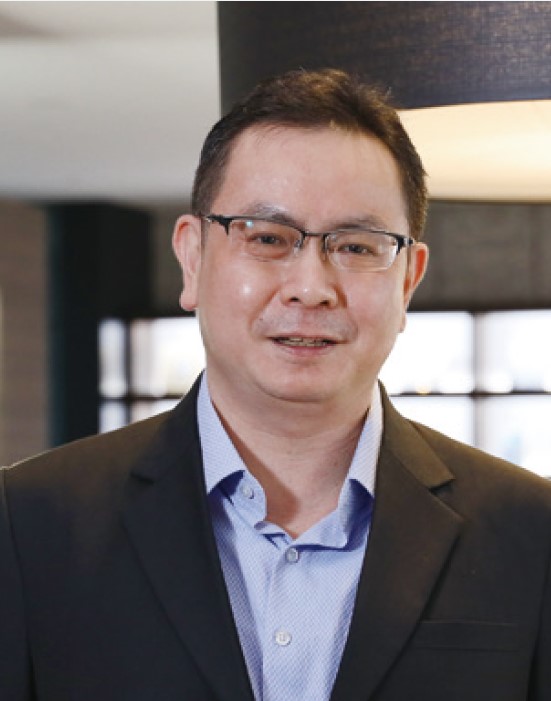
Clifton Tang
Regional Human Resource Director, DIC Asia Pacific Pte Ltd.
Asia–Pacific Region
The DIC Group in the Asia–Pacific region comprises 21 companies spanning 12 countries and territories. Operating in such a highly diverse cultural environment and with 25 different nationalities, the challenges can be overwhelming. With our commitment to the “One DIC” approach, we have launched various successful initiatives that have expanded our diversity outreach, as a result of which 26% of management positions are now filled by female employees. We have deepened our health programs by conducting mental well-being initiatives for our more than 160 regional managers, as well as a “4 Design Thinking” workshop, while continuing to extend the reach of such efforts to employees at different levels. In addition, we have introduced a regional personnel system and strategically linked it with corporate headquarters in Japan, thereby widening access to internal communications, as well as an e-evaluation system to strengthen communication between employees and management, and promote the use of flexible working schemes and mobile desking wherever possible to address changing social norms and diversity in work styles. We will continue to drive DEI&B to enhance teamwork, bonding, production and innovation. We aim to drive related initiatives from a holistic perspective, to better meet the needs of individual employees while eliminating unconscious bias against the different variables of diversity.
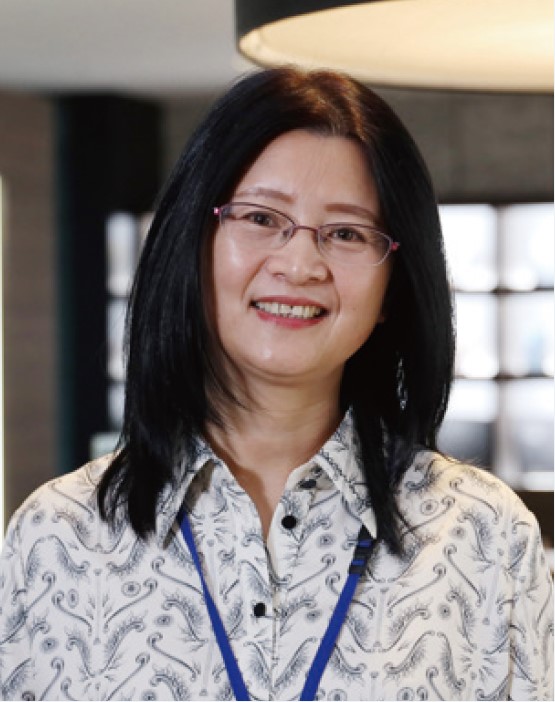
Genni Zhou
Corporate HR Director, DIC (China) Co., Ltd.
Greater China
Greater China is home to 24 DIC Group companies. In the PRC, dual-income households are common and there are many women in managerial positions, meaning there are few discernable differences in the gender breakdown at the management level. Our principal current challenge revolves around a shortage of younger people, the result of an aging population. To address this challenge, we focus on recruiting efforts and retaining younger talent. To acquire top talent, we have established a recruitment page on our website targeting young professionals. Additionally, in collaboration with a college we launched the “DIC Class,” aimed at approximately 20 selected first-year undergraduates. DIC staff members serve as instructors for this program, providing information on DIC products and our corporate culture, as well as know-how related to color. In 2023, 11 new graduates joined DIC Graphics (Dongguan) Ltd. and eight joined DIC Synthetic Resins (Zhongshan) Co., Ltd., all of whom are actively contributing in key positions. Moving forward, we will continue these initiatives to ensure our ability to attract employees of various generations.
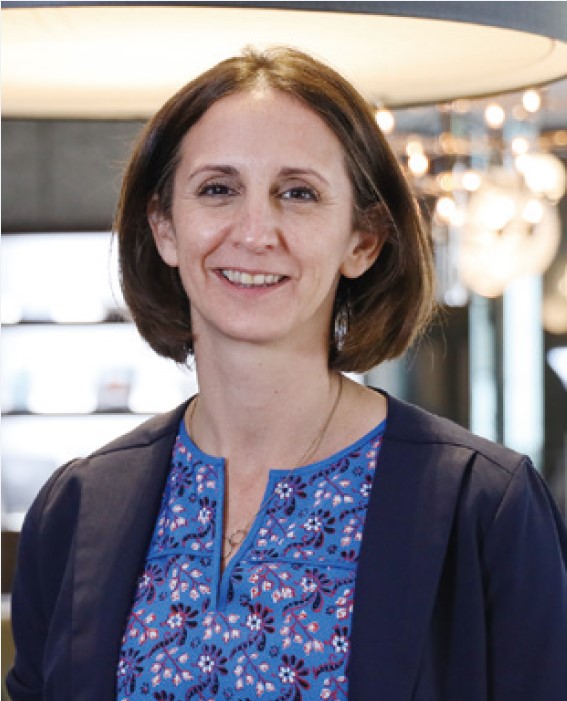
Jennifer Dewey
Director, Global Talent Management Sun Chemical Corporation
The Americas, Europe, the Middle East and Africa
With a global workforce exceeding 10,000 employees across 45 countries and territories, primarily in the Americas, Europe, the Middle East and Africa, Sun Chemical is dedicated to cultivating an inclusive culture that prioritizes both customer value and the satisfaction and engagement of our employees. To reinforce this commitment, we integrate DEI&B into every aspect of the employee experience, as well as into our human resources process, from recruitment and onboarding through to career development and performance evaluation.
We have positioned the fostering of leaders and effective onboarding of new hires as the fundamental goals of our diversity strategy. We are investing in leadership development initiatives to nurture leaders with awareness, empathy and strong communication skills. By equipping employees with the necessary tools and skills, we aim to foster an environment where diverse perspectives are not only valued but also celebrated, ensuring that every individual feels respected and heard.
As our workforce evolves and new talent joins our team, our main concern is to seamlessly integrate new people into the Sun Chemical culture. We place significant emphasis on welcoming and onboarding our newest employees with care, recognizing that fostering a sense of belonging and facilitating smooth integration is essential. Through these efforts, we will continue to effectively unlock value for our business and establish a foundation for sustained success.


Employees in Management Positions and Percentage of Management Positions Occupied by Women by Region
| Total number of employees in management positions (global) | 3,106 (male: 2,641, female: 464) |
|---|---|
| Percentage of management positions occupied by women (global) | 14.9% |

2. Hiring of Foreign Nationals
With the objective of securing talented individuals with advanced specialized competencies, global perspectives and language proficiency, DIC actively promotes the hiring of international students completing undergraduate or graduate studies at Japanese universities, as well as Japanese and foreign nationals who are completing undergraduate studies at overseas universities or have extensive specialized experience and expertise. At present, 62 foreign nationals are employed in various capacities at the Company. Since fiscal year 2019, DIC has worked actively to support the careers of non-Japanese employees by creating working environments that enable individuals to exercise their capabilities and play an active role. To support these employees’ careers, the Company promotes infrastructural and system improvements, including establishing a consulting desk and dedicated website, translating key in-house materials into English and, in December 2020, introducing biannual networking conferences. In fiscal year 2022, DIC also introduced cross-cultural training sessions for non-Japanese employees and the departments to which they are assigned.

Number of Foreign Nationals Currently Employed at DIC
| Sales positions |
Technical positions |
Department/ division administration |
Posted overseas |
Production | Total |
|---|---|---|---|---|---|
| 4 | 37 | 6 | 11 | 4 | 62 |
VOICE
I look forward to helping drive innovation at DIC by capitalizing on D&I.

I learned about DIC’s active efforts to promote diversity and inclusion (D&I) after joining the Company in fiscal year 2023. This reinforced my understanding of DIC as a global entity that seeks to grow together with its employees by leveraging the individual attributes and capabilities that come with a labor force comprising employees with widely ranging backgrounds. I believe that DIC’s real strength lies in its corporate culture, which encourages the recognition of different ways of thinking, opinions and values to ensure the mutual understanding and collaboration crucial to achieving common goals.
At the Central Research Laboratories, where I am based, our team comprises researchers with different varying areas of specialization and professional experiences and who are of differing ages and nationalities. Diversity & inclusion (D&I), which emphasizes valuing diverse ideas and opinions, rather than rejecting them, is driving new insights and innovations in R&D, as well as in other areas. I look forward to helping on the innovation front by capitalizing on D&I and communicating openly with as many people as possible.
FEM Project, Advanced Material Research Center (Central Research Laboratories),
R&D Management Unit, DIC Corporation
Chienju Lee
I am focused on discovering new themes and taking on new challenges with the aim of making a positive impact on society.

In my previous job, I encountered the DIC Group’s technologies in areas such as pigments and LCs, which is how I came to know about the Company. I used to work in the R&D department of a global chemicals manufacturer in Japan, so I had an interest in product development. Since joining DIC’s Chiba Plant, I have focused on exploring new research themes and different markets such as new resins for industrial-use coatings. Sustainability, including the reduction of CO₂ emissions, recycling and the use of biomass materials, is always a central consideration in my job in product development. For this reason, I’m always proud that what I’m doing will benefit society in the future.
The DIC Group’s extensive global presence means there are also opportunities to work with R&D teams and new Group companies in other countries and territories. I look forward to further expanding and enlivening exchanges and discussions with our overseas counterparts.
Functional Materials Technical Group 4, Functional Materials Technical Division, Chiba Plant, DIC Corporation
Fabien Nekelson
TOPICS
Networking Conference Held for Non-Japanese Employees
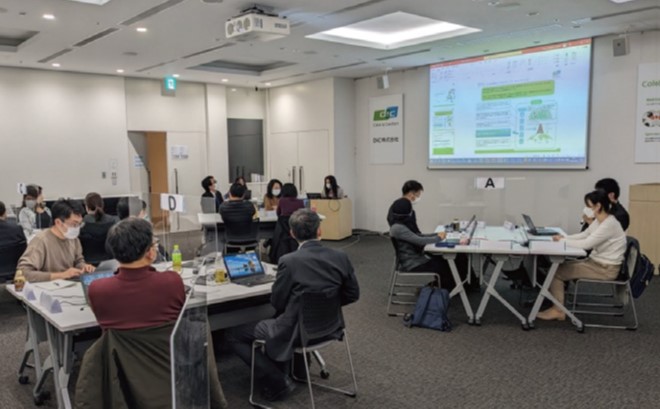
The sixth networking conference for DIC Group employees in Japan who are foreign nationals was held in July 2023 at DIC’s corporate headquarters in Tokyo. This conference, which was launched in fiscal year 2020, is held twice annually to foster ties among non-Japanese employees.
Beginning from the sixth conference, several non-Japanese employees have joined the secretariat and are playing a role from the planning stage, including determining the conference theme. A variety of ideas for the theme of the sixth conference were suggested, but given the underlying objective of better understanding the individual concerns of non-Japanese employees it was decided that the theme this time should be the creation of a forum for groupings of two secretariat members and two non-Japanese employees to exchange views. During the conference, participants were asked their opinions regarding the pros and cons of holding such meetings. Based on the findings of the sixth conference, in the second half of fiscal year 2023 non-Japanese employee volunteers were paired with secretariat members to conduct two-on-two meetings with employees who expressed a desire for such an interview. Concerns raised during these two-on-two meetings will be used to determine a theme for the next networking conference and deepen the level of discussion to find viable solutions. Approximately 20 new foreign nationals joined DIC Group companies in Japan in fiscal year 2023. DIC will continue to actively foster closer communications with non-Japanese employees to create work environments where all feel able to fully leverage their strengths and capabilities.
Networking Conference Held for Non-Japanese Employees
The fifth networking conference for DIC Group employees who are foreign nationals was held in January 2023 at the Company’s corporate headquarters in Tokyo. These conferences, which were launched in fiscal year 2020, are held twice annually to foster ties among non-Japanese employees. All previous conferences had been conducted online because of COVID-19, so this was the first time for participants to actually meet in person. Participants were divided into groups to exchange opinions on the format of future networking conferences with the goal of making it an even more meaningful event. Gathering in the same space improved communication and facilitated deeper discussions about what they expected of the conferences, and what they felt would be ideal in terms of frequency and timing.
DIC looks forward to continuing to hold this networking conference in the future, incorporating the views of participants, as one way to ameliorate any anxiety that non-Japanese employees may feel regarding their work environment or career, as well as to help bolster their motivation.
3. Expansion of Career Opportunities for Women
In line with its commitment to promoting diversity, DIC implements a variety of initiatives to expand career opportunities for female employees. Having established a full-scale program to support employees in balancing the demands of a career and childcare in 2007, since fiscal year 2016 the Company has pushed ahead with measures to transform employee mindsets and its corporate culture, as well as to provide training designed to encourage the drive and determination of female employees and broaden the range of jobs open to women.
In fiscal year 2022, the Company began dispatching female employees to take part in training offered by a third-party provider with the aim of encouraging greater drive and determination, as well as established an in-house mentoring program for women in management with in-house executives serving as mentors to help create pipelines to higher-ranking female colleagues. The mentoring program has since been expanded to enable women in management who were previously mentored to mentor female employees who are about to be promoted to management-level positions. When women in management-level positions who have been mentored then become mentors themselves, it can further expand their horizons and frame of reference, as well as enhance their approach to resolving issues. It can also provide an opportunity for female employees to build networks beyond the confines of their particular department. Looking ahead, DIC will continue to take various steps to assist female employees to envisage their own ideal work styles and professional growth to help ensure they enjoy active and fulfilling careers.
① Broadening the Scope of Positions Available to Female Employees
Since first assigning four female employees to line shift jobs at the Chiba Plant in 2008, DIC has gradually increased the number of female employees in production and utility control groups across Japan. At present, there are 24 female employees in such positions at five sites in Japan. The number of women serving as managers and team leaders has also risen. The Company has already made changes to improve site working environments, including establishing break rooms and locker rooms for women, and will continue taking similar steps with the goal of further broadening the scope of positions available to female employees.

| Site | Production group | Utility control group |
| Chiba Plant | 8 | 2 |
| Hokuriku Plant | 0 | 2 |
| Sakai Plant | 4 | 0 |
| Saitama Plant | 6 | 0 |
| Yokkaichi Plant | 2 | 0 |
| Total | 20 | 4 |
② Initiatives since Fiscal Year 2016 to Expand Career Opportunities for Women
Since fiscal year 2016, DIC has promoted a wide range of initiatives to expand career opportunities for women with the aim of becoming an organization in which women can play an active role. With the launch of WSR 2020 in fiscal year 2020, which is headed by the president and CEO, the Company is promoting related diversity initiatives that will help increase corporate value.
| Transform corporate culture and mindset | ・Messages from the president |
|---|---|
| ・Identical uniforms for male and female employees | |
| ・Training on unconscious bias | |
| Encourage the drive and determination of female employees | ・Third-party leadership development program |
| ・Joint leadership development program with companies in other sectors | |
| ・Mentoring program with in-house executives as mentors | |
| ・Mentoring program with female employees in management positions as mentors | |
| Broaden the scope of positions available to female employees | ・Assignment of female employees to production, as well as to sales and other positions involving work outside the Company |
| ・Inclusion of female employees in the regular system of transfers, reassignments and job rotations | |
| Establish systems to help female employees balance childcare and their careers | ・Expansion of systems designed to help female employees balance childcare and their careers |
| ・Training for employees returning after taking childcare leave | |
| ・Training (e-learning) for male employees on taking childcare leave | |
| ・Informal discussions for male employees who have taken and those who wish to take hildcare leave | |
| Create workplaces conducive to job satisfaction | ・Introduction of a system allowing management-level employees to limit the locations to which they will accept transfers |
| ・Expansion of flextime system | |
| ・Launch of telework and hybrid working styles |
③ Selection for Inclusion in the Next Nadeshiko: Companies Supporting Dual-Career and Co-Parenting
In 2024, DIC was selected as a company with an outstanding performance in terms of supporting both male and female employees to strike a balance between empowerment in the workplace and child-rearing under “Next Nadeshiko: Companies Supporting Dual-career Co-parenting,” a new program inaugurated in fiscal year 2023 by Japan’s Ministry of Economy, Trade and Industry. DIC was one of 16 companies chosen in the first year of this program across all industries and one of two in the “Raw Materials & Chemicals” industry category.
In recent years, the average length of service for female employees of DIC in Japan has exceeded that of male employees. Close to 100% of female employees return to work after maternity leave. Unlike in the past, continuing to work after having children has become the norm for women in Japan. Accordingly, the Company recognizes that the fact such life events as childbirth and childcare are treated as career interruptions is something it must help address, and it works to create an environment in which female employees can resume their careers and male employees can participate in the raising of their children and to foster a corporate culture that encourages both female and male employees to play active roles in the family and in the workplace.

4. Efforts to Advance the Employment of Individuals with Disabilities
In Japan, DIC’s General Affairs and HR Department and specialpurpose subsidiary* DIC Estate Co., Ltd., spearhead efforts to create workplaces that maximize the individual attributes and talents of its diverse human resources.
In addition to actively promoting the hiring of individuals with disabilities, DIC Estate fosters the development of human resources by establishing systems designed to expand the range of jobs available and facilitate individual growth, thereby realizing work environments that support employees with disabilities and empower them to realize their potential. DIC Estate also works with other DIC Group sites and companies in Japan to strengthen recruitment capabilities and develop systems that bolster retention, thereby enhancing the employment experience for employees with disabilities across the Group.
- A special-purpose subsidiary is a company that prioritizes hiring of individuals with disabilities and is authorized by the Minister of Health, Labour and Welfare via Japan’s Hello Work public employment office. DIC Estate was accredited as a special-purpose subsidiary on January 1, 2023.

VOICE

I joined DIC Estate’s Business Support Department in 2022 after graduating from Tokyo Metropolitan Katsushika School for the Deaf. At first, I had no idea about the collection and delivery service I was assigned to perform and was frequently confused. Because I am deaf, communicating with those around me was difficult, but I continued to press ahead using gestures and written notes to communicate with my seniors and fellow employees and I’m now able to instruct my juniors on collection and delivery duties. I look forward to continuing to work hard so that individuals with similar disabilities are given the opportunity to join our company.
DIC Estate Co., Ltd. Shinji Maruo
TOPICS
Holding Study Session on Employing Individuals with Disabilities
On November 2, 2023, DIC Estate held a study session on employing individuals with disabilities at the request of Kanagawa Prefecture’s Heartful Leader Association.* Approximately 30 representatives of companies that are working to employ people with disabilities, employment assistance organizations and special needs schools, as well as 11 people from the DIC Group, participated in the session and discussed the status of efforts by DIC and DIC Estate to hire individuals with disabilities, toured both companies’ premises and held a Group discussion.
With the goal of continuing to promote the hiring of individuals with disabilities, the DIC Group will continue to regularly hold company tours and study sessions to which it invites people from other companies responsible for hiring individuals with disabilities, as well as from employment assistance organizations, special needs schools and other groups.
- A volunteer association of companies and employment assistance organizations concerned with the employment of individuals with disabilities that is active primarily in Kanagawa Prefecture and Tokyo.

Expanding Interaction with Students at Special Needs Schools
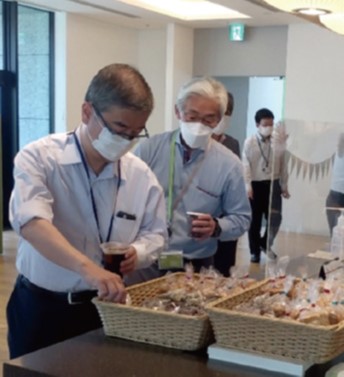
DIC Estate offers internship to a large number of high school students with disabilities from special needs schools, as well as hires such students as employees after they graduate. On the one-year anniversary of its employee cafeteria, DIC Estate, in cooperation with the alma mater of some of these employees, purchased baked sweets made by current students of the school for sale to DIC Estate employees. This initiative strengthened the company’s relationship with the school. The school reported that seeing those who graduated before them in the workplace had also motivated many current students to rededicate themselves to their studies. Going forward, DIC Estate will continue promoting efforts to work with special needs schools not only in Tokyo but also in the suburbs of the capital.
Expanding Interaction with Students at Special Needs Schools

DIC Gives Presentation at Employment Support Forum for Individuals with Disabilities
On July 29, 2021, DIC Estate Co., Ltd., gave a presentation as part of a webinar-format employment support forum for individuals with disabilities sponsored by Tokyoto Business Service Co., Ltd., and Ricoh Japan Corp., that focused on leveraging case studies to develop a framework for hiring individuals with disabilities. DIC Estate, which is based at DIC’s corporate headquarters in Tokyo, has earned high marks for creating a framework that enables employees with disabilities to enjoy active and fulfilling careers. The company’s presentation, titled “Personal Growth and Organizational Expansion: Diversity and Inclusion in the Era of COVID-19,” outlined the use of video manuals to introduce businesses, as well as current efforts to promote business expansion and foster human resources, to the audience of 65 company and school representatives. In addition to an animated Q&A session, audience members asked many other questions in a survey they were requested to complete after the presentation, underscoring a high level of interest in DIC Estate’s efforts.
5. Reemployment after Retirement
DIC has deployed a system that facilitates the reemployment until age 65 of individuals reaching retirement age (60) and wishing to remain with the organization. With available options including full-time work, part-time work and work sharing, this system enables reemployed individuals to maximize their experience, and to make full use of their accumulated technical abilities and specialized expertise, thereby contributing to sustainable growth for the DIC Group and the training of subsequent generations.
DIC also offers classes for employees in the final year before retirement that helps them prepare for life after they have finished their careers. These classes provide assistance with retirement planning and education regarding the national pension system, as well as offer retirement lifestyle simulations.
Number of Reemployed Individuals
| Fiscal year 2017 | Fiscal year 2018 | Fiscal year 2019 | Fiscal year 2020 | Fiscal year 2021 | Fiscal year 2022 | Fiscal year 2023 | |
|---|---|---|---|---|---|---|---|
| Number of retirees (A) | 69 | 89 | 96 | 92 | 103 | 150 | 122 |
| Individuals seeking reemployment | 55 | 74 | 81 | 80 | 87 | 132 | 105 |
| Number of individuals reemployed (B) | 55 | 70 | 77 | 79 | 84 | 128 | 102 |
| Reemployment rate (B) / (A) | 79.7% | 78.7% | 80.2% | 85.9% | 81.6% | 85.3% | 83.6% |
5. Respect for Human Rights
1. The DIC Group’s Human Rights Policy
The DIC Group actively supports global codes governing human rights and in 2018 formulated the DIC Group Human Rights Policy. In light of the increasing importance of respecting human rights around the world, in fiscal year 2023 the Group announced a revised version of this policy, in line with which it is promoting related initiatives.
The DIC Group Human Rights Policy
2. The DIC Group’s Human Rights Due Diligence System
To fulfill its responsibility to respect human rights, the DIC Group continues to employ, as well as to make systematic improvements in, its human rights due diligence system.
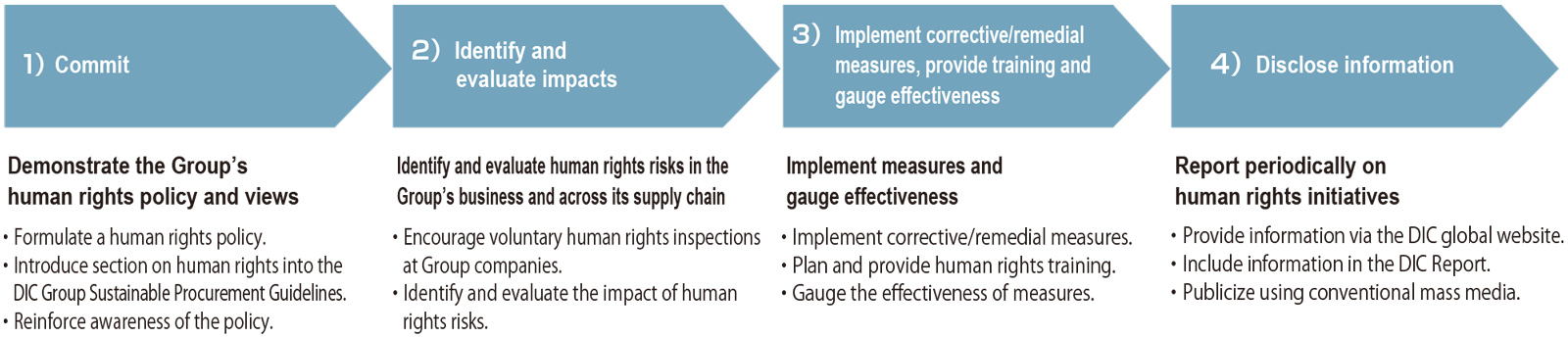
① Addressing Human Rights Due Diligence Challenges in the Area of Procurement
The DIC Group has formulated and disseminates the DIC Group Sustainable Procurement Guidelines and compels its suppliers to respect human rights and to take appropriate steps to ensure acceptable work environments. The Group also surveys the status of suppliers’ efforts through various follow-up procedures. For more information, please see “Human Rights Due Diligence in Supply Chains.”
② Promoting the Responsible Procurement of Minerals
The DIC Group has formulated the Basic Approach to the Responsible Procurement of Minerals, recognizing the high risk of human rights violations in the procurement of these resources. In addition to the surveys described above, the Group also surveyed smelters and refineries used for minerals contained in the raw materials it procures. For more information, please see Responsible Procurement of Minerals in “Sustainable Procurement.”
③ Implementation of Human Rights Due Diligence at DIC Group Companies
In fiscal year 2023, the Group promoted human rights awareness at 65 sites belonging to the DIC Group’s 13 companies in Japan. In tandem with selfinspections for compliance with labor laws, human rights due diligence was conducted with survey items added regarding foreign nationals, who are at high risk of human rights violations in Japan. No issues were identified as a result of this process. Going forward, the DIC Group will seek to raise the level of its human rights due diligence initiatives by advancing awareness of human rights, as well as by re-examining and designating business areas with inherent human rights risks.
④ Establishment of Whistle-Blowing Hotlines and Corrective Measures by the Compliance Team
The DIC Group has created whistle-blowing hotlines for Group employees. In fiscal year 2023, 20 reports were received regarding human rights– related issues such as power harassment and discrimination. The Group has also established the Ethics Hotline for reports from external stakeholders. In fiscal year 2023, one report of power harassment was received through this hotline. The Group conducts internal investigations and responds to any incidents requiring action by taking corrective or remedial measures in accordance with pertinent regulations. For more information, please see “Initiatives to Promote Compliance” in “Compliance.”
⑤ Contact Procedures
Procedures have been established for suppliers, customers, local communities and other stakeholders to report human rights–related issues by telephone or via the DIC global website. The Group strives to respond swiftly to queries and complaints received. No such complaints were received in fiscal year 2023.
3. Building Trust with the DIC Employees’ Union
DIC’s management and representatives of its employees’ union meet regularly with the goal of ensuring healthy industrial relations based on mutual trust. In addition, through labor–management councils and casual management conferences, DIC shares management information and its vision for the future with union representatives and encourages the frank exchange of opinions. A total of 72.6% of parent company employees belong to the DIC Employees’ Union (99.1% of eligible employees).
6. Work–Life Balance/Occupational Health
1. Work–Life Balance
DIC views a healthy work–life balance as essential to both self-realization and sustainable corporate growth. Accordingly, from the perspective of corporate health management,* the Company continues to expand systems intended to facilitate such a balance. Against a backdrop of growing global awareness of the concept of “human capital management,” DIC respects the diversity of its labor force and seeks to enable each individual to exercise their capabilities, recognizing its employees as important corporate assets. DIC has promoted initiatives meant to enable all employees to achieve both active and satisfying careers and a fulfilling life outside of work, in line with its belief that positive workplaces lead to higher productivity.
- An approach to employee health management that emphasizes a corporate management perspective and the implementation of strategic measures.
① Enhancing Programs that Help Employees Balance the Demands of Career and Childcare
In 1986, DIC implemented a childcare leave program before such programs were legally mandated. Since establishing a program to support employees in balancing the demands of a career and childcare in 2007, the Company has deployed various systems for both regular and management-level employees, including one that enables employees to take leave to provide nursing care for a child up until the end of the child’s third year of elementary school and another that allows them to limit the locations to which they will accept transfers, making it easier for individuals who are unable to accept transfers that involve relocation because of childbirth, childcare, nursing care or other responsibilities. In recognition of these efforts, in 2024 DIC was recognized for its efforts to promote work–life balance by being selected under the “Next Nadeshiko: Companies Supporting Dual-career Co-parenting” program.
② Retaining Employees with Nursing Care Responsibilities
In 2016, the Japanese government revised the Child Care and Family Care Law to make it easier for individuals to take leave or time off, as well as increasing benefits for temporary absences from work, for individuals who find themselves with nursing care responsibilities. To encourage use and promote knowledge of its related leave programs, DIC has prepared the Childcare and Nursing Care Handbook, which is distributed to employees of Group companies across the country. DIC has also modified the rules of these programs to make them easier to use, including making it possible to break up nursing care leave and to take such leave in one-hour units, and extending the period over which they may shorten their workday to fulfill nursing care responsibilities, originally one year, to three years.
③ Creating Flexible and Efficient Work Environments
To facilitate flexible work styles, DIC significantly expanded its flextime system in April 2018 by making it applicable to all areas of operations, with certain exceptions such as production floors. In April 2024, the Company reviewed its core hours and shortened the minimum number of work hours per day to facilitate greater flexibility. This, plus telework, encourages the independent execution of duties and an enhanced capacity for self-management.
④ Introducing a Leave to Accompany Spouse Overseas Program
To ensure its ability to secure and retain talented human resources and enhance employees’ work–life balance, in January 2019 DIC introduced a program allowing employees to take leave to accompany spouses on overseas work assignments. This system helps employees achieve an appropriate work–life balance without having to leave their jobs.
⑤ Establishing a System to Help Employees Balance Medical Treatment and Work
In January 2020, DIC introduced a system to support employees undergoing medical treatment who wish to continue working. To guarantee this system functions effectively, the Company formulated guidelines to ensure employees making use of this system receive the ongoing support necessary to balance medical treatment and work through job-related accommodations and considerations.
⑥ Programs that Help Employees Balance the Demands of Work and Home
| Childcare Leave Program | The maximum length of leave is until the child reaches the age of 2 years and 6 months, which is six months longer than the legally mandated leave period. Male employees can also take childcare leave at the time of birth (postpartum paternity leave) together with four weeks (28 days) of paid leave under the Leave to Assist with Parenting Program during the eight weeks following their child’s birth. |
|---|---|
| Paid leave programs for pregnancy and childcare | Outpatient care leave: Employees can take leave for outpatient care, including regular medical examinations and health guidance. |
| Special maternity protection leave: Female employees can take up to 10 days of special leave during pregnancy or the year after giving birth to protect the health of both mother and child. |
|
| Leave to Assist with Parenting Program: Male employees can take five consecutive days of paid leave during the eight weeks following their child’s birth to assist with parenting. |
|
| Pediatric nursing care leave: Employees can take leave to provide nursing care for a child until the end of the child’s third year of elementary school, which is beyond what is mandated by law. This includes up to five days of paid leave per fiscal year. |
|
| Childcare While Working Program | Employees can shorten their workday by up to three hours until the end of a child’s third year of elementary school. Employees can also stagger their working hours to accommodate childcare schedules. |
| Economic support system | This system enables employees on unpaid childcare leave to borrow a portion of their bonuses in advance to pay for, among others, fertility treatment or infant care facility fees. |
| Return to previous (or equivalent) position | Employees returning from childcare leave must be allowed to return to their previous position or to a position equivalent thereto. |
| Information sharing to promote program participation | DIC’s views on support for work and childcare balance, as well as a guide to its various available systems and how to make use of them, are posted on the Company’s websites and intranet. |
| Nursing care leave system | Employees can take such leave for up to one year, exceeding the statutory maximum of 93 days. Employees may also break up leave into a maximum of six units. |
| Nursing Care While Working system | Employees not wishing to take leave while providing nursing care can shorten their workday by up to three hours for a maximum period of three years. As of January 2018, employees may also request to be excused from doing overtime without restriction. |
| Leave to accompany spouse overseas | Employees can take leave in the form of a temporary overseas assignment to accompany a spouse who is scheduled to be abroad for more than one year. The period of the leave must be more than one year, with a maximum length of three years. Employees may make use of this system once during their careers. |
| Relocation limitation system | Management-level employees may limit the locations to which they will accept transfers that involve relocating because of childbirth, childcare, nursing care or other responsibilities. |
| System to help employees balance medical treatment and work | Employees undergoing medical treatment who wish to keep working can access necessary support in the form of jobrelated accommodations and considerations. |
| Half-day and hourly annual paid leave system | Employees may take annual paid leave in half-day units. They may also take up to five days of annual paid leave in one-hour units. |
| Saved paid leave system | Expiring annual paid leave can be saved for up to 30 days and used for a variety of purposes, including injury or illness, nursing care for a family member, care for a sick child and fertility treatment. |
⑦ Use of the Childcare Leave and Leave to Assist with Parenting Programs
Owing to the introduction of various programs to help employees in balancing the demands of work and home and the creation of an environment that encourages employees to take advantage of such thereof, the percentage of DIC employees who return to work after making use of the Childcare Leave Program is currently 100%. In addition, the number of employees taking advantage of the Leave to Assist with Parenting Program following a child’s birth is also rising.
| Fiscal year 2017 | Fiscal year 2018 | Fiscal year 2019 | Fiscal year 2020 | Fiscal year 2021 | Fiscal year 2022 | Fiscal year 2023 | |
|---|---|---|---|---|---|---|---|
| Number of employees using the Childcare Leave Program | 35 (0) |
21 (4) |
28 (4) |
22 (3) |
25 (4) |
55 (28) |
62 (40) |
| Number of employees using the Leave to Assist with Parenting Program | 77 | 81 | 86 | 84 | 77 | 87 | 94 |
- Note: Figures in parentheses are the number of male employees included in the total number of employees using the Childcare Leave Program.
⑧ Reducing Extreme Overwork and Encouraging Employees to Take Annual Paid Leave
DIC has deployed an electronic management system that tracks employee working hours based on sign in/sign out data extracted from IC cards. To prevent extreme overwork, if an employee appears likely to exceed the overtime limit (including weekends) agreed upon by labor and management, or if their monthly overtime has exceeded 70 hours, their supervisor and the senior executive in charge are automatically notified. The supervisor is required to submit a report outlining the employee’s work responsibilities and factors behind the excessive hours, and presenting specific measures to ameliorate the situation, which is shared with the DIC Employees’ Union. This process is designed to curb/reduce excessively long working hours. In addition, employees are encouraged to take annual paid leave, with sites recommending appropriate timing for leave and having employees plan dates for such leave.
⑨ Average Monthly Overtime Hours Worked and Annual Paid Leave Taken
| Fiscal year 2017 | Fiscal year 2018 | Fiscal year 2019 | Fiscal year 2020 | Fiscal year 2021 | Fiscal year 2022 | Fiscal year 2023 | |
|---|---|---|---|---|---|---|---|
| Average monthly overtime hours worked per employee |
12.2 hours | 12.0hours | 10.8hours | 10.1hours | 12.3hours | 12.4hours | 11.9hours |
| Average annual paid leave granted | 18.8days | 18.6days | 18.7days | 18.7days | 18.9days | 18.8days | 18.4days |
| Average annual paid leave used | 12.0days | 12.5days | 13.3days | 11.8days | 12.1days | 13.4days | 13.8days |
| Usage rate for annual paid leave | 63.8% | 67.2% | 70.9% | 63.1% | 64.0% | 71.3% | 75.1% |
2. Corporate Health Management
In line with its Health Management Declaration, the DIC Group works actively to support the physical and mental health of its employees, as well as to create a work environment conducive to job satisfaction. Looking ahead, the Group will continue to promote imaginative and original health management measures, recognizing that the health of its employees is essential to the realization of sustainable growth.
Ties with Employees
The DIC Group continues to promote a variety of initiatives to facilitate active communication with Group employees around the world, including establishing an internal Group chat function, a Group intranet and other new digital channels, thereby enhancing its communications infrastructure.
Communication Across the Global DIC Group
The DIC Group launched The DIC Way Vision and Core Values Awards with the objective of fostering awareness of The DIC Way, which represents the Group’s management philosophy, among employees worldwide. Awards were conferred once again in fiscal year 2023, with gold, silver and bronze award winners selected from among hundreds of nominations received from Group employees recommending outstanding colleagues who embody the Group’s core yalues. In fiscal year 2024, awards were presented in person at DIC's anniversary ceremony and a program of presentations by recipients was held, helping further foster a sense of solidarity across the DIC Group family.
In-House Newsletter
The DIC Group publishes a digital newsletter entitled Better Tomorrows, which is compiled and published by teams in Japan, the PRC and the Asia–Pacific region. Better Tomorrows provides information that assists employees in advancing DIC Vision 2030 and highlights Group technologies, products, businesses, employees and corporate culture, serving as a key tool for improving communication with each other.
Ties with the Media
DIC is reinforcing its publicity activities as a means of communicating with its many stakeholders, including its customers, shareholders, investors and local communities. This reflects its conviction that promoting active disclosure that facilitates objective media coverage is vital to securing stakeholders’ understanding of the DIC Group and its operations, and to promoting a sense of unity among employees. In fiscal year 2023, DIC put out news releases regarding business acquisitions, new products, capital investments, operating results and sustainability initiatives, among others. The Company also disseminated information on its long-term vision, as articulated in DIC Vision 2030, through interviews with members of the media and other means, encouraging understanding of its commitment to deliver value that exceeds the provision of fine chemicals with the goal of contributing to sustainable prosperity.
| Press conferences held in fiscal year 2023 | Interviews with journalists in fiscal year 2023 |
|---|---|
| 70 | 66 |
